Thai Scientists Delighted as Chinese-Made Fusion Reactor Advances Research on Clean Energy

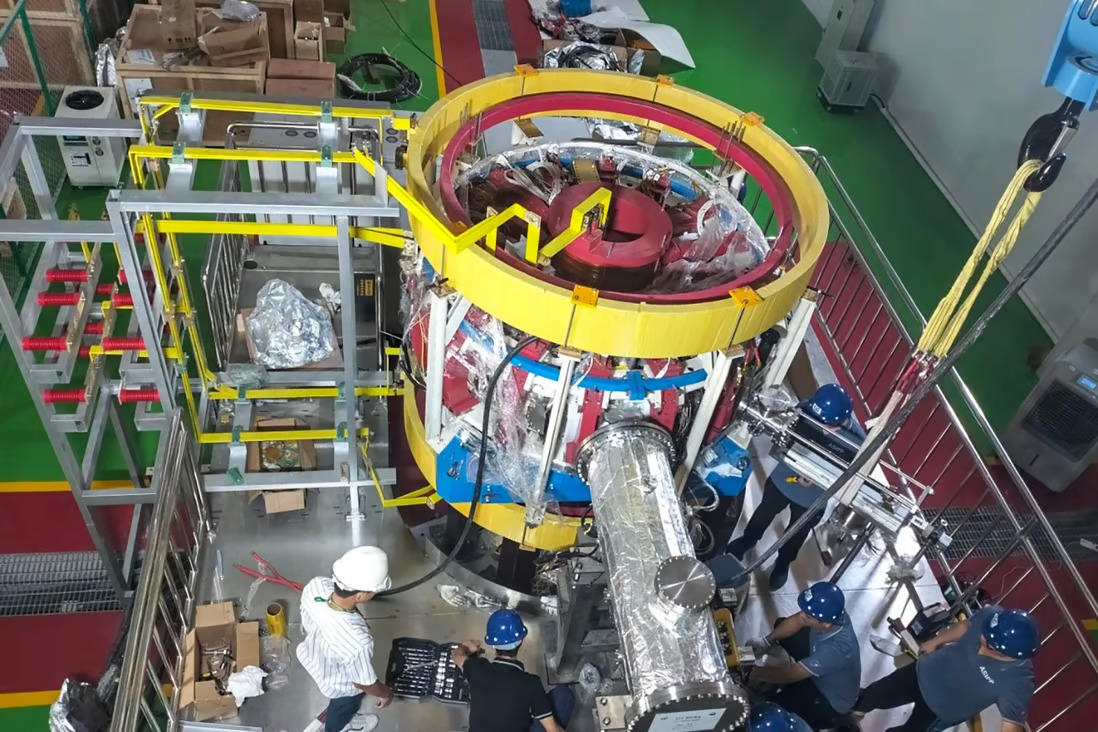
In an effort to establish the region as a prominent center for clean fusion energy research, scientists in Thailand have achieved the generation of hydrogen plasma using a tokamak device donated by China. The device, named Thailand Tokamak-1 (TT-1), is anticipated to reach its maximum capacity this month, enabling further research and the potential for elevating the temperature within the machine.
A tokamak, a torus-shaped apparatus designed to harness fusion energy, generates an immensely powerful magnetic field to confine and control hydrogen gas at temperatures ten times hotter than the sun's core. Thermonuclear fusion, the same process that has fueled the sun for the past five billion years, is regarded as the ultimate solution to humanity's future energy requirements. Unlike current nuclear power plants fueled by uranium, a fusion reactor would produce no radioactive waste.
The refurbished device, previously operated for 18 years until 2002 at the Institute of Plasma Physics (ASIPP) in Hefei, Anhui province, was developed and donated by the Chinese Academy of Sciences. TT-1 is expected to facilitate the training of scientists and engineers from Thailand and other ASEAN member states. Testing of the device commenced last month, with Chinese experts providing on-site assistance alongside Thai researchers.
On April 21, the team achieved their first successful test, as confirmed by Nopporn Poolyarat, head of the nuclear fusion and plasma division at the Thailand Institute of Nuclear Technology. Speaking from the location of TT-1, approximately 90 km (56 miles) northeast of Bangkok, he explained that although they encountered some initial issues in the morning, they managed to generate the first breakdown in the afternoon, resulting in the observation of plasma. While it was a modest achievement, it brought joy to everyone involved.
Fusion energy is generated through high-temperature nuclear fusion reactions. During these reactions, two atomic nuclei, specifically isotopes of hydrogen called deuterium and tritium, merge to form a heavier nucleus, releasing vast amounts of energy. The fusion reactions occur in a state of matter known as plasma, an extremely hot ionized gas. The term "breakdown" refers to the transition process from an insulating gas to a conducting plasma.
The electric current measured during the initial plasma phase reached 2,000 amperes, a relatively small value compared to the team's achievements during their training in China. Nopporn, who was part of a nine-member team that spent three months in Hefei to learn how to operate a tokamak, explained that they initially focused on ensuring the system's stability and connectivity. Injecting a large amount of energy into the plasma at the start could potentially damage the machine, so they gradually increased the input.
Since then, the team has successfully heated the plasma to a range of 60,000 to 70,000 amperes, maintaining it for 0.05 seconds. Their current objective is to raise the plasma temperature to a maximum capacity of 100,000 amperes for 0.1 seconds by mid-May. "More plasma particles mean increased fusion creation, which translates to greater energy generation," Nopporn emphasized.
Chinese scientists have been present on-site since before the arrival of the tokamak in January, providing technical support. Somsak Dangtip, manager of the Thai institute's advanced engineering and nuclear technology center, confirmed that a crew from ASIPP visited in December to inspect the site, followed by another group of engineers responsible for unpacking and installing the machine. Presently, the fourth group of Chinese engineers is working alongside the Thai team. Even after their departure later this month, they will maintain contact to offer operational and maintenance support.