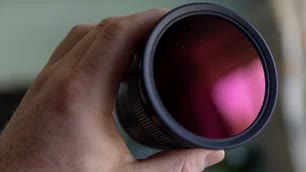
The best ND filters for 2022
-
 Loading...
 - Henry Williams
- 31 May 2022
- 280 Views
- 0 Like
- 0 Comment
Aquality ND filter (short for neutral density filter) cuts the amount of light coming into the camera without affecting the color or overall appearance of the image. While photographers often want more light to make their images, limiting that incoming illumination can come in handy during a variety of shooting scenarios. For instance, it will allow you to shoot long exposures even on the brightest days. They’re great for cityscapes and essential for people who shoot a lot of video and need to keep careful control over their shutter speeds. The best ND filters offer effective light reduction without adding reflections, distortions, or other negative effects to your images.
- Best overall: HOYA Pro ND Filter
- Best for cinematography: Lee Filters Stopper
- Best for drones: Tiffen Camera Lens Filters for Compact DJI Mavic 2 Pro Drone
- Best for smartphones: Moment 37mm ND Filter
- Best budget: Neewer ND Filter Kit
Things to consider when shopping for the best ND filter
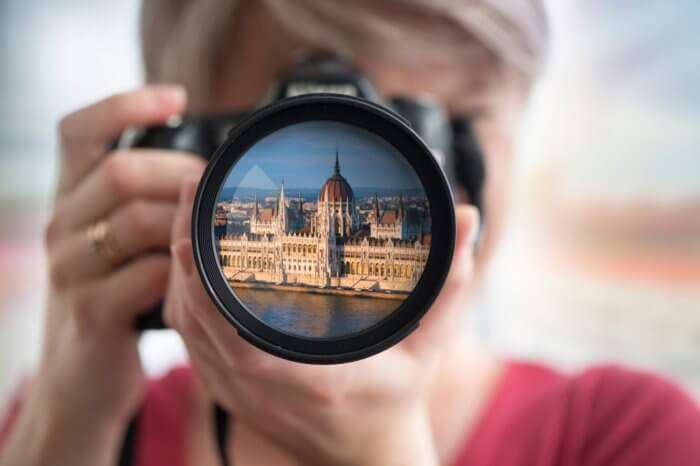
Shooting with an ND filter is a bit like putting a pair of sunglasses on your camera lens. These colorless filters attach to the front of your lens and cut the intensity of the natural sunlight so you can have more control over your aperture and shutter speeds even on the sunniest days.
Although photographers love their light, there is such a thing as too much light. Shooting with an ND filter on your lens will allow you to shoot with a wide aperture even on a sunny day—something that can be extremely useful for portrait photographers, street photographers and videographers. Shooting with an ND filter also means that you can extend the time of your exposures. Nature photographers often rely on them to shoot sunrise and sunset images, or to blur motion in a landscape. If you happen to have hiked to that beautiful waterfall on an extremely sunny day it might be difficult to adjust your camera’s settings to show the movement in that water. Attaching an ND filter to your camera’s lens is an easy fix.
What ND filter is right for me
ND filters typically come in 3-stop, 6-stop and 10-stop increments. You should select an ND filter by considering the lighting conditions on the day that you are shooting and also how much you want to extend your shutter speeds by. A 10-stop filter is the darkest of the ND filters and will help you extend 1/60 second at f/20 exposure to nearly a minute. An exposure this long will allow you to blur out pedestrians and cars in a cityscape or capture a beautifully smooth lake out in nature. It’s not unusual for photographers who use ND filters to carry a kit that includes a 3-stop, 6-stop and 10-stop filter so that they can select the best one for their shooting scenario.
Variable ND filters
If you’re not sure how much neutral density you’re going to need, you can always opt for a variable model. These typically consist of several elements, one of which attaches directly to your lens, the other which spins around like you’d find on a circular polarizer.
As you rotate the front element, the variable ND filter will get lighter or darker depending on which direction you go. While these absolutely add utility to the product, they also add more glass and more opportunities for reflections and other light transmission issues that can affect your image. Some even cause a large, shadowy “X” pattern on image under the wrong circumstances. A high-end version will minimize your chances of screwing things up, but it’s worth checking it out yourself at home before you take your new filter out on a real shoot.
Shape
ND filters are typically sold as square filters or circular filters. Choosing what one is right for you has a lot to do with personal preference. Square filters will require a filter holder in order to be used with the camera. The addition of this accessory makes them more expensive initially, but many photographers and videographers find that using square filters and a filter holder make it easier to swap filter strengths while out in the field. A square filter will generally work better if you are shooting with lens hoods on your cameras.
A circular filter will screw onto the front element of your lens. A screw in circular filter can be more convenient to travel with if you are planning to stick with one strength of ND filter, because you can simply leave it attached to your lens at the end of your shoot. However, if you are shooting with circular screw in filters you need to pay extra attention to the diameter of your lens. These filters come in very specific sizes in order to be compatible with whatever lens is attached to the camera.
Graduated filters
While you won’t find any graduated filters on this list, you will find them out in the market when you’re shopping for ND filters. Graduated models only block light on part of the scene, which can come in handy if you’re trying to regulate your exposure of a bright sky and a darker foreground. It can also look dramatic and you’ve probably seen the effect in TV shows like Top Gear or movies like Top Gun.
Our picks for the best ND filters
With some of the most important terms defined, we can move onto the list of picks. While we’ve chosen models that address specific users and shooting scenarios, everyone’s needs differ. There’s a lot of overlap when it comes to features and quality, so be sure to check out all the options before making a purchase.
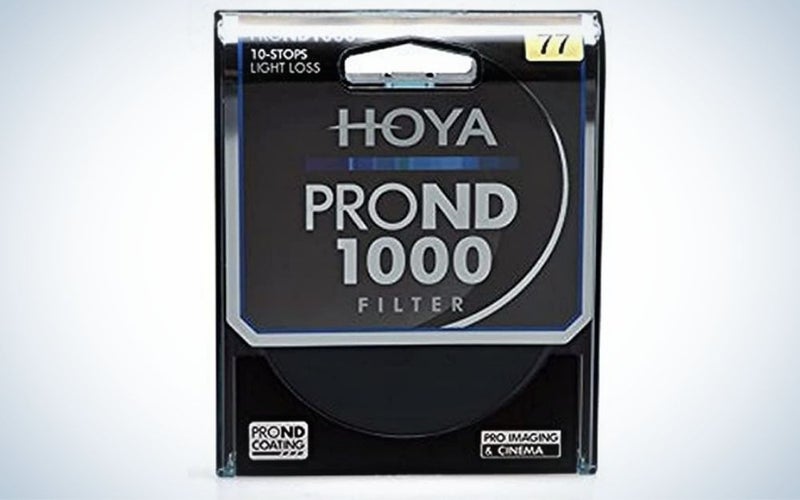
Best overall: HOYA Pro ND Filter
Specs:
- Circular screw in filter
- Aluminum and glass construction
- ACCU-ND coating for neutral color balance
Why It Made The Cut
- The circular screw-in filters from Hoya don’t require an additional accessory to use, opt for high-quality glass, come in a variety of sizes, and 1-stop to 16-stop density intensity.
Pros
- Large range of ND filters
- Low profile ring avoids vignetting
- Compact
Cons
- Screw in ND filters can be time consuming to attach
- Expensive
- Product Description
Hoya has one of the best reputations in the filter market. Its ND filters come in a variety of sizes and densities from one to 16 stops. The filters are made of glass and aluminum and have an ACCU ND coating for accurate and neutral color balance. They’re more compact than a square filter and since they screw onto the front of your lens they’re also easy to travel with.
Hoya has also done an impressive job keeping to the “neutral” part of the product name. It won’t affect your overall color balance, so you won’t have to make a big adjustment after attaching it. That’s a big deal if you’re shooting in a high-volume situation.
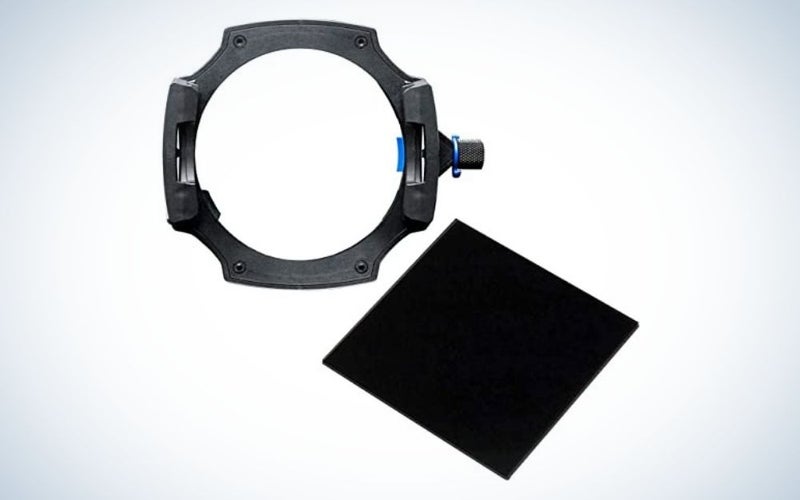
Best for cinematography: Lee Filters Stopper
Specs:
List 3 key specs/dimensions readers use when evaluating this kind of product. Examples include:
- 10-stop ND filter
- Square
- Sold with filter holder
Why It Made The Cut
- Lee Filters have been making high-quality ND filters since the late ‘60s and, even know they’re pricey, they’re built to last.
Pros
- Excellent built quality
- Modular design
- Easy to use mounting system
Cons
- Expensive
Product Description
One of Lee’s most well-known products, the Big Stopper is a high quality 10-stop ND filter. The square shaped filters attach to the camera using Lee’s filter holder, which is compatible with all of the Lee filters, and has an innovative design that makes it easy to swap out filters while shooting. The holder features a multi-function control pin for fast one-handed mounting that can be rotated or locked into position depending on a photographer’s preference. Although Lee’s filters do require an additional accessory of the filter holder, many photographers favor this setup as it saves time out in the field when swapping ND filters. The 100mm x 100mm measurements also make it large enough to cover just about any lens you have in your bag so you can save money if you’re planning to use it across a variety of glass. Read More...