Home Upload Photo Upload Videos Write a Blog Analytics Messaging Streaming Create Adverts Creators Program
Bebuzee Afghanistan Bebuzee Albania Bebuzee Algeria Bebuzee Andorra Bebuzee Angola Bebuzee Antigua and Barbuda Bebuzee Argentina Bebuzee Armenia Bebuzee Australia Bebuzee Austria Bebuzee Azerbaijan Bebuzee Bahamas Bebuzee Bahrain Bebuzee Bangladesh Bebuzee Barbados Bebuzee Belarus Bebuzee Belgium Bebuzee Belize Bebuzee Benin Bebuzee Bhutan Bebuzee Bolivia Bebuzee Bosnia and Herzegovina Bebuzee Botswana Bebuzee Brazil Bebuzee Brunei Bebuzee Bulgaria Bebuzee Burkina Faso Bebuzee Burundi Bebuzee Cabo Verde Bebuzee Cambodia Bebuzee Cameroon Bebuzee Canada Bebuzee Central African Republic Bebuzee Chad Bebuzee Chile Bebuzee China Bebuzee Colombia Bebuzee Comoros Bebuzee Costa Rica Bebuzee Côte d'Ivoire Bebuzee Croatia Bebuzee Cuba Bebuzee Cyprus Bebuzee Czech Republic Bebuzee Democratic Republic of the Congo Bebuzee Denmark Bebuzee Djibouti Bebuzee Dominica Bebuzee Dominican Republic Bebuzee Ecuador Bebuzee Egypt Bebuzee El Salvador Bebuzee Equatorial Guinea Bebuzee Eritrea Bebuzee Estonia Bebuzee Eswatini Bebuzee Ethiopia Bebuzee Fiji Bebuzee Finland Bebuzee France Bebuzee Gabon Bebuzee Gambia Bebuzee Georgia Bebuzee Germany Bebuzee Ghana Bebuzee Greece Bebuzee Grenada Bebuzee Guatemala Bebuzee Guinea Bebuzee Guinea-Bissau Bebuzee Guyana Bebuzee Haiti Bebuzee Honduras Bebuzee Hong Kong Bebuzee Hungary Bebuzee Iceland Bebuzee India Bebuzee Indonesia Bebuzee Iran Bebuzee Iraq Bebuzee Ireland Bebuzee Israel Bebuzee Italy Bebuzee Jamaica Bebuzee Japan Bebuzee Jordan Bebuzee Kazakhstan Bebuzee Kenya Bebuzee Kiribati Bebuzee Kuwait Bebuzee Kyrgyzstan Bebuzee Laos Bebuzee Latvia Bebuzee Lebanon Bebuzee Lesotho Bebuzee Liberia Bebuzee Libya Bebuzee Liechtenstein Bebuzee Lithuania Bebuzee Luxembourg Bebuzee Madagascar Bebuzee Malawi Bebuzee Malaysia Bebuzee Maldives Bebuzee Mali Bebuzee Malta Bebuzee Marshall Islands Bebuzee Mauritania Bebuzee Mauritius Bebuzee Mexico Bebuzee Micronesia Bebuzee Moldova Bebuzee Monaco Bebuzee Mongolia Bebuzee Montenegro Bebuzee Morocco Bebuzee Mozambique Bebuzee Myanmar Bebuzee Namibia Bebuzee Nauru Bebuzee Nepal Bebuzee Netherlands Bebuzee New Zealand Bebuzee Nicaragua Bebuzee Niger Bebuzee Nigeria Bebuzee North Korea Bebuzee North Macedonia Bebuzee Norway Bebuzee Oman Bebuzee Pakistan Bebuzee Palau Bebuzee Panama Bebuzee Papua New Guinea Bebuzee Paraguay Bebuzee Peru Bebuzee Philippines Bebuzee Poland Bebuzee Portugal Bebuzee Qatar Bebuzee Republic of the Congo Bebuzee Romania Bebuzee Russia Bebuzee Rwanda Bebuzee Saint Kitts and Nevis Bebuzee Saint Lucia Bebuzee Saint Vincent and the Grenadines Bebuzee Samoa Bebuzee San Marino Bebuzee São Tomé and Príncipe Bebuzee Saudi Arabia Bebuzee Senegal Bebuzee Serbia Bebuzee Seychelles Bebuzee Sierra Leone Bebuzee Singapore Bebuzee Slovakia Bebuzee Slovenia Bebuzee Solomon Islands Bebuzee Somalia Bebuzee South Africa Bebuzee South Korea Bebuzee South Sudan Bebuzee Spain Bebuzee Sri Lanka Bebuzee Sudan Bebuzee Suriname Bebuzee Sweden Bebuzee Switzerland Bebuzee Syria Bebuzee Taiwan Bebuzee Tajikistan Bebuzee Tanzania Bebuzee Thailand Bebuzee Timor-Leste Bebuzee Togo Bebuzee Tonga Bebuzee Trinidad and Tobago Bebuzee Tunisia Bebuzee Turkey Bebuzee Turkmenistan Bebuzee Tuvalu Bebuzee Uganda Bebuzee Ukraine Bebuzee United Arab Emirates Bebuzee United Kingdom Bebuzee Uruguay Bebuzee Uzbekistan Bebuzee Vanuatu Bebuzee Venezuela Bebuzee Vietnam Bebuzee World Wide Bebuzee Yemen Bebuzee Zambia Bebuzee Zimbabwe
Blog Image

One of the Webb telescope's first missions will scope out two hot exoplanets

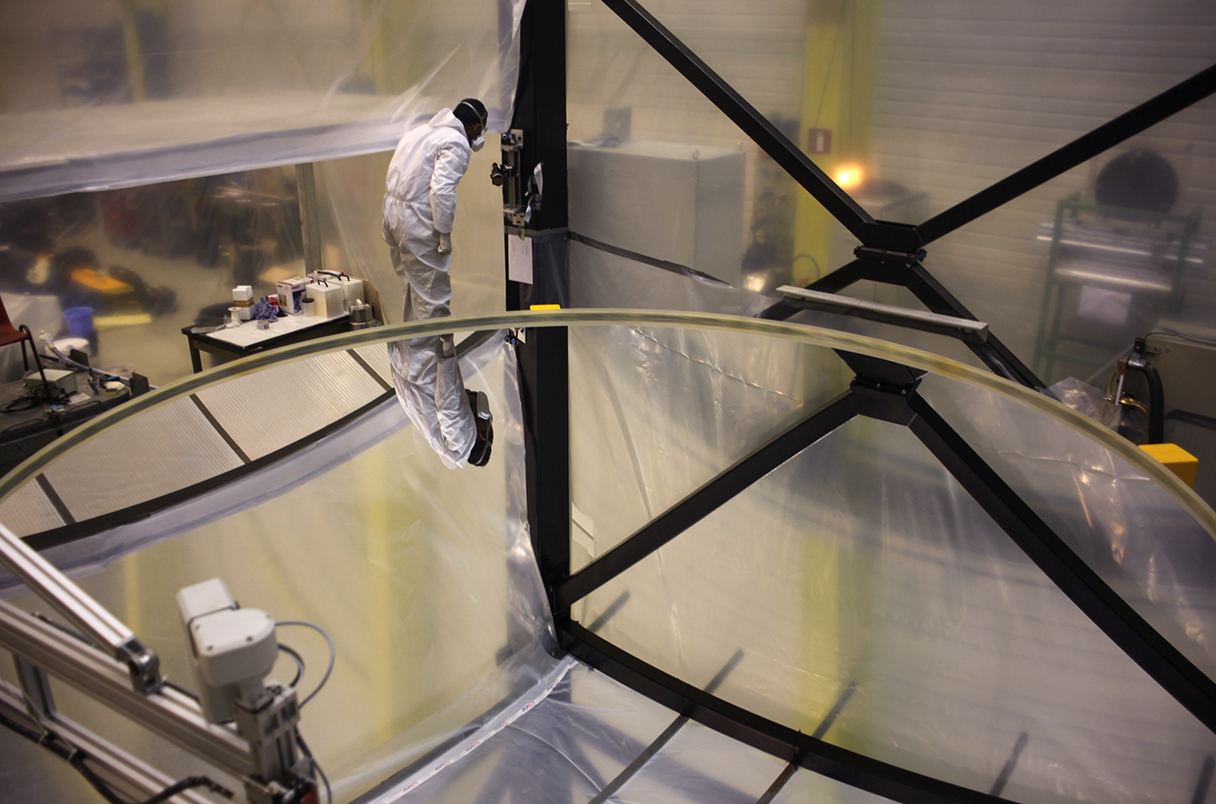
After much breath-holding and anticipation, the James Webb Space Telescope (JWST) is just weeks away from being completely operational. The mirror segments are successfully aligned and the last step is to calibrate its scientific instruments. When ready, the JWST will spend part of its first year gazing out at two exoplanets.

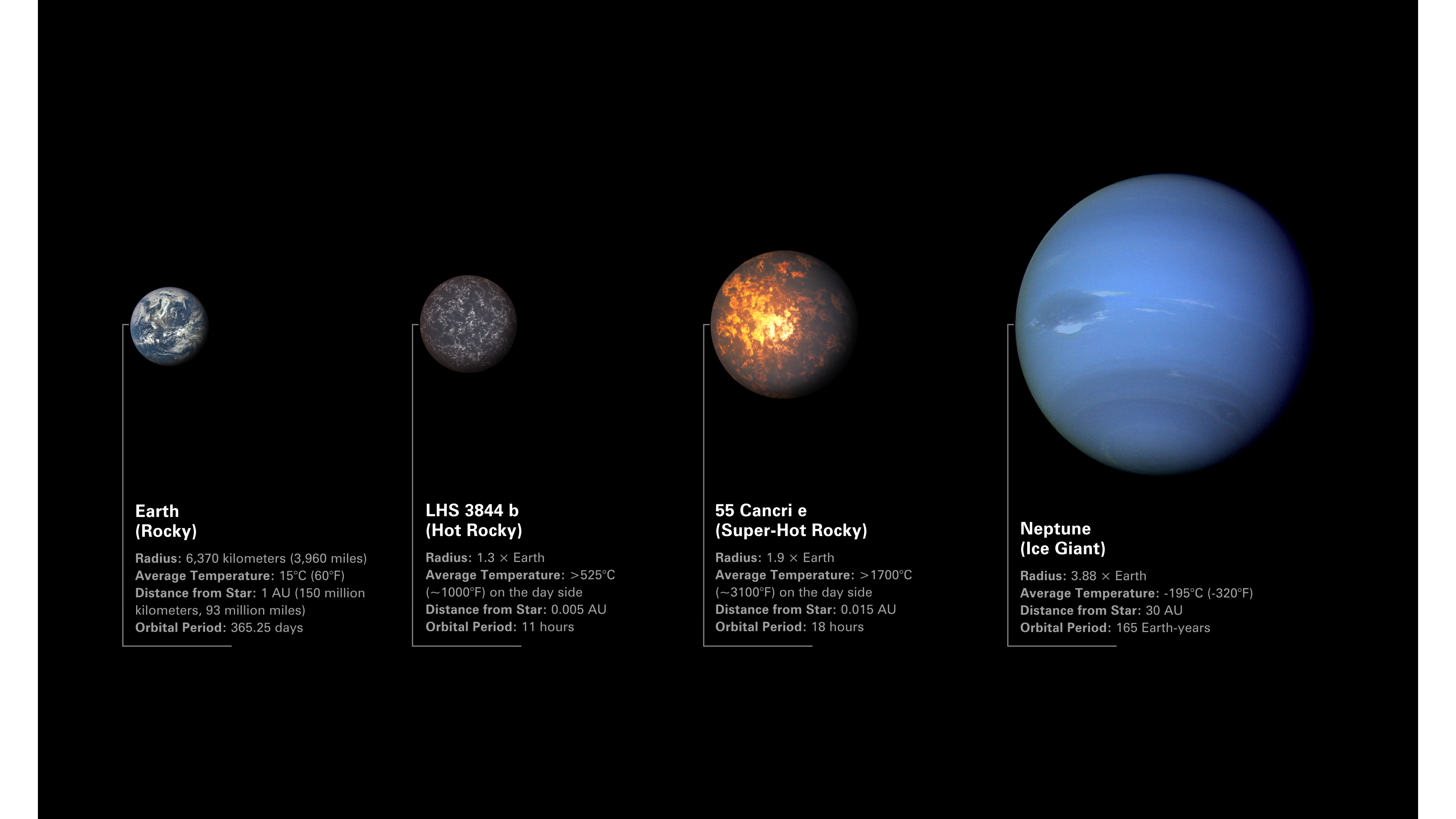
The hot exoplanets have been classified as “super-Earths” based on their sizes and rocky compositions. Why do we say hot? The average temperature on Earth is 60 degrees Fahrenheit. Meanwhile, these two orbs, known as LHS 3844 b (“Hot Rocky”) and 55 Cancri e (“Super-Hot Rocky”) have average temperatures of 1,000 degrees and 3,100 degrees, respectively. Scientists plan to use JWST’s high-precision spectrographs (instruments that separate light by wavelength or frequency) to study the planets, with the goal of gaining a better understanding of geologic diversity and evolution of rocky planets, Earth included.

What is 55 Cancri e?

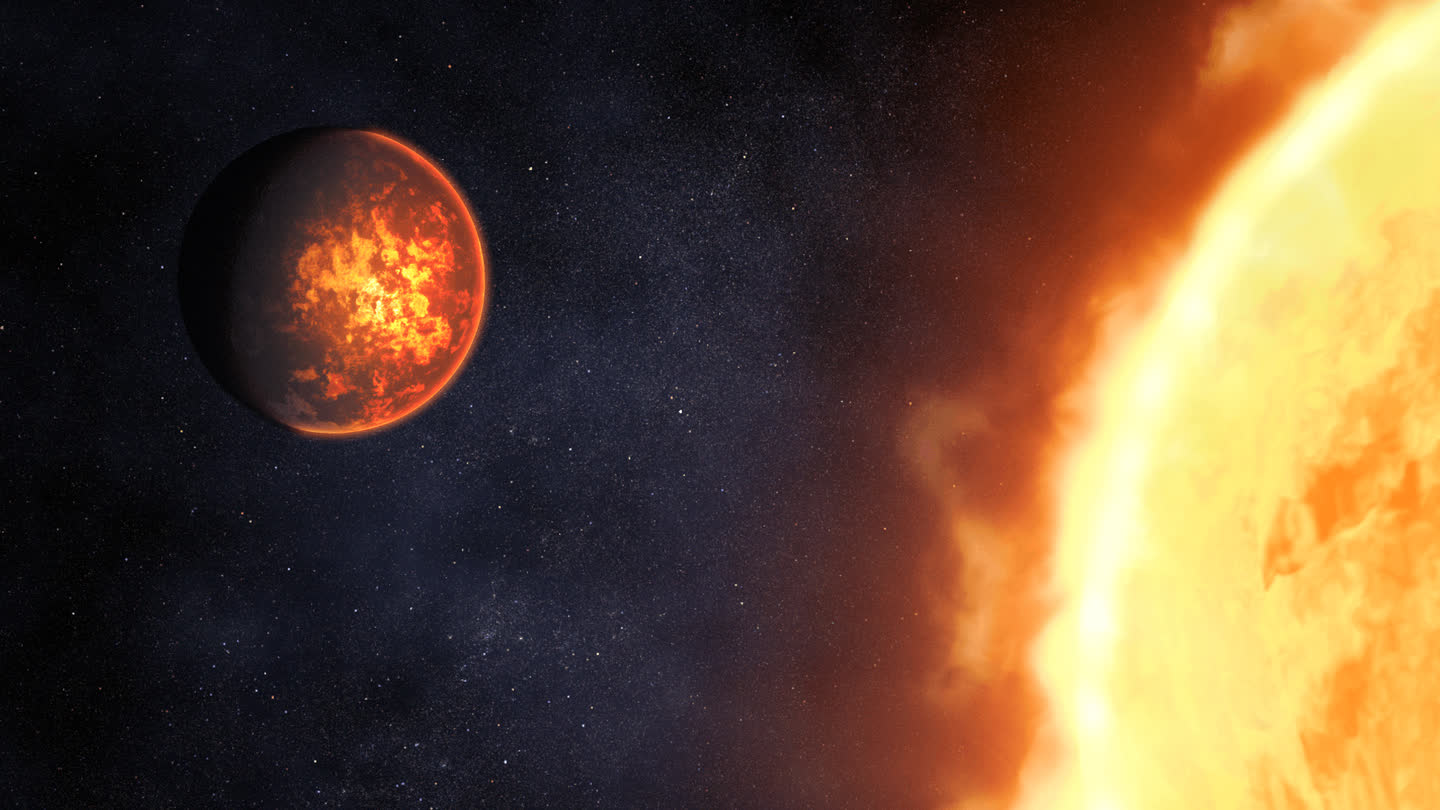
55 Cancri e, the hotter exoplanet of the two, orbits its sun-like star at a distance of less than 1.5 million miles, which is roughly 1/25th the stretch between Mercury and the Sun. Thus, a day on 55 Cancri e is 18 hours, and the proximity and orbit mean surface temperatures are well above the melting point of rock-forming minerals.

Supposedly, the sun-facing surface of the exoplanet is covered in seas of lava, however, further study by JWST will reveal exactly how it orbits its star and how that affects the surface temperature. Interestingly, according to the Spitzer Space Telescope, the hottest area of the planet may not actually be directly facing 55 Cancri e’s sun, but is rather located off-center.

“Planets that orbit this close to their star are assumed to be tidally locked, with one side facing the star at all times,” NASA explains. “As a result, the hottest spot on the planet should be the one that faces the star most directly, and the amount of heat coming from the day side should not change much over time.”

JWST will study the exoplanet’s atmosphere and composition, and entertains the possibility that it is not, in fact, tidally locked, which explains why the hotspot is off-kilter. Another proposition is that like Mercury, 55 Cancri e has a 3:2 resonance, meaning that it will rotate three times every two orbits, thus creating a day/night cycle that affects surface temperatures.

“That could explain why the hottest part of the planet is shifted,” explains Alexis Brandeker, a researcher from Stockholm University who leads another team studying the planet. “Just like on Earth, it would take time for the surface to heat up. The hottest time of the day would be in the afternoon, not right at noon.”

What is LHS 3844 b?

Unlike 55 Cancri e, LHS 3844 b is significantly cooler, and affords researchers the opportunity to study solid rock on an exoplanet. Though it is much closer to its “sun” (one orbit is just 11 hours) the star is fairly small and cool, and therefore LHS 3844 b does not have a molten surface. Scientists plan to use spectroscopy as the exoplanet does not have an obscuring atmosphere.

“It turns out that different types of rock have different spectra,” explains Laura Kreidberg at the Max Planck Institute for Astronomy. Read More...


Previous Post

10 everyday items every wedding photographer should carry in their kit

Next Post

The best ND filters for 2022

Comments