The ever-evolving art of Malaysian poetry
-
 Loading...
 - Akemi Ando
- 07 Apr 2023
- 77 Views
- 0 Like
- 0 Comment
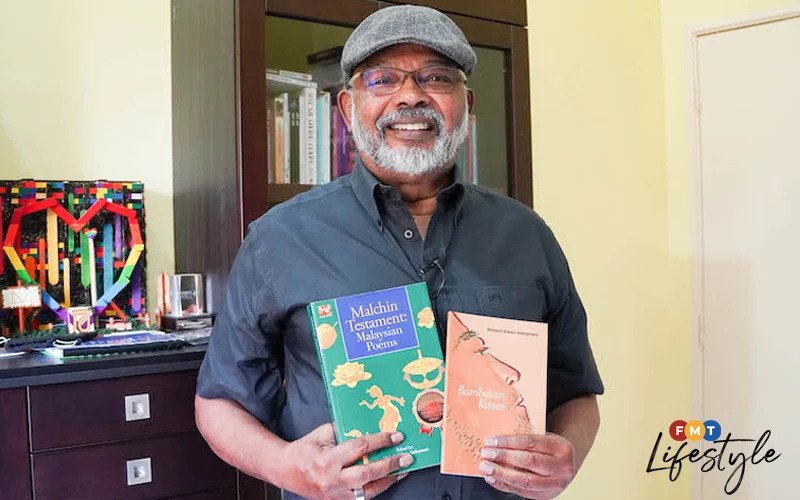
In conjunction with World Poetry Day today, Malachi Edwin Vethamani and Jack Malik share how this written art form has shifted in the local scene.
Through the decades, the works of Malaysian pioneers such as Usman Awang, A Samad Said, Wong Phui Nam, and Hilary Tham have become a blueprint for many aspiring poets who hope to provoke responses, engage, and evoke emotions through their words.
But veteran poet Malachi Edwin Vethamani has noticed that poetry has changed, with newcomers dabbling in the art form and treating it differently.
The 67-year-old said many Malaysians, especially the younger generation, have begun to do more performative poetry, also known as spoken word.
“People often say nobody reads poetry anymore, it is a dead art – but the new generation have all these open-mic sessions, giving it new life,” he told FMT in conjunction with World Poetry Day today.
“Young Malaysian poets speak about their identity and concerns. That is what poetry should do: it should link us with what is happening in our lives.
“These young poets have certainly contributed to the art form.”
‘Strong Malaysian presence’
Malachi’s love for poetry began he read the works of Walter Whitman and T S Eliot at age 18. He was captivated by the way these poets expressed themselves, which prompted him to write his own.
“One of the things I wanted in my writing is a very strong Malaysian presence… a kind of universal appeal. I wanted other people to connect with what I’m writing about.”
He has since published three volumes of his original poems – “Complicated Lives”, “Life Happens”, and “Rambutan Kisses” – which cover a wide range of Malaysian experiences such as love, loss, identity and sexuality.
The professor of Modern English Literature at University of Nottingham Malaysia believes there are many new avenues for youths to share their works and express themselves – for instance, via social media.
“Instagram poetry is not really valued because most people think it’s just [users] churning things out, but it’s a start. I wouldn’t look down on Instagram poetry,” he said.
“Even if you published your poetry [conventionally], it wouldn’t be perfect. There will always be a range in quality.” Read More…