The Miraculous Trees That Could Save Pakistan's Largest City from Climate Disaster
-
 Loading...
 - Zayan Pohekar
- 27 Jun 2022
- 150 Views
- 0 Like
- 0 Comment
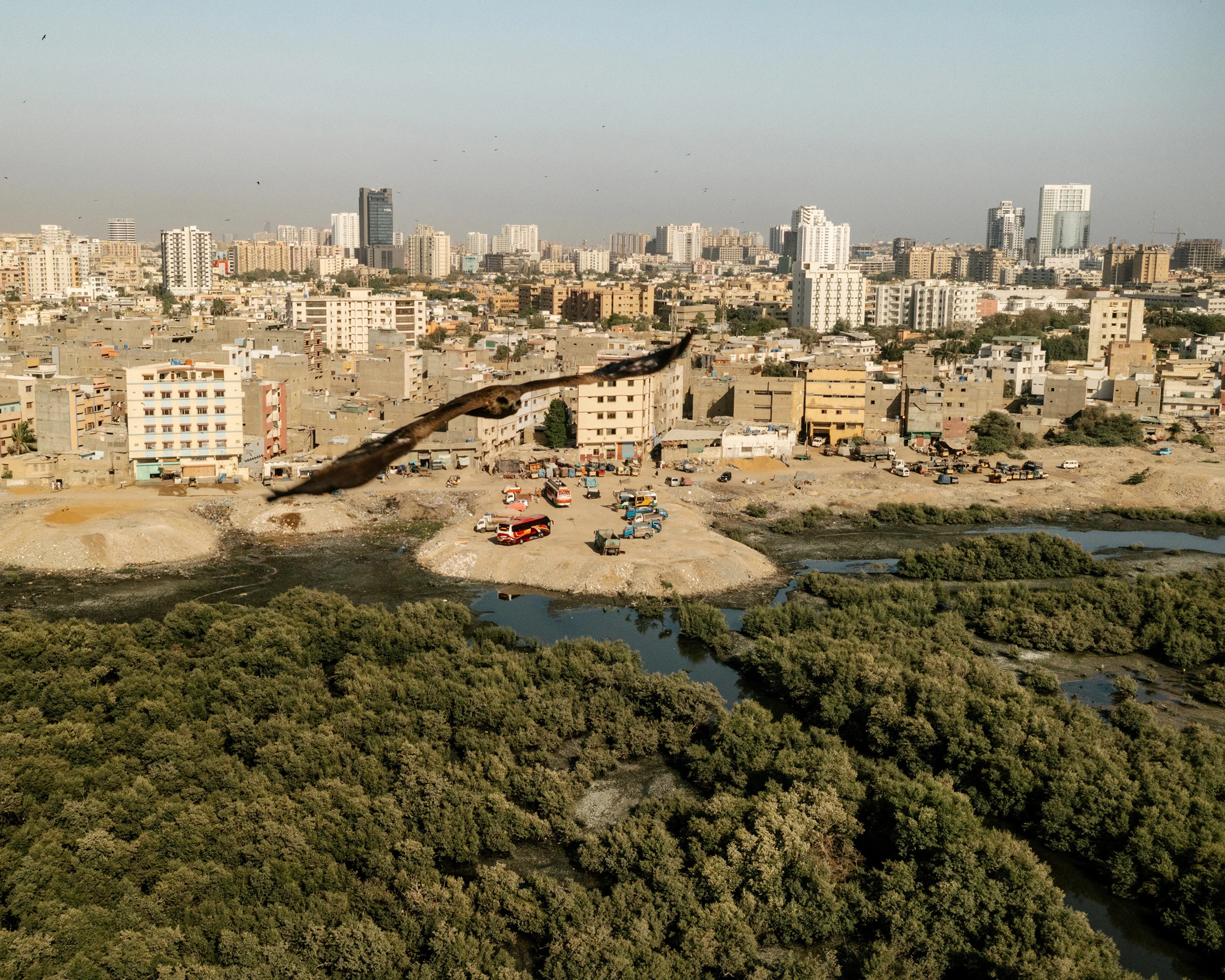
On a recent Tuesday morning, several dozen Pakistani schoolchildren barreled down a wooden walkway into a thicket of mangroves. They jostled for space at a small viewing platform and eagerly pointed out fish darting between the exposed tree roots. As the rising tide inched ever closer to the crabs and mudskippers resting on shore, the children’s guide launched into a detailed explanation of the unique marine ecosystem fringing the coast, and how it provided both a vital nursery for ocean fish and protection from tsunamis and storm surges. If mangroves are so important, wondered one child out loud, “Why are they in here, and not out there?” By in here, she meant the soaring glass atrium of Karachi’s newly opened MagnifiScience Centre, where the high-tech centerpiece is the living mangrove exhibit—complete with real trees, live fish, plastic crabs, and an accelerated tidal ebb and flow maintained by underground water pumps. Out there is the crowded coastal megacity of Karachi, where all but a few of the mangrove forests that once defined this Indus Delta port town have been chopped down, paved over, and developed into ocean-view high-rises, golf courses, and container ports.
Mangrove forests are not just any old woodlands. They are one of the most powerful natural tools we have to simultaneously reduce climate-change risks and protect ourselves from the impacts that are already here—and those to come. This is especially true for warm coastal cities like Karachi.
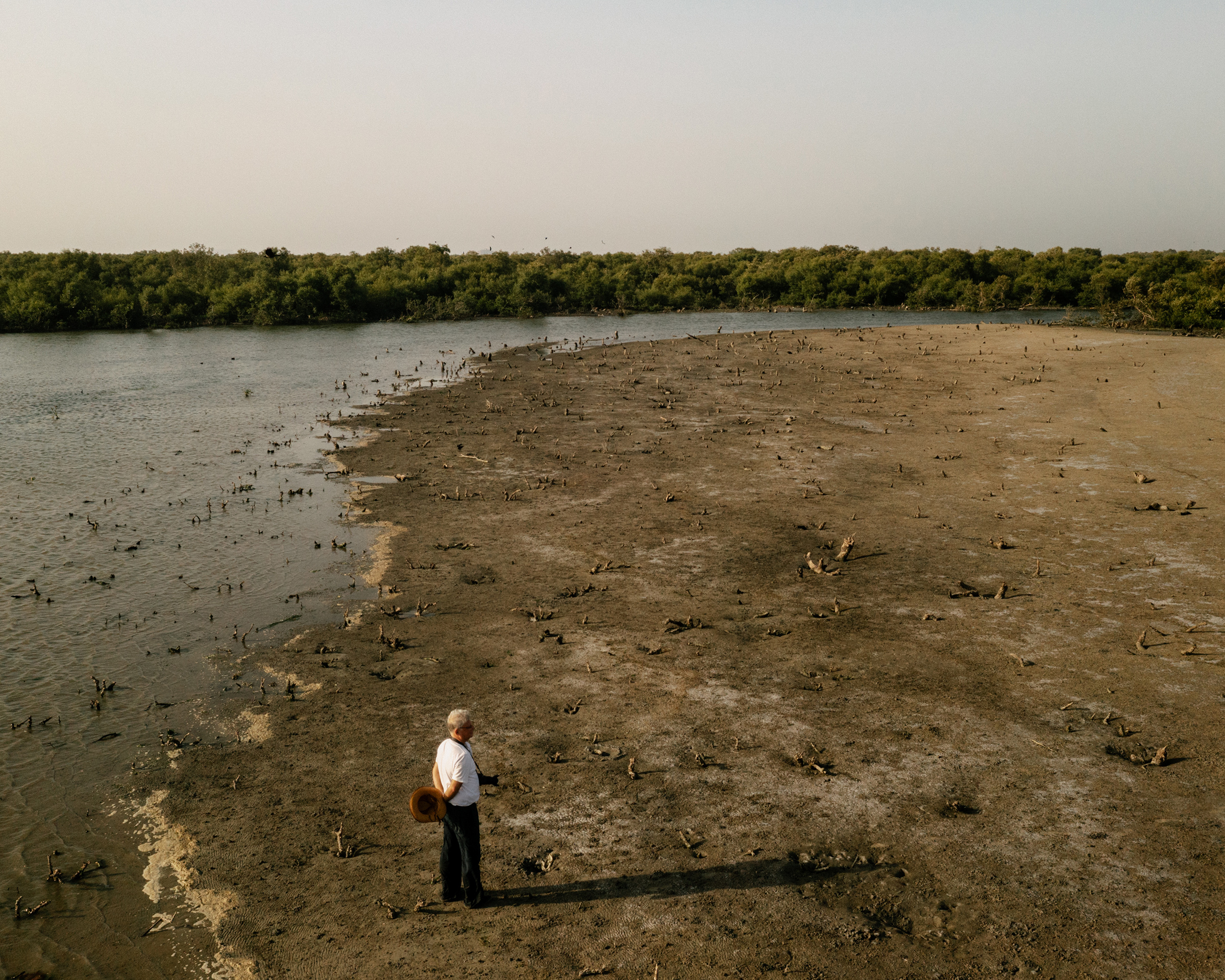
In what’s left of Karachi’s original mangrove swamps, one of the museum exhibit’s designers is documenting, in forensic detail, the piecemeal destruction of a once pristine forest for his weekly social media dispatch. “There are days out here when you can’t hear a single bird because the chainsaws are so loud,” Tariq Qaiser murmurs into his iPhone with a David Attenborough cadence as he pans the camera over a clear-cut swath of stump-studded silt. Just a few weeks ago, he continues, “the tree canopy was overhead, and the light filtered through as if you were in a cathedral. Now …” He shakes his head mutely as he steers his small boat past a pile of cut branches destined for the city’s back-alley firewood markets and charcoal kilns.
Pakistan’s Indus River Delta is home to hundreds of thousands of acres of mangroves, and the country boasts one of the most successful mangrove reforestation projects in the world. But only a few remain in the economic capital of Karachi, where 16 million residents are corralled onto low-lying spits of land, many of which have been reclaimed from the sea. Qaiser, an architect of some renown, with thick gray hair, horn-rimmed glasses, and a late-middle-age paunch he attributes to COVID-enforced inactivity, has spent the past half decade fighting for the protection and expansion of a small patch of mangroves rooted at the tip of a tidal island directly facing some of Karachi’s most valuable land.
Developers envision landfilling Bundal Island, linking it to the mainland via a causeway, and turning it into prime real estate for an ever expanding city. Qaiser sees the island as the terrestrial incarnation of Abdullah Shah Ghazi, the patron Sufi saint of Karachi, who protects the city from storms, disease, and hunger. “I don’t want to fight with the developers,” Qaiser says. “But I do want them to think about the future of this city.” In a congested metropolis already plagued by the urban heat-island effect, in which endless expanses of concrete buildings and paved roads amplify the already sweltering temperatures by several degrees, trees are a threatened resource. Mangroves, says Qaiser, “are our air-conditioning, our oxygen supply. If you just increase the mangrove cover, Karachi’s next 30 years will be much better than if you build over them.”
The world will be better as well. By sequestering carbon, mangroves help slow climate change. They also protect locals against some of its effects, like rising sea levels and increasingly severe storms. Qaiser’s quest to save Karachi’s last intact mangrove forest comes against the backdrop of a growing global movement to preserve those that remain and replace what has been lost. In this battle, his weapon of choice is a series of short, stunning nature videos filmed in and around Karachi’s mangroves. He disseminates them weekly via Whats-App to some 2,000 contacts, and urges his followers to share widely. And they do. At 197 and counting, his 90-second dispatches (the maximum allowed by WhatsApp) have raised awareness among the urban elite, and have in some instances spurred officials to act, sending in security to stop illegal woodcutters. But in a city where land is at a premium, development is the bigger threat. Keeping Bundal Island intact means educating a new generation of Karachiites about the value of not just the mangroves but the entire surrounding ecosystem. That was the impetus behind the museum’s mangrove exhibit, says Qaiser. The problem is that by the time the schoolkids are in a position to make any decisions, it might be too late—not for Pakistan’s mangroves, which are flourishing, but for Karachi’s, which are not.
Stretched over approximately 600 acres, Bundal Island’s mangroves account for less than 0.2% of Pakistan’s coastal forest cover. They are largely inaccessible, visited primarily by private boat owners like Qaiser, illegal woodcutters, and camel herders who swim their animals over to graze at low tide. From Karachi, the dense thicket appears as a faint green line on the horizon, perpetually smudged by haze and smog. Given the immensity of Pakistan’s problems—political instability, economic crisis, the perpetual threat of terrorism, and the deleterious impact of climate change—saving this tiny sliver of an island may seem a quixotic exercise, tilting at construction cranes when far more dangerous threats loom.
Yet Qaiser girds for battle as if the very future of his city were at stake. In a way it is.
Often dismissed as mosquito-ridden, unproductive swamps, mangroves are in fact bio-diverse ecosystems whose protection delivers more carbon-sequestration bang per buck than almost any other intervention. Though they occupy only 0.5% of the earth’s shorelines, they account for up to 15% of coastal carbon-storage capacity, holding the equivalent of more than 21 gigatons of CO2, roughly as much as China currently emits over two years. The salt-tolerant trees are adept at filtering pollutants from seawater, and their extensive root systems are important nurseries for fish, home to a wide variety of crustaceans, and the feeding grounds for migrating birds, crocodiles, and even big cats—mangrove aficionados claim that Rudyard Kipling’s fictional The Jungle Book, with panther Bagheera and tiger Shere Khan, must have been set in the Bay of Bengal’s Sundarbans, the largest contiguous mangrove forest in the world. Read More…