The Ultimate Guide To Dating In France
-
 Loading...
 - felicity mariam
- 07 Feb 2022
- 407 Views
- 0 Like
- 0 Comment
The French tend to not make a date too romantic and prefer to keep things casual by incorporating finding love into their everyday lives. So just in time for Valentine’s Day, read on to learn more about the French dating system.
How Dating is Different in France
Dating in France is very common; according to this study, 91% of the French say to have had at least one “date” in their lifetime —a “rendez-vous” preceding a possible romantic relationship. However, in France, there is no proper dating protocol or dating typical scenario as there is no word for “dating” in French.
Indeed, a “date” could be translated in French by “un rendez-vous galant” or a “rendez-vous amoureux” (which is rarely used) or simply a “rendez-vous”. But if a simple “rendez-vous” means a romantic date, it can also mean a very formal appointment or a non-romantic meeting with friends and family. The verb “to date” can also be translated in French by “voir / frequenter quelqu’un(e)” which literally means “seeing someone”. Nowadays, the English word “date” is an integral part of the French language, but this doesn’t mean the American concept of “dating” goes without saying.
The French Won’t Ask a Stranger on a Date
Instead, they like to get to know each other before moving on to date or having a romantic relationship. That is why in France, the concept of the blind date is inexistent. The French generally date someone that they had previously met either through their friends or social circles, meetup groups, local events, but also through online dating site and apps.
Online dating sites, or apps —like Tinder, Happn, Meetic, etc.— are more and more popular for both men and women. According to this study, 38% of the French say they have already used an app or a dating site, and this is even higher among men (45%) or the young (59% among those under 35).
Online dating sites and apps make no exception: a more or less long exchange by messages is necessary before even considering a first date. French dating culture requires a certain level of familiarity and the French need to get to know someone well before asking them out on a date. By the way, French women tend to ask men on a date as much as the opposite.
The First Date is Kept Casual
The French prefer to keep things casual, even during the initial stages of getting to know someone. In France, there is no typical dating scenario that involves a first, second, third, and fourth date with a sort of “dating code”. Instead, the first date is a way to get to know a person and to develop a relationship before becoming more involved. So if you have a first date with a French man or woman, don’t expect any romantic gestures or any indication that you are officially dating, this will not happen.
The Perfect First Date Location
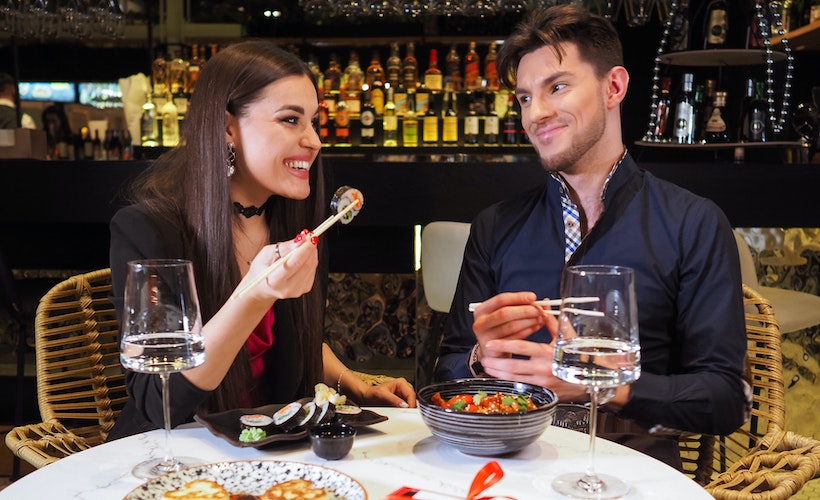
In France, the first date will likely involve a coffee or a drink (at a brasserie or café) or even sometimes a dinner at a nice restaurant. According to this study, 35% of the French choose a restaurant as their first date location, 34% rather a bar or a café ( 37% among those under 35), 17% a public place such as a street or a park, and 13% a more specific activity.
An activity for a first date is a great way to spend some time together, but it doesn’t really feel like a date so there will be less pressure. The French generally opt for a comedy show, a concert, or a museum. The youngest prefer less conventional activities, such as cooking classes, sports classes, or discovery flights. Then, if the first date goes great it will be easy to ask your date out on a more formal date.
Who Should Pay The Bill
Talking openly about money is considered vulgar in France. That is why splitting the bill at the end of a meal isn’t a common practice —and asking to do so could make you appear miser. According to this study, 15% of French people agree that it is up to the person who asked to go on a date to pay the bill. But in many cases, the man will pay for dinner on the first date, and the woman might pay the next time. 57% of French men believe that they must pay the bill at the end of the date, whereas only 30% of them consider that the bill should be split. Read More…