Thousands of native plants are unphotographed, and citizen scientists can help fill the gaps

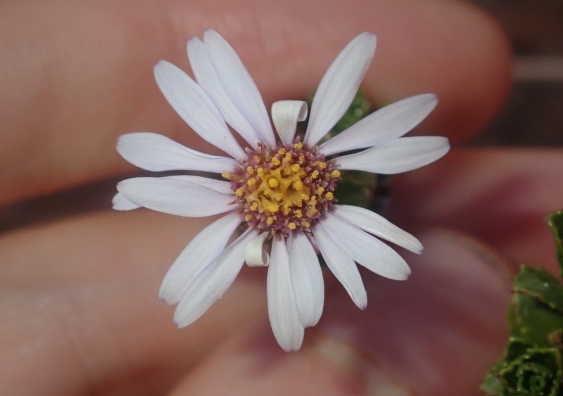
Scientists have documented plant species for centuries to help us understand and protect the incredible diversity of flora in our world. But according to new research, many have never actually been photographed in their natural habitats – and that’s a problem.
Researchers from UNSW Sydney and the Australian Institute of Botanical Science, part of the Royal Botanic Gardens and Domain Trust, surveyed 33 major online databases of plant photographs to examine the photographic record of Australian plant species. The findings, published in New Phytologist, reveal out of 21,077 native Australian vascular plant species, almost 20 per cent lack a verifiable photograph.
Lead author of the study and UNSW Science PhD student Thomas Mesaglio says Australia is one of the richest areas in the world for native species.
“It was surprising to see how many plant species had just line drawings, illustrations, paintings, or even no media at all,” Mr Mesaglio says.
Dr Hervé Sauquet, co-author of the study and Senior Research Scientist at the Australian Institute of Botanical Science, is based at the National Herbarium of New South Wales.
“All species of plants ultimately rely on specimens in herbarium collections for their identification,” Dr Sauquet says. “Yet, even in this digital age where most herbarium specimens have been scanned and are accessible on the web, photos of live plants in the wild remain in critical need.”
Senior author of the study from UNSW Science Associate Professor Will Cornwell says a lack of detailed photos can have real consequences. Many plant species that are difficult to identify in the wild may go extinct if scientists cannot properly identify them with the help of photos.
“We had assumed every plant species would have simply been photographed by someone, somewhere, throughout history. But it turns out this isn’t the case,” says A/Prof. Cornwell.
“This is where citizen scientists can come in and help us fill this gap with their photos.” Read More…