Home Upload Photo Upload Videos Write a Blog Analytics Messaging Streaming Create Adverts Creators Program
Bebuzee Afghanistan Bebuzee Albania Bebuzee Algeria Bebuzee Andorra Bebuzee Angola Bebuzee Antigua and Barbuda Bebuzee Argentina Bebuzee Armenia Bebuzee Australia Bebuzee Austria Bebuzee Azerbaijan Bebuzee Bahamas Bebuzee Bahrain Bebuzee Bangladesh Bebuzee Barbados Bebuzee Belarus Bebuzee Belgium Bebuzee Belize Bebuzee Benin Bebuzee Bhutan Bebuzee Bolivia Bebuzee Bosnia and Herzegovina Bebuzee Botswana Bebuzee Brazil Bebuzee Brunei Bebuzee Bulgaria Bebuzee Burkina Faso Bebuzee Burundi Bebuzee Cabo Verde Bebuzee Cambodia Bebuzee Cameroon Bebuzee Canada Bebuzee Central African Republic Bebuzee Chad Bebuzee Chile Bebuzee China Bebuzee Colombia Bebuzee Comoros Bebuzee Costa Rica Bebuzee Côte d'Ivoire Bebuzee Croatia Bebuzee Cuba Bebuzee Cyprus Bebuzee Czech Republic Bebuzee Democratic Republic of the Congo Bebuzee Denmark Bebuzee Djibouti Bebuzee Dominica Bebuzee Dominican Republic Bebuzee Ecuador Bebuzee Egypt Bebuzee El Salvador Bebuzee Equatorial Guinea Bebuzee Eritrea Bebuzee Estonia Bebuzee Eswatini Bebuzee Ethiopia Bebuzee Fiji Bebuzee Finland Bebuzee France Bebuzee Gabon Bebuzee Gambia Bebuzee Georgia Bebuzee Germany Bebuzee Ghana Bebuzee Greece Bebuzee Grenada Bebuzee Guatemala Bebuzee Guinea Bebuzee Guinea-Bissau Bebuzee Guyana Bebuzee Haiti Bebuzee Honduras Bebuzee Hong Kong Bebuzee Hungary Bebuzee Iceland Bebuzee India Bebuzee Indonesia Bebuzee Iran Bebuzee Iraq Bebuzee Ireland Bebuzee Israel Bebuzee Italy Bebuzee Jamaica Bebuzee Japan Bebuzee Jordan Bebuzee Kazakhstan Bebuzee Kenya Bebuzee Kiribati Bebuzee Kuwait Bebuzee Kyrgyzstan Bebuzee Laos Bebuzee Latvia Bebuzee Lebanon Bebuzee Lesotho Bebuzee Liberia Bebuzee Libya Bebuzee Liechtenstein Bebuzee Lithuania Bebuzee Luxembourg Bebuzee Madagascar Bebuzee Malawi Bebuzee Malaysia Bebuzee Maldives Bebuzee Mali Bebuzee Malta Bebuzee Marshall Islands Bebuzee Mauritania Bebuzee Mauritius Bebuzee Mexico Bebuzee Micronesia Bebuzee Moldova Bebuzee Monaco Bebuzee Mongolia Bebuzee Montenegro Bebuzee Morocco Bebuzee Mozambique Bebuzee Myanmar Bebuzee Namibia Bebuzee Nauru Bebuzee Nepal Bebuzee Netherlands Bebuzee New Zealand Bebuzee Nicaragua Bebuzee Niger Bebuzee Nigeria Bebuzee North Korea Bebuzee North Macedonia Bebuzee Norway Bebuzee Oman Bebuzee Pakistan Bebuzee Palau Bebuzee Panama Bebuzee Papua New Guinea Bebuzee Paraguay Bebuzee Peru Bebuzee Philippines Bebuzee Poland Bebuzee Portugal Bebuzee Qatar Bebuzee Republic of the Congo Bebuzee Romania Bebuzee Russia Bebuzee Rwanda Bebuzee Saint Kitts and Nevis Bebuzee Saint Lucia Bebuzee Saint Vincent and the Grenadines Bebuzee Samoa Bebuzee San Marino Bebuzee São Tomé and Príncipe Bebuzee Saudi Arabia Bebuzee Senegal Bebuzee Serbia Bebuzee Seychelles Bebuzee Sierra Leone Bebuzee Singapore Bebuzee Slovakia Bebuzee Slovenia Bebuzee Solomon Islands Bebuzee Somalia Bebuzee South Africa Bebuzee South Korea Bebuzee South Sudan Bebuzee Spain Bebuzee Sri Lanka Bebuzee Sudan Bebuzee Suriname Bebuzee Sweden Bebuzee Switzerland Bebuzee Syria Bebuzee Taiwan Bebuzee Tajikistan Bebuzee Tanzania Bebuzee Thailand Bebuzee Timor-Leste Bebuzee Togo Bebuzee Tonga Bebuzee Trinidad and Tobago Bebuzee Tunisia Bebuzee Turkey Bebuzee Turkmenistan Bebuzee Tuvalu Bebuzee Uganda Bebuzee Ukraine Bebuzee United Arab Emirates Bebuzee United Kingdom Bebuzee Uruguay Bebuzee Uzbekistan Bebuzee Vanuatu Bebuzee Venezuela Bebuzee Vietnam Bebuzee World Wide Bebuzee Yemen Bebuzee Zambia Bebuzee Zimbabwe
Blog Image

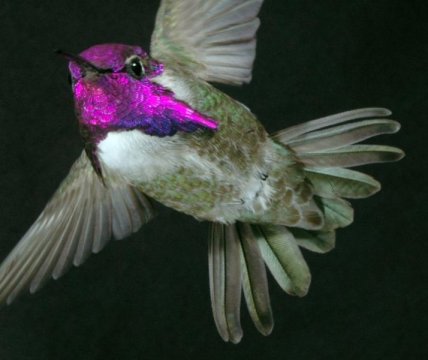
To impress females, Costa's hummingbirds 'sing' with their tail feathers

Male Costa's hummingbirds, like the one shown here, court females using a high-speed dive in which they sing with their tail feathers. Credit: Christopher Clark, UC Riverside

In the world of Costa's hummingbirds, it's not size that matters -- it's sound. During breeding season, male Costa's perform a high-speed dive during which they "sing" to potential mates using their tail feathers.

Unlike related hummingbird species, Costa's perform their dives to the side of females, rather than in front of them. In a paper published today in Current Biology, researchers at the University of California, Riverside show this trajectory minimizes an audible Doppler sound that occurs when the Costa's dive. The Doppler effect is familiar to most people as the change in tone of an ambulance siren as the vehicle passes by.

The findings suggest that males can strategically manipulate the way females perceive their displays by minimizing the Doppler sound. This deprives females of an acoustic indicator that would otherwise reveal the speed of their dives.

"Recent studies in birds and other animals suggest that females prefer higher speeds during male athletic displays. By concealing their speed, males are not necessarily cheating, but instead have evolved this placement of trajectory out of female choice," said Christopher Clark, who led the study. Clark is an assistant professor of biology in UCR's College of Natural and Agricultural Sciences.

Clark and co-author Emily Mistick, a former research assistant at UCR, showed that males aim their sound toward potential mates by twisting their tail vertically by up to 90 degrees. In previous research, Clark has shown that the tail song is made by the flutter of the outer tail feathers.

"We don't know why males twist only half of their tails toward the females, but it may be due to anatomical limitations that prevent them from twisting their whole tail around," Clark said.

Clark and Mistick used a device called an acoustic camera to record Costa's dives. They also conducted experiments in a wind tunnel to examine how the birds' speed and direction influence the sounds they make. Curiously, they found it was difficult to measure the velocity of the Costa's dive from the sound produced.

"Once I realized it wasn't trivial for a scientist to measure, I realized it wouldn't be trivial for a female to measure either," Clark said.

Clark said the findings add to the literature about how male animals use athletic displays to attract females.

"Most research has focused on static male attributes, such as bright colors or elongated tails, but our research shows that dynamic displays may be just as important, and males strategically control these performances to show themselves in the best possible light," Clark said.

Previous Post

Tiny distortions in universe's oldest light reveal strands in cosmic web

Next Post

Animal images used in marketing may skew public perception about their survival risks

Comments