Tree therapy: How to photograph rainforests
-
 Loading...
 - Valeria Barrera
- 16 Feb 2023
- 67 Views
- 0 Like
- 0 Comment
Explore patterns and details
Opening your eyes to naturally occurring patterns and the details that support the wider landscape can lead to creative photos.
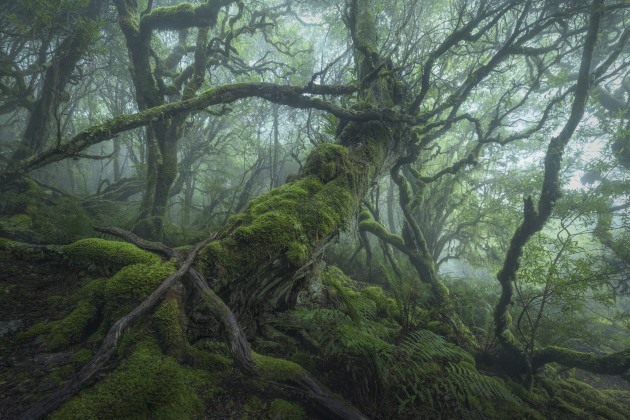
This approach ties into the concept of slow photography I mentioned earlier. While big, gnarly trees are easier to spot due to their obvious visual impact, the subtleties can be an enjoyable challenge to capture.

One of the best ways to look for these compositions is to see the rainforest in lines, shapes, colour, and texture, rather than its literal nature. To the untrained eye, a group of trees off in the distance may be just that, nothing more. To you, they could be an exploration of parallel vertical lines. A leaf fluttering in the sunlight could be a study of shape and silhouette; lichen-covered bark, an exemplification of textures.
Often defined as “intimate landscapes”, these are a great way to diversify your portfolio and get to know the rainforest at a deeper level. As eye-grabbing as the wide-angle images are, sometimes an image that whispers rather than shouts is most powerful.

Experiment with abstraction
Impressionism and abstraction in art has been around for over 150 years. Though it’s not as commonly associated with photography, playing with abstraction can be a great way to get creative in the rainforest.
The most common method for abstraction in photography is using intentional camera movement (ICM). This is the practice of slowing down your shutter speed – anything from 1/30s to 1s – and deliberately moving the camera to induce motion blur.

Since trees are vertical shapes, moving your camera vertically usually produces the most pleasing results. A pan head tripod can be used to create smooth lines. I personally prefer to have a bit more fun with it, going handheld for a more organic and textured result. I enjoy a shutter speed somewhere between 1/5s and 1/10s, with aperture and ISO simply balancing exposure.
A second method of abstraction is using multiple exposures (ME). This consists of merging two photos together, either in-camera or in Photoshop. The possibilities here are endless – from creating floating islands of foliage, to complete abstractions reminiscent of scraping thick oil paint on canvas. Read More…