Home Upload Photo Upload Videos Write a Blog Analytics Messaging Streaming Create Adverts Creators Program
Bebuzee Afghanistan Bebuzee Albania Bebuzee Algeria Bebuzee Andorra Bebuzee Angola Bebuzee Antigua and Barbuda Bebuzee Argentina Bebuzee Armenia Bebuzee Australia Bebuzee Austria Bebuzee Azerbaijan Bebuzee Bahamas Bebuzee Bahrain Bebuzee Bangladesh Bebuzee Barbados Bebuzee Belarus Bebuzee Belgium Bebuzee Belize Bebuzee Benin Bebuzee Bhutan Bebuzee Bolivia Bebuzee Bosnia and Herzegovina Bebuzee Botswana Bebuzee Brazil Bebuzee Brunei Bebuzee Bulgaria Bebuzee Burkina Faso Bebuzee Burundi Bebuzee Cabo Verde Bebuzee Cambodia Bebuzee Cameroon Bebuzee Canada Bebuzee Central African Republic Bebuzee Chad Bebuzee Chile Bebuzee China Bebuzee Colombia Bebuzee Comoros Bebuzee Costa Rica Bebuzee Côte d'Ivoire Bebuzee Croatia Bebuzee Cuba Bebuzee Cyprus Bebuzee Czech Republic Bebuzee Democratic Republic of the Congo Bebuzee Denmark Bebuzee Djibouti Bebuzee Dominica Bebuzee Dominican Republic Bebuzee Ecuador Bebuzee Egypt Bebuzee El Salvador Bebuzee Equatorial Guinea Bebuzee Eritrea Bebuzee Estonia Bebuzee Eswatini Bebuzee Ethiopia Bebuzee Fiji Bebuzee Finland Bebuzee France Bebuzee Gabon Bebuzee Gambia Bebuzee Georgia Bebuzee Germany Bebuzee Ghana Bebuzee Greece Bebuzee Grenada Bebuzee Guatemala Bebuzee Guinea Bebuzee Guinea-Bissau Bebuzee Guyana Bebuzee Haiti Bebuzee Honduras Bebuzee Hong Kong Bebuzee Hungary Bebuzee Iceland Bebuzee India Bebuzee Indonesia Bebuzee Iran Bebuzee Iraq Bebuzee Ireland Bebuzee Israel Bebuzee Italy Bebuzee Jamaica Bebuzee Japan Bebuzee Jordan Bebuzee Kazakhstan Bebuzee Kenya Bebuzee Kiribati Bebuzee Kuwait Bebuzee Kyrgyzstan Bebuzee Laos Bebuzee Latvia Bebuzee Lebanon Bebuzee Lesotho Bebuzee Liberia Bebuzee Libya Bebuzee Liechtenstein Bebuzee Lithuania Bebuzee Luxembourg Bebuzee Madagascar Bebuzee Malawi Bebuzee Malaysia Bebuzee Maldives Bebuzee Mali Bebuzee Malta Bebuzee Marshall Islands Bebuzee Mauritania Bebuzee Mauritius Bebuzee Mexico Bebuzee Micronesia Bebuzee Moldova Bebuzee Monaco Bebuzee Mongolia Bebuzee Montenegro Bebuzee Morocco Bebuzee Mozambique Bebuzee Myanmar Bebuzee Namibia Bebuzee Nauru Bebuzee Nepal Bebuzee Netherlands Bebuzee New Zealand Bebuzee Nicaragua Bebuzee Niger Bebuzee Nigeria Bebuzee North Korea Bebuzee North Macedonia Bebuzee Norway Bebuzee Oman Bebuzee Pakistan Bebuzee Palau Bebuzee Panama Bebuzee Papua New Guinea Bebuzee Paraguay Bebuzee Peru Bebuzee Philippines Bebuzee Poland Bebuzee Portugal Bebuzee Qatar Bebuzee Republic of the Congo Bebuzee Romania Bebuzee Russia Bebuzee Rwanda Bebuzee Saint Kitts and Nevis Bebuzee Saint Lucia Bebuzee Saint Vincent and the Grenadines Bebuzee Samoa Bebuzee San Marino Bebuzee São Tomé and Príncipe Bebuzee Saudi Arabia Bebuzee Senegal Bebuzee Serbia Bebuzee Seychelles Bebuzee Sierra Leone Bebuzee Singapore Bebuzee Slovakia Bebuzee Slovenia Bebuzee Solomon Islands Bebuzee Somalia Bebuzee South Africa Bebuzee South Korea Bebuzee South Sudan Bebuzee Spain Bebuzee Sri Lanka Bebuzee Sudan Bebuzee Suriname Bebuzee Sweden Bebuzee Switzerland Bebuzee Syria Bebuzee Taiwan Bebuzee Tajikistan Bebuzee Tanzania Bebuzee Thailand Bebuzee Timor-Leste Bebuzee Togo Bebuzee Tonga Bebuzee Trinidad and Tobago Bebuzee Tunisia Bebuzee Turkey Bebuzee Turkmenistan Bebuzee Tuvalu Bebuzee Uganda Bebuzee Ukraine Bebuzee United Arab Emirates Bebuzee United Kingdom Bebuzee Uruguay Bebuzee Uzbekistan Bebuzee Vanuatu Bebuzee Venezuela Bebuzee Vietnam Bebuzee World Wide Bebuzee Yemen Bebuzee Zambia Bebuzee Zimbabwe
Blog Image

Trophy hunting may cause extinction in a changing environment

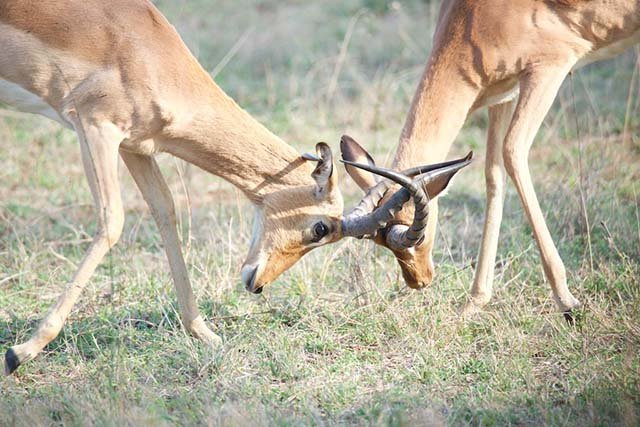
Male impala fighting. Credit: Rob Knell

Trophy hunting and other activities involving the targeting of high-quality male animals could lead to the extinction of certain species faced with changing environmental conditions, according to new research from Queen Mary University of London (QMUL).

Male animals with large secondary sexual traits, such as antelope horns, deer antlers and lions' manes are often targeted by hunters for recreational purposes. Similarly, some insect collectors will pay high prices for specimens of animals such as stag beetles because of their large secondary sexual traits.

These well-ornamented individuals tend to be the most evolutionarily fit so if they are removed then the best genes are taken out of the population. The researchers predict that in some circumstances, when an animal population is faced with a changing environment, harvesting rates of as low as five per cent of these high quality males can cause extinction.

The study was published in Proceedings of the Royal Society B: Biological Sciences.

Lead author Dr Rob Knell, from QMUL's School of Biological and Chemical Sciences, said: "This demonstration that trophy hunting can potentially push otherwise resilient populations to extinction when the environment changes is concerning. Because these high-quality males with large secondary sexual traits tend to father a high proportion of the offspring, their 'good genes' can spread rapidly, so populations of strongly sexually selected animals can adapt quickly to new environments. Removing these males reverses this effect and could have serious and unintended consequences.

"We found that 'selective harvest' has little effect when the environment is relatively constant, but environmental change is now a dangerous reality across the globe for considerable numbers of species."

Trophy hunting is an important industry -- a greater land area of Sub-Saharan Africa is conserved for hunting than is protected in national parks -- and it is thought to have little effect on well-managed harvested populations because off-take rates are low and usually only the males are targeted.

Using a computer simulation model, however, the researchers were able to predict the impact of selectively targeting males on the basis of their secondary sexual traits and how the environment affects this.

In addition to the careful reactive management of harvested populations, they suggest removing only older males which have already had an opportunity to reproduce.

Dr Knell said: "Our results clearly show that age restrictions on harvest which allow males to breed before they are taken is effective at reducing the impact of selective harvest on adapting populations.

"When properly regulated trophy hunting can be a powerful force for conservation which is why we're suggesting a different management approach as opposed to calling for a ban."

Trophy hunters and insect collectors are not the only people targeting males on the basis of their secondary sexual ornaments. Many animal populations harvested for food are managed by only allowing the harvest of males and in at least some of these, such as certain crab populations, males with big secondary sexual traits are targeted.

Furthermore, elephant tusks function partly as secondary sexual traits and poachers will specifically target elephants based on tusk size. This research suggests that these populations might be at more risk than was previously thought.

Previous Post

Injectable gel helps heart muscle regenerate after heart attack

Next Post

Turbulence in astrophysical plasmas

Comments