Turning Waste into Treasure: Gadiaba Kodio's Mission to Recycle Africa's Waste
-
 Loading...
 - Dzifa Nsiah
- 20 Dec 2024
- 46 Views
- 0 Like
- 0 Comment
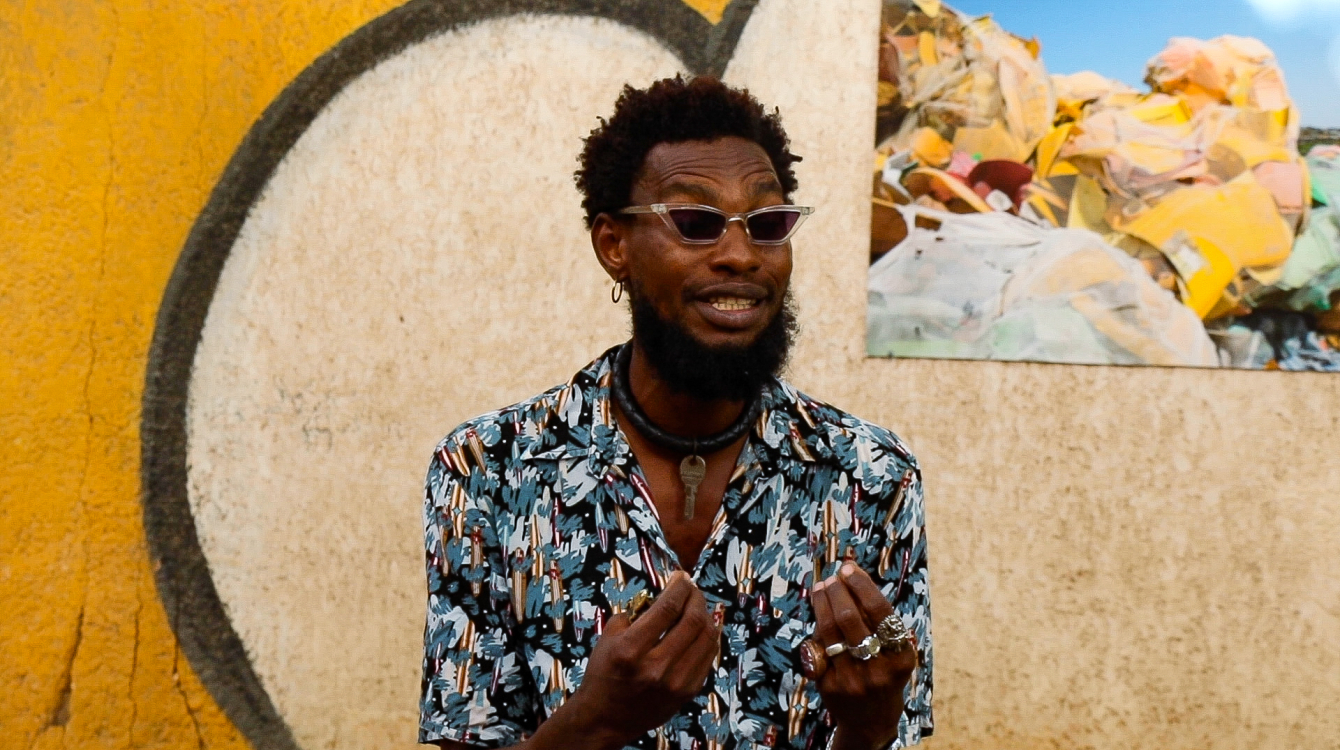
Malian artist Gadiaba Kodio is on a transformative mission to reimagine Africa’s waste, blending art and activism to spark an eco-conscious revolution. His powerful works symbolize the disastrous consequences of environmental neglect, impacting both animals and humans alike. “Living in the capital, we don't always grasp the issues surrounding plastic,” Kodio explains, highlighting the disconnect many urban dwellers have with the realities of waste.
Kodio uses sheep as a metaphor for the cycle of pollution, illustrating how animals ingest waste that ultimately enters the human food chain, affecting our health. As the founder of Chez Toi Design, a gallery and art studio dedicated to recycling and environmentally responsible creation, he aims to change the perception of waste across Africa.
Growing up in a modest neighborhood of Bamako, Mali, Kodio lived next to a large landfill. “At times, I could find little treasures among the garbage,” he recalls. With limited resources, he began crafting toys and objects from discarded materials. “My family couldn’t always give me little things that the other kids in the neighborhood had, so I would find ways to make things for myself,” he says. This youthful ingenuity has blossomed into a lifelong passion for creation and environmental preservation.
At Chez Toi Design, everyday objects are reinvented. Old fridges become wardrobes, worn-out bathtubs transform into comfortable armchairs, and discarded microwave doors are turned into elegant mirrors. Holding up a chair made from a reused oil drum, he emphasizes, “We already have everything. They've already created everything. The idea behind Chez Toi Design is to reclaim what has already been created by industry, to give it our absolute value, so that we create less.”
In one of his innovative projects, he repurposes old suitcases into trash cans, prompting people to rethink the potential of everyday objects and reduce waste. “Look at the suitcase—it wasn't always like that. In fact, all suitcases bring us waste. When you buy a sausage, how many times do you wrap it? How many times do you pack cheese? If you buy new clothes, how many times do you pack them?” This perspective encourages a shift in how we view consumption and waste.
Kodio's philosophy is both simple and profound: the continuous production of new items is unnecessary and harmful. “I find it's not worth creating new things, new objects again because we already have everything in everyday life,” he asserts. His work challenges consumerist culture and highlights the potential of recycling to address environmental issues.
Africa faces a paradox; despite being rich in resources, the continent grapples with its own waste as well as imported waste from other countries. “We get rubbish from other countries—old fridges, old TVs, old cars that still have garbage in them,” laments Kodio. His concerns resonate on a larger scale, as echoed by UN Secretary-General António Guterres at the recent COP29 summit, where he called for a fundamental shift in Africa’s economic model.
Education is central to Kodio's vision for the future. He dreams of establishing a training center in Mali to teach young people how to transform waste into valuable objects. “Training today is the key to the future. It's the key to fighting all the climate problems we have today,” he asserts. By equipping young people with skills and awareness, he hopes to foster a culture of sustainability across the continent.
Kodio's work has already begun to inspire others. He shares stories of children who, after seeing his creations, start making their own from recycled materials. “For me, this is no small gesture,” he says proudly. “And the child will never forget that memory. Rather, he'll keep thinking: ‘If I can really make a torch, maybe I can create a lamp next. If I can make a lamp, perhaps tomorrow I'm coming up with a vehicle.’”
Despite the admiration his art garners, Kodio emphasizes that mere appreciation is not enough. “People are here, they appreciate it. But the idea isn't that they appreciate it; it's that they can do it at home,” he insists. His aim is to inspire concrete change, encouraging individuals to rethink waste and see the potential in what is often discarded.
Standing next to his sheep installation, Kodio delivers a sobering reminder: “If you aren't careful, you're destroying the whole family.” His message serves as both a warning and a call to action—a testament to what can be achieved when creativity meets conviction. Through his work, Kodio is not only transforming waste into art but also igniting a movement toward environmental consciousness and sustainability in Africa.