Two Chinese snooker players banned for life for match-fixing, eight others suspended
-
 Loading...
 - Donghai Huang
- 08 Jun 2023
- 75 Views
- 0 Like
- 0 Comment
Two professional snooker players from China have received lifetime bans, while eight others have been suspended, following their involvement in match-fixing and other offenses, as announced by the governing body of the sport. This punishment represents the latest crisis to hit professional sports in China, which has witnessed numerous match-fixing scandals across various disciplines in recent years. Traditionally, snooker has been dominated by players from the United Kingdom; however, there has been a surge in Chinese talent in recent times, leading to an increase in the sport's popularity in the country.
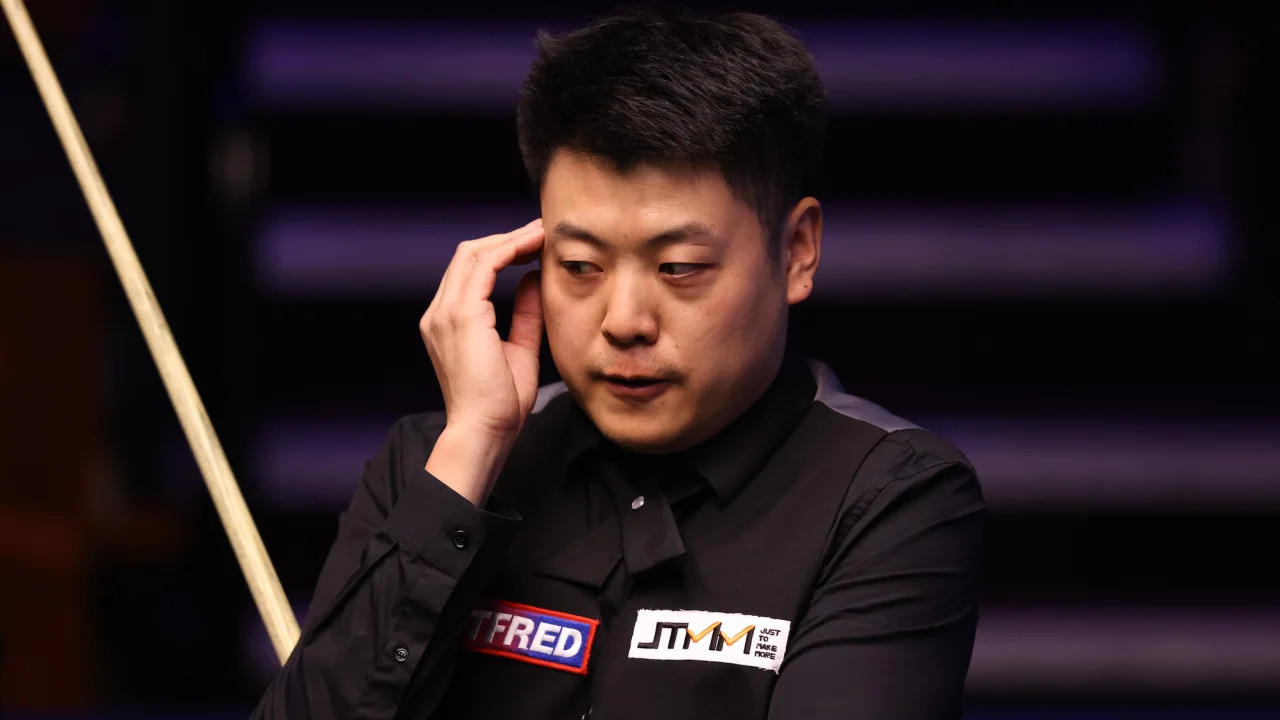
Liang Wenbo and Li Hang have been handed lifetime bans for their violations of conduct regulations, while the remaining eight players have pleaded guilty and received substantial suspensions for their involvement, according to the World Professional Billiards and Snooker Association (WPBSA). Among these players are Zhao Xintong and Yan Bingtao, who are regarded as some of the brightest talents in snooker and have been banned for one year and eight months, and five years, respectively. Lu Ning, Zhao Jianbo, Chang Bingyu, Bai Langning, Chen Zifan, and Zhang Jiangkang have also been banned for periods ranging from two to eight years, with the duration reduced due to their early admission of guilt. The disciplinary hearing occurred between April and May of this year, following an alert from the International Betting Integrity Association (IBIA) in August of last year. Liang was the first Chinese player to be suspended in connection with the investigation in October.
All ten players have until June 20 to lodge an appeal against the decisions. In its summary, the WPBSA determined that Li and Liang were the main instigators of match-fixing in multiple matches that took place between July and September of the previous year. The remaining players either participated in match-fixing or placed illegal bets themselves.
WPBSA's chairman, Jason Ferguson, stated in a released statement announcing the punishments that, "This has been a very complex case. It has been heart-breaking to see some young talented players fall afoul of the WPBSA Conduct Regulations due to the pressure exerted by two senior players. This behavior has been deemed entirely unacceptable, leading to the imposition of two lifetime bans from participating in recognized snooker in any capacity."
He further added, "Those who attempt to corrupt the sport are continuously devising new methods to evade our monitoring processes, and this outcome should serve as a lesson to those who believe they can avoid detection. If any player is involved in fixing a snooker match, they will be apprehended and face severe penalties." Additionally, fines ranging from $9,300 to $53,000 have been imposed on all ten players.
As of now, none of the penalized players have made public statements regarding the matter. The Chinese Billiards and Snooker Association released a statement on Wednesday acknowledging the involvement of the ten players in manipulating match results and reiterated its zero-tolerance approach towards unsportsmanlike conduct such as gambling and match-fixing. The association also expressed its intention to issue warnings and educate the Chinese snooker industry, while enhancing cooperation with relevant international organizations.
The IBIA, which provided the initial report of suspicious betting activity that triggered the investigation last year, expressed its approval of the sanctions imposed on the players. The bans send a clear message to all athletes about the risks associated with engaging in match-fixing.
Snooker, a sport that shares similarities with the American game of pool, is played on a large green table using cues and involves two players. The objective is to alternately strike the white cue ball to pot one of the 15 red balls, each worth 1 point, and subsequently pocket one of the six differently colored balls, which are valued between 2 and 7 points, into the six pockets around the table. The player with the highest score in each frame emerges as the winner, with the overall victor being determined by the number of frames won.