Uncovering the Secrets of Ancient Egypt's Sacred Baboons
-
 Loading...
 - Elettra Barone
- 19 Aug 2024
- 47 Views
- 0 Like
- 0 Comment
Deep within the tombs of Tuna el-Gebel, a fascinating glimpse into ancient Egyptian belief and culture awaits. The mummified remains of baboons, revered as sacred animals, sit upright in niches, surrounded by ornate script and stone pillars. But why did the Egyptians hold these primates in such high esteem?
The depiction of baboons in ancient Egyptian art and religion spans 3,000 years, from predynastic statues to wall paintings, amulets, and statues. They are often shown wearing a circular lunar disk or facing the sun with raised arms, suggesting a connection to the gods Ra and Thoth. The Egyptians may have believed that baboons could communicate with these deities, thanks to their human-like vocalizations.
The burial of baboons dates back to the predynastic period, around 3,500 B.C.E. Many of these animals were imported to Hierakonpolis, where they were mummified and buried alongside other exotic animals. Over time, baboons were consistently depicted in art, often with protruding genitals, and were associated with the moon and sun.
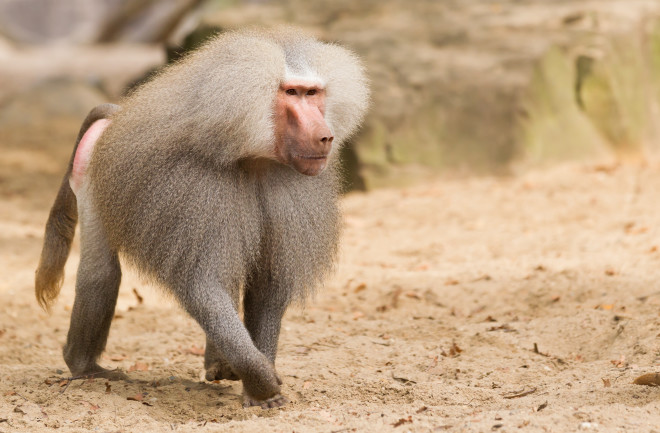
The majority of baboon depictions show the Papio hamadryas species, with its distinctive dog-like muzzle. However, physical remains reveal a mix of olive and hamadryas baboons. It's unclear whether the Egyptians favored one species over the other, or if availability played a role in their depiction.
Unlike many sub-Saharan African cultures, which view baboons as pests due to their crop raiding, the Egyptians held them in high esteem. This may be due to the ancient pastoral ancestry of the Egyptians, who didn't see baboons as a threat to their livelihood.
While baboons were revered, they were not worshipped. Instead, they were raised in captivity and mummified after death. Unfortunately, many baboons suffered injuries and deformities, likely due to poor living conditions. Some were kept by royal families or priests, who would sell their cadavers to those seeking to mummify them as offerings to the gods.
The practice of mummifying baboons came to an end with the rise of Christianity, which led to the destruction of pagan symbols. The discovery of baboon remains in North Saqqara, which was destroyed in the 8th century C.E., marks the final chapter in the story of ancient Egypt's sacred baboons.