US graduate students protest against low pay while universities profit from their work
-
 Loading...
 - Adio Tarek
- 01 Apr 2022
- 361 Views
- 0 Like
- 0 Comment
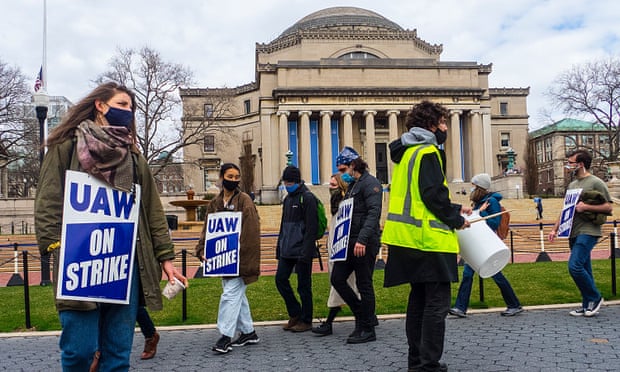
Thousands of graduate student workers around the US at private and public universities have gone on strike over the past few years, from Ivy League institutions like Harvard University and Columbia University to public state universities in California.
Graduate workers at even more colleges have organized unions in spite of staunch opposition from their administrations. Among the most pressing unifying themes among graduate student workers organizing unions and holding protest actions and strikes is the low pay, an issue plaguing graduate student workers around the US.
In the US, graduate workers take on jobs such as helping teach courses, assisting with research projects and performing often vital clerical tasks that help run academic institutions.
In Indiana, graduate workers at Indiana University Bloomington are currently considering a strike over their university’s refusal to negotiate with their union over ending fees charged to graduate workers and paying them a living wage.
Zara Anwarzai, a PhD candidate in philosophy and cognitive science at Indiana University Bloomington for four years, receives about $20,000 a year in pay from the university, and barely makes ends meet without working a side job, even as she shares a tiny one-bedroom apartment with her partner, who is also a graduate worker.
“It’s often the case that we pay our monthly bills late so that we can make it until the next check,” said Anwarzai.
She has struggled with chronic back pain and can’t afford the physical therapy her doctor has recommended for it. She’s often delayed filling prescription medications because she couldn’t afford the copay for it. When taking on side jobs either within or outside the university, she’s worked as much as nearly 18 hours with few breaks.
“We have to stop spreading the ‘I get paid to study!’ narrative of graduate school,” added Anwarzai. “As you go through a program, you realize to what extent your work in your departments and the university have benefited them. They need your labor as a teacher and researcher, they need you as someone who takes on unpaid service roles, and they need your academic and professional reputation.” Read More...