The observatory in the Colca Canyon that will be able to detect the "invisible universe"
-
 Loading...
 - Sharon Lambert
- 29 Aug 2022
- 66 Views
- 0 Like
- 0 Comment
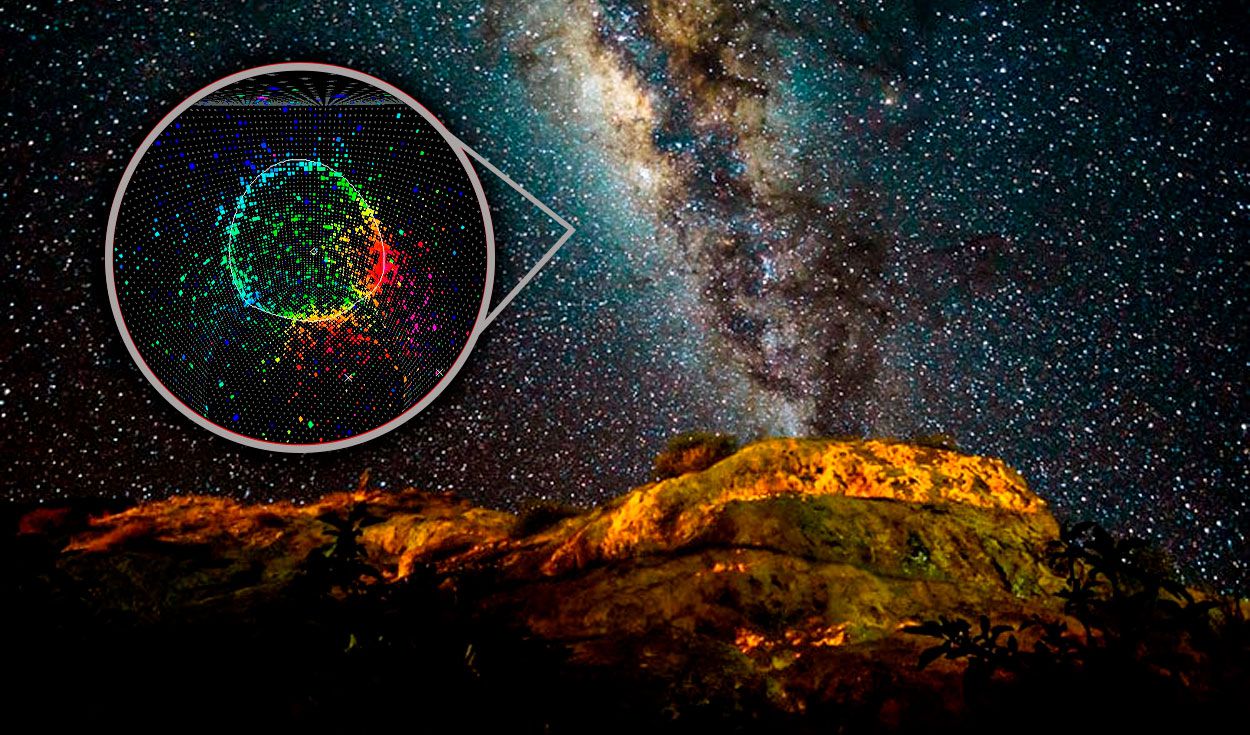
The different types of telescopes allow us to observe everything that reflects or emits light , such as stars, galaxies or nebulae. However, in our universe there is much more, but it is impossible to see. To unveil this mystery, an international team of scientists proposes to build an unprecedented observatory in the Colca Canyon (Arequipa, Peru). Its objective: to capture invisible particles that come from the depths of the cosmos.
These are neutrinos, elementary particles that have a very small mass and no electrical charge, so they travel almost at the speed of light and can pass through matter.
Peruvian physicist Dr. Carlos Argüelles, a professor at Harvard University and one of the initiators of this project called TAMBO, explains to La República that neutrinos, along with black holes and dark matter, “are the three components of the universe invisible” because we only know they exist by the effects they cause on their environment.

From theory to reality
Until now, the majority of neutrinos that have been detected come from the Sun and from violent phenomena, such as supernovae or the centers of galaxies that expel jets of radiation. Likewise, it is presumed that there is another source that also produces these particles, but at much higher energies.
TAMBO was designed to capture these ultra-high energy (UHE) neutrinos. These are the most sought after by the scientific community, since they can interact with the radiation left over from the Big Bang , the explosion that gave rise to the universe approximately 13.8 billion years ago. Read More…