Would you eat vegetables grown from hair? Scientists discover new way to grow greens from discarded hair

The idea of eating vegetables that sprouting from unwanted hair may make one's hair stand on end, but researchers have found a new way to use such biowaste as a soil replacement.
The research team from Nanyang Technological University, consisting of Professor Ng Kee Woei and Professor Hu Xiao as well as seven other researchers from NTU and Harvard University, used keratin extracted from hair to create a sustainable substitute for growth mediums used in urban farming.
Keratin is a type of protein found in hair, skin and nails, as well as in animal wool and bird feathers.
Prof Ng, the associate chair (research) at NTU’s School of Materials Science and Engineering, pointed out that livestock farming also produces large amounts of keratin as biowastes, because it is found abundantly in wool, horns, hooves and feathers.
“Since keratin can be extracted from many types of farm wastes, developing keratin-based hydroponic substrates could be an important strategy for recycling farm wastes as part of sustainable agriculture,” he said.
In hydroponics, crops are grown without soil. Instead, a substrate is used to act as a support structure and reservoir for water and nutrients.
Hydroponic substrates, used in urban farming here, only serve to keep the plant rooted in place and absorb the water delivering nutrients to the plants flowing below the substrate.
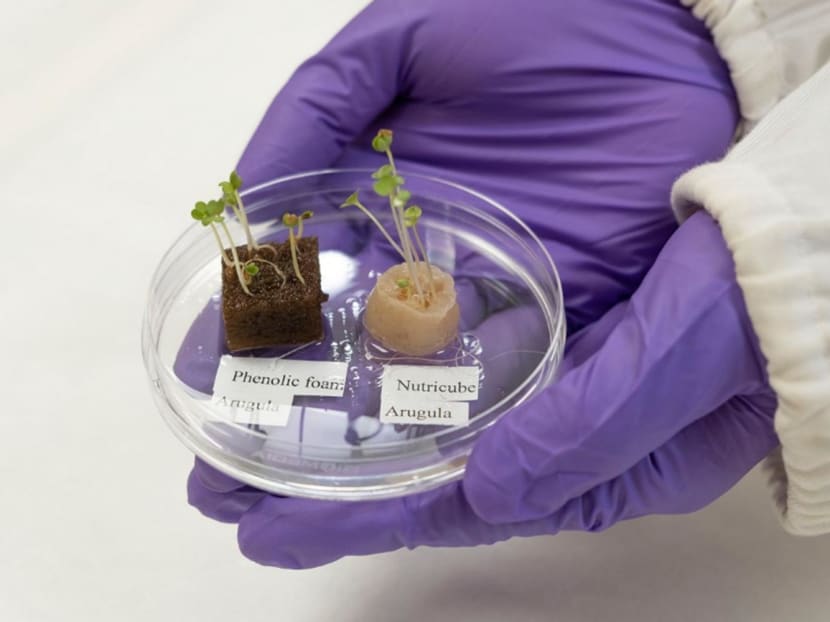
These growth mediums, usually made from non-sustainable and non-biodegradable materials such as rockwool, polyurethane and phenolic foams, create more waste when farmers throw them away after use.
In contrast, the keratin-cellulose substrate created by NTU researchers contains its own source of nutrients for plant growth and is able to release them under controlled conditions.
The substrate is also made with cellulose fibres extracted from softwood pulp, making it sustainable while also leaving no waste behind after use. Read More…