Using AI To Detect Cancer Mutations
-
 Loading...
 - Banyul Nur
- 03 Oct 2022
- 70 Views
- 0 Like
- 0 Comment
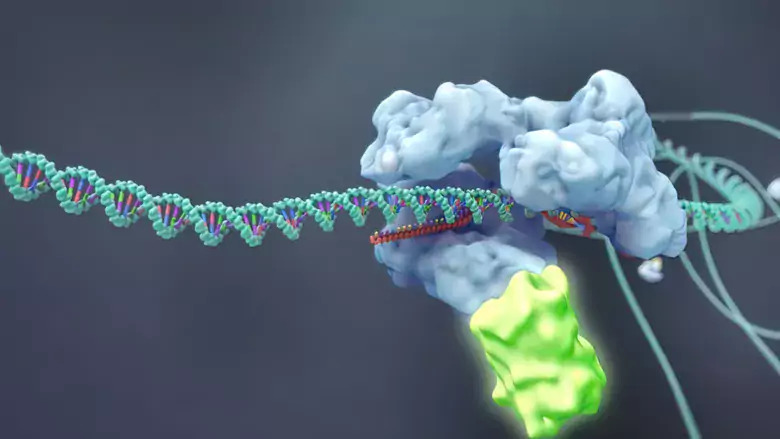
Cancer is one of the most prevalent noncommunicable diseases worldwide. Singapore alone reported 78,204 cases between 2015 and 2019, according to Singapore National Registry for Disease. That is nearly 43 patients diagnosed with a form of cancer per day through that period. With this, identifying cancer-causing mutations in a person’s genome is key to understanding the mechanism of disease formation and development of precision medicine to target specific cancer mutations in a patient’s sample.
However, sequencing large amounts of patient data – billions of nucleotides – to find mutations is time consuming and expensive. Therefore, the global scientific community has been trying to use AI to make the process efficient and accurate.
A research group from the Genome Institute of Singapore (GIS) have developed an AI-based mutation caller. Known as VarNet, the caller uses deep learning models to sift through raw DNA sequencing data and detect mutations. The group reported its findings in a recently published paper in Nature Communications.
VarNet is not the first AI-mutation caller. It’s unique because it is a ‘weakly supervised’ deep learning model, according to Anders Skanderup, Group Leader of the Laboratory of Computational Cancer Genomics at GIS and co-author of this paper.
“Deep learning models typically require vast amounts of labeled training data to perform robustly,” Skanderup told Asian Scientist Magazine. DNA sequencing data for cancer genomics is usually the opposite: the individual data samples themselves are not that large and not all mutations are fully labelled. “This poses a challenge in training a deep learning model for detecting cancer mutations as it requires significant human effort to create such a training dataset.” A ‘weakly supervised’ deep learning model is capable of handling large sums of imperfectly labeled data in its training data set and find cancer mutations. Read More…