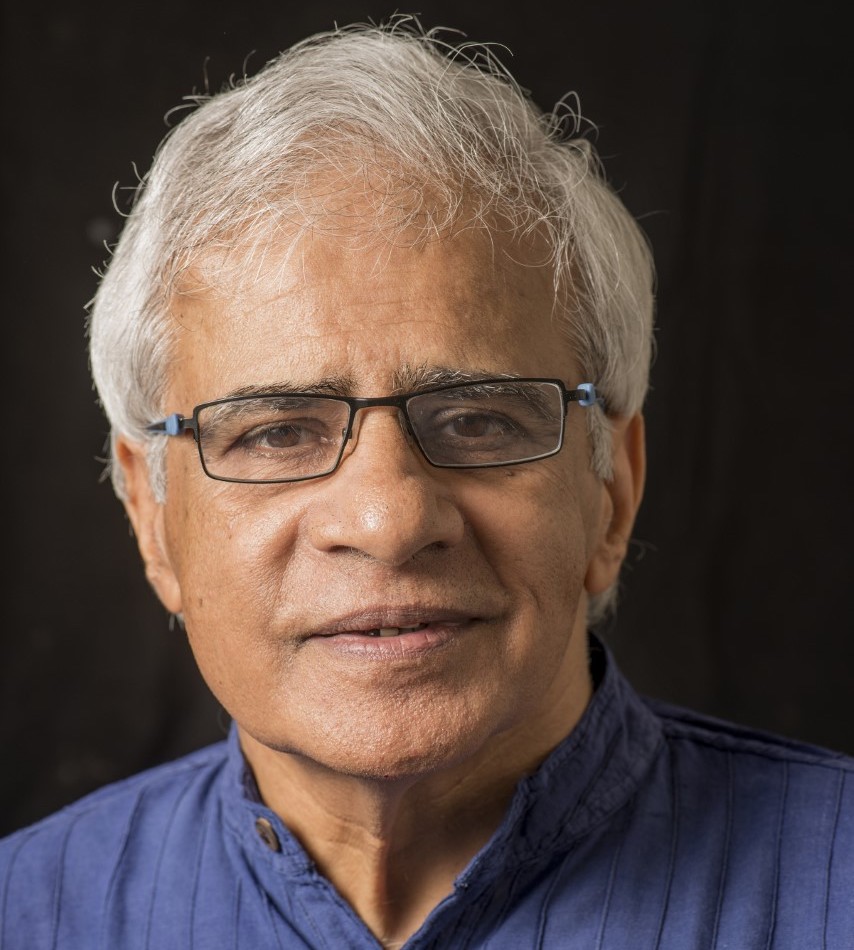
Vivan Sundaram, Pioneering Installation Artist Who Transformed India’s Art Scene, Dies at 79
-
 Loading...
 - Tamil Anand
- 03 Apr 2023
- 79 Views
- 0 Like
- 0 Comment
Vivan Sundaram, an influential artist whose installations have been credited with opening new possibilities for his Indian compatriots, died on Thursday at 79. His death was announced by the Safdar Hashmi Memorial Trust (SAHMAT), an arts organization that Sundaram cofounded.
Sundaram’s art in many mediums is seen as key within the development of the Indian art scene of the past few decades. In India, he is considered to be among those who helped solidify installation art as a veritable artistic medium during the early ’90s, a period when the previously dominant mode of formalist abstraction was waning in influence.
In a statement to ARTnews, Shireen Gandhy, creative director of Chemould Prescott Road, the Mumbai-based gallery that represents Sundaram, said, “In the early 90s, if one looks back at a breakthrough of mediums, where the norm of artists working in traditional oil paintings (something that Vivan very much did too), Vivan would be considered one of the earliest ‘breakthrough artists.’ He truly was the trailblazer.”
While Sundaram’s installations, photo-based art, illustrations, paintings, and more are well-known in India and in the international art scene, he is also fondly remembered for his outspoken leftist views. His work marked one way to marry his politics and his genuine belief that art could mirror the world—and potentially even change it.
Among the installations that are considered game-changers by Sundaram is 1993’s Memorial, a piece made in response to destruction of the Babri Mosque, a 16th-century religious structure in Ayodhya, by a right-wing Hindu mob the year prior. Composed of photographs struck through with nails, a triangular structure with a plaster body on its floor, trunks stacked to form an archway-like sculpture, and more, Memorial paid homage to how Sundaram had experienced the events of 1992 remotely. Read More…