What Hides in the Heart of Saloum
-
 Loading...
 - Paul Wanyonyi
- 21 Sep 2022
- 72 Views
- 0 Like
- 0 Comment
Saloum opens with a musical riff that sounds like an accelerating jet engine, a declarative African drumbeat, and a droning white-noise machine fed together through a whirring meat grinder. It’s a jarringly unnerving, unexpectedly catchy cacophony of noise that follows its own pattern — sometimes pausing and sometimes ricocheting forward — and burrows its way into your raw nerve endings, your clenched teeth, your jostled bones. That surprisingly ingratiating feeling of dissonance immediately sets the tone for writer-director Jean Luc Herbulot’s twisty fusion of heist thriller, African-Caribbean mysticism, and political horror, and it’s a pleasure to sprint alongside Saloum in an effort to keep up.
Herbulot, who is Congolese and whose Senegal-set TV series Sakho & Mangane (available on Netflix) is a kind of Law & Order meets Evil, has made in Saloum an interrogation of Heart of Darkness and an homage to various ’80s action and ’90s horror classics that remains entirely its own thing, even as the film’s plot undergoes a radical shift midway through and challenges our expectations of its protagonists’ actions. (Saloum opens in select theaters Sept. 2 and will be available for streaming on Shudder on Sept. 8.) An unseen female narrator and gunshot sounds accentuating the film’s pauses and subtitles bring to mind Quentin Tarantino; the frenetic editing style, Tony Scott; the myriad drone shots that capture Senegal’s dusty aqua waters and khaki interior, a Planet Earth documentary. But between all those allusions and nods — intended or otherwise — Saloum finds its own unsettling through line about the irreversibility of evil and the burden of infamy. Can we ever change what others have made us into, into what we yearn to be? Or is fate its own curse?
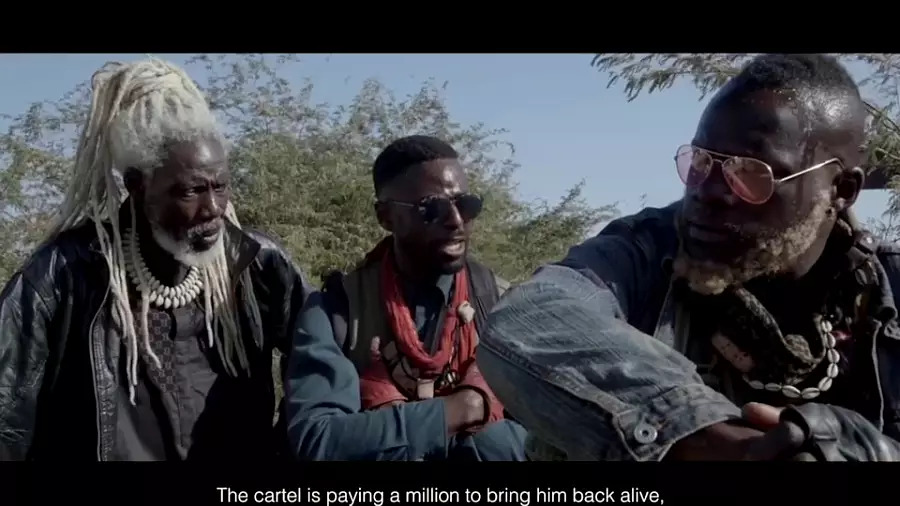
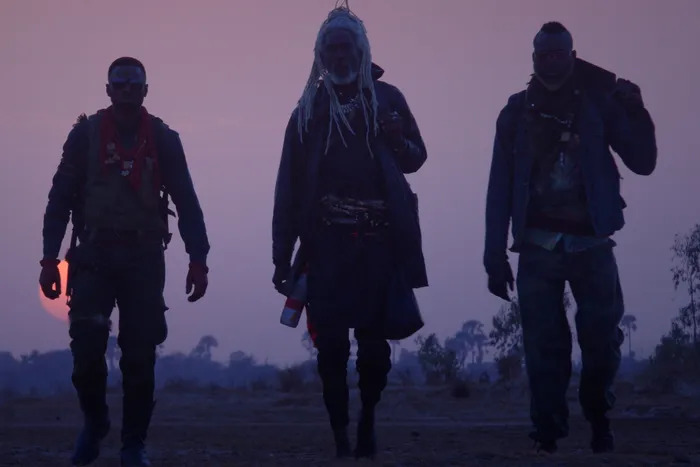
That wild soundscape from composer Reksider (doing great work alongside sound editor Ousmane Coly) starts Saloum off with an introduction to the mercenary trio Bangui Hyenas, whose “guns for hire, live by fire” ideology — as explained by that unidentified narrator, voiced by Alvina Karamoko — has made them a legend throughout Africa in 2003, when the film is set. Some say they’re cannibals, some say they’re sorcerers; the playing cards they leave behind on corpses, decorated with a hyena’s head and crossed machetes, indicate that the men relish the attention. Chaka (Yann Gael, who worked with Herbulot on Sakho & Mangane), Rafa (Roger Sallah), and Minuit (Mentor Ba) are utterly devoted to each other, and cinematographer Gregory Corandi well captures their practiced rhythms during the film’s opening attack on a compound in Guinea-Bissau: close-ups of their footwear as they move in unison up a set of stairs; a dash down a hallway as they each throw open a door and rush inside unseen rooms. The Bangui Hyenas have been doing this a long time, and the faith they have in each other has, so far, been unshakable. Read More…