Woodpeckers and other birds can taste sugar - but how?
-
 Loading...
 - Cynthia Mendes
- 22 Aug 2022
- 65 Views
- 0 Like
- 0 Comment
While many mammals have the ability to detect sugars, most birds are insensitive to them. Recent studies have found evidence that both hummingbirds and songbirds have regained their ability to sense sugars by repurposing their savory receptor to detect carbohydrates in nectar and fruits. How other bird species sense sugars – and the extent to which taste receptor responses track the vast dietary diversity of birds – is still unclear.
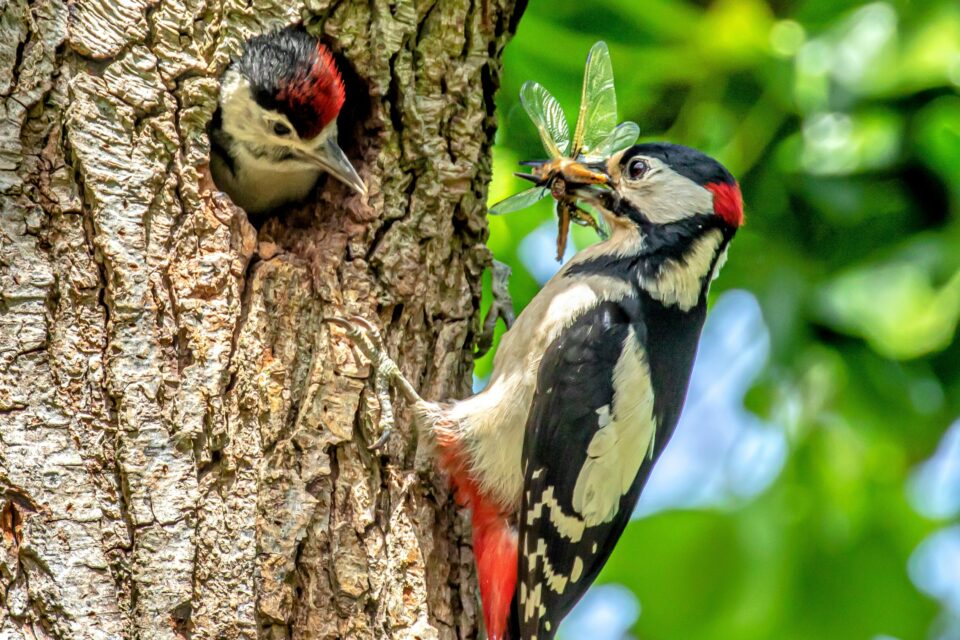
Now, an international team of scientists led by the Max Planck Institute for Biological Intelligence has set out to investigate this question by focusing on woodpeckers. Their analyses revealed that, although most woodpeckers have also regained sweet taste, wrynecks – specialized ant-eating woodpeckers – selectively reversed this gain through a simple yet unexpected change in their taste receptors.
Using behavioral tests of wild birds, as well as functional analyses of their taste receptors, the scientists discovered that woodpeckers clearly prefer sugars and amino acids over water, and their taste receptors are highly sensitive to sugars. Surprisingly though, wrynecks displayed preference for amino acids but not for sugars.
According to the researchers, the common ancestor of woodpeckers and wrynecks already possessed a modified savory receptor capable of responding to sugars.
“This finding unveiled a third case of independent sugar-sensing evolution via modification of the savory receptor in birds,” said study first author Julia Cramer, a doctoral student in Ecology and Evolution at the Max Planck Institute. “Yet, what was even more exciting was the implication that wrynecks subsequently lost the receptor’s new function.”
By meticulously investigating the differences between wryneck and woodpecker receptors, Cramer and her colleagues showed that changes in a single amino acid in the wryneck receptor selectively turned off sugar-sensing. Read More...