Work remote, get paid less? The battle dividing offices will define the future of work
-
 Loading...
 - Denis Da Silva
- 24 May 2022
- 290 Views
- 0 Like
- 0 Comment
The world of work was already quite sick before the coronavirus took hold, but the pandemic put rocket boosters on cultural change.
We can see the impact of this in every metric around work: during the Great Resignation of 2021, millions of American workers resigned en masse. Workers worldwide have declared that they would quit their jobs if not provided with flexibility.
The reduction in corporate property rents last year as high as 10%, with huge changes in the use of office space and co-working space. And the city has a new competitor: the suburb. The flight to suburbia during the pandemic has accounted for a rise in the property market for residences outside city centers. For downtown districts to attract and retain people as places to live and work, city centers will need to be redesigned completely.
These developments come as no surprise: the McKinsey Global Institute estimates that up to a quarter of workers in advanced economies will work permanently on a hybrid basis, ie partly from home, several days a week. Discussions about RTO (returning to the office) are increasingly fraught and in flux. There is no uniform model or agreement.
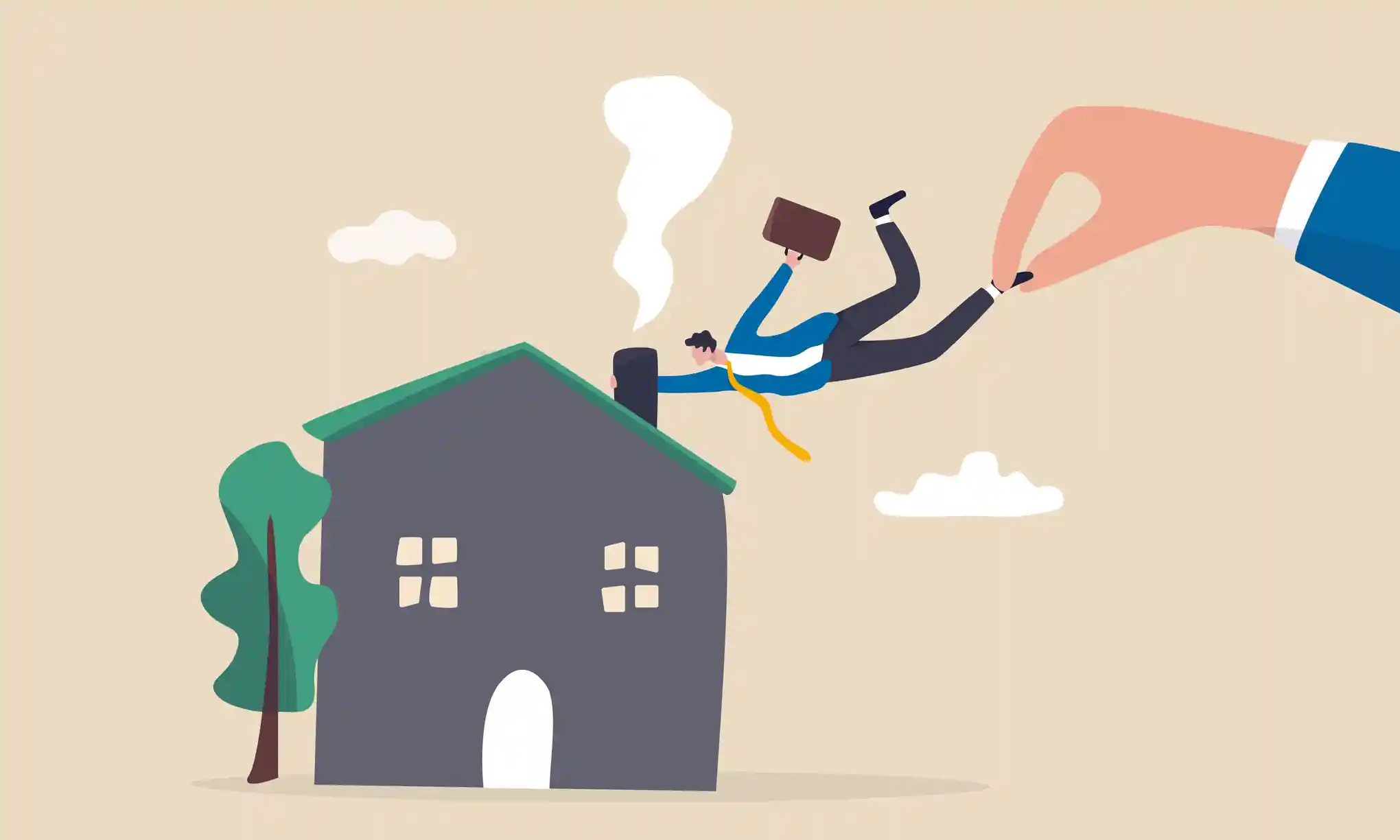
The case for going into an office regularly is having to be made to the workforce – and many are rejecting it. Meanwhile, CEOs have to grapple with employees who want more flexibility, the ability to work remotely and even the ability to choose their working hours – and this without a paycut.
The degree of agency workers will be given – to be able to choose your place and hours of work – might well define us far more than previous classifications in the future. Being labeled a “white-collar” or a “blue-collar” worker could be replaced by being a “hybrid have” or “hybrid have-not” worker instead.
People recognize that their work is a valuable commodity and they want to have a greater say in when and where they sell it
In addition, up to half of America’s jobs are projected to be freelance by 2030 and two-thirds of employers now regard some form of remote work or hybrid work as “the new norm”. Many companies are declaring themselves “fully remote”, giving them a competitive edge over those requiring presenteeism.
As more of us can now choose how to manage the time we spend working in a way that suits us rather than the traditional nine to five, discussions around the four-day week have reached an intensity never seen before. We are not yet anywhere near to the famous 15-hour working week John Maynard Keynes predicted in the 1930s, but his prediction seems newly relevant. People recognize that their work, and therefore their time, is a valuable commodity and they want to have a greater say in when and where they sell it.
In spite of those changes, considerable ambivalence remains among some leaders. In one camp, you get the hardliners who believe working from the office is best. Many feel that those who work from home are to some extent work-shy. At the very least, they wish to penalize people who prefer to work hybrid.
Take the bombastic internal memo sent by James Gorman, chair and CEO of Morgan Stanley, to his staff: “If you want to get paid New York rates, you work in New York. None of this ‘I’m in Colorado … and getting paid like I’m sitting in New York City,’” echoing an equally robust statement from David Solomon of Goldman Sachs that working from home was “an aberration”.
Similarly, the veteran Wall Street observer William Cohan simply said this: “Here’s my advice to you, fellow Wall Street drones: Get back to the office.”
In another camp are the more emollient hybrid softliners such as Kevin Ellis, London-based chair of consultancy firm PwC with 285,000 employees in 155 countries around the world, who said “we want to enshrine new working patterns so that they outlast the pandemic”.
Regardless of which camp employers are in, it is obviously true that an awful lot of social capital resides in the office. I talked to Kevin Ellis, who said, “My worry is that we’re going to create a glass ceiling for people whose careers will be stunted because they’re working from home and not realising what they’re missing out on.”
Nevertheless, all these comments reflect a wistfulness on the part of big business, which can no longer magically attract the same kind of worker prepared to work in the same way they did before the pandemic. Hybrid working reflects the fact that mobility and freedom are the new prizes for the professional working class. The shift to a placeless and timeless dimension for work means the fixed HQ will have to work a lot harder to attract and retain talent.
Smart leaders are thinking the unthinkable and asking whether they need an office in the same way again
Smart leaders today are thinking the unthinkable and asking whether they need an office in the same way again, not because they are following the hybrid herd, but because they are keeping their eyes and ears open to what is going on in their own businesses.
Joanna Swash, CEO of outsourcing reception, PA and communications provider Moneypenny, was frank that her perceptions had been challenged by the pandemic when everyone had to go fully remote overnight. “Before Covid-19 I thought we’ve got amazing offices, and that they are this space that everybody loves,” she said. “What I learned was that our culture was so strong that it wasn’t just based on the office or on the physical environment, but it was based on that whole community feel, and how people trust each other. It should have been obvious to me, but that was a really big lesson at the start of the pandemic.”
A similar point was made by Chris Thurling, chair of Armadillo, a digital design firm which went fully remote during the pandemic, who expanded his business during this period:
“I want to remain completely open-minded about whether we ever need to have a traditional office again. If you look at the performance of our business since March 2020, we are performing really well and our clients are not saying there’s been a drop-off in quality. Our profitability as a business has gone up and we’re growing. Why would we change too much?”
Bruce Daisley, an authority on the future of work and presenter of the podcast Eat Sleep Work Repeat, watches the hybrid work trend closely. He told me, “Probably the most farsighted approach I have seen was Dropbox, which said late in 2020 that getting people into the office for a certain number of days or specific days doesn’t work. Because people think, why am I going in to the office on Wednesday? Just because it’s Wednesday doesn’t make any sense. People will come in to the office when they need to and they will come into the office for experiences.” Read More...