Young conservationists rally local community to save Mpenge River
-
 Loading...
 - Rose Kendi
- 10 Dec 2021
- 458 Views
- 0 Like
- 0 Comment
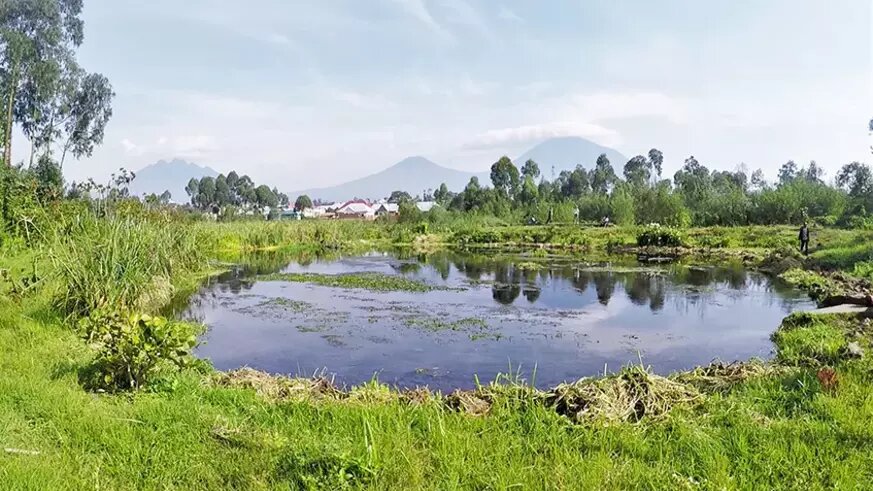
20-years ago, when Musanze – then called Ruhengeri – was still a small town, Mpenge River was ecologically in good health. Moreover, as the town expanded with a growing population, the river became increasingly threatened by pollution.
“People threw waste into the water and even garage workers from the town dumped their wastes on the river banks,” says Susanne Ntakayoberana, who has lived near the river for 40-years.
"The place became a dump site, and there was an unpleasant view of garbage in the water."

Mpenge River is located on the outskirts of Musanze City, where agricultural and livestock activities are practiced, and it should be protected according to the environment law.
The 9 kilometre river flows into Mukungwa, a tributary of Nyabarongo— Rwanda's second longest river.
In October 2020, a group of young conservationists launched a project on Mpenge River with a goal to clean its polluted water and protect aquatic life.
Before the restoration project, a water quality assessment done at the river exposed enormous challenges.
“We measured the concentration of chemical and physical properties in the water using a biodiversity index and the level of pollution was very high,” says Jean Claude Dusabimana, the executive director of Nature Rwanda, a youth-led organisation implementing the project.
“The normal water quality should be three points on the index, but due to pollution, we found that the water in Mpenge ranged between eight and nine points. Ten points indicate the highest level of water pollution.”
They also looked at the number of microorganisms living in the water, and the more the pollutants, the less organisms they found.
Agriculture activities, including livestock and crop farming, had encroached the waterway.
“The riparian zone had been eroded so much that the river looked naked,” Dusabimana said.
Nature Rwanda says the agricultural activities and the pollutants had impacts not just on the river, but also on the people who use its water. Read More…