5 Modern Congolese Artists You Should Know
-
 Loading...
 - Joseph Tagoe
- 13 Jun 2023
- 363 Views
- 0 Like
- 0 Comment
To explore the rich history of African art, a complex, diverse, and multicultural continent, can be a daunting task, especially for newcomers. However, fear not, as we are here to assist you. Follow our series, "Artists to Know or Watch," in each country, and you'll soon acquire expert knowledge!
After covering Nigeria and South Africa, let's continue our journey with the Democratic Republic of Congo. In this article, we will focus on modern Congolese artists who have greatly influenced the art scene during the latter half of the previous century. These artists have earned national acclaim for their contributions to the arts, praised for their vividness and social commentary. Congolese art reflects the conditions of its time, shaped by the influences and oversight of colonialism. With the advent of modernism and independence, new streams of creation and innovation emerged, combining global artistic influences with traditional art forms and practices. This survey aims to shed light on artists who may not have received major international recognition, such as Chéri Samba or Bodys Isek Kingelez, but have nevertheless enjoyed prolific careers within the country.
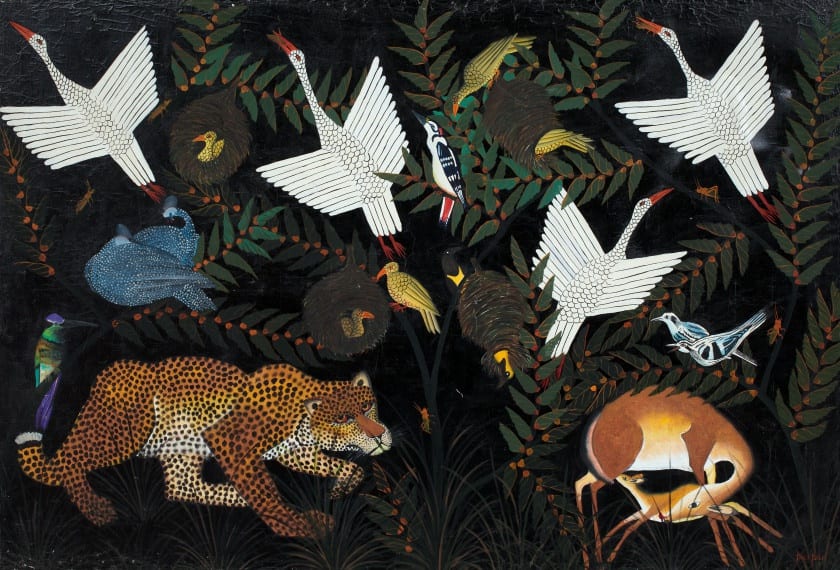
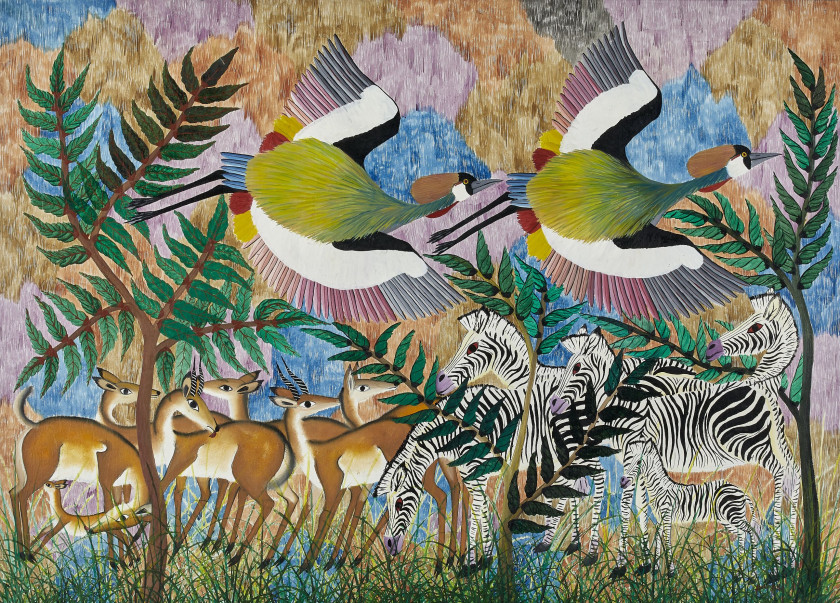
Tracing the trajectory of modern art in the Congo, where various art ideologies and movements coexist and clash, is no easy feat. One cannot overlook the Hangar workshop, established in 1946 under the guidance of Pierre Romain-Desfossés until his passing in 1954. Romain-Desfossés, a naval officer and painter, settled in Lubumbashi in 1944, fostering untainted local art creation free from Western influences. Artists like Pilipili Mulongoy, Mwenze Kibwanga, and Sara Bela were encouraged to find inspiration in nature and their immediate surroundings. Their works prominently feature fauna, flora, and rural life, displaying freedom and ingenuity in their artistic techniques. The results of a recent auction showcasing Hangar artists' works speak to their international appeal. Following the workshop's closure, it integrated with the Académie des Beaux-Arts of Élisabethville (formerly Lubumbashi), where artists passed on their skills and artistic visions.
The five artists we present in this review have earned recognition from their peers and have significantly influenced both the nation and the wider African art community. Their academic involvement, progressive approaches, and the context of the Zaïre regime at the time all contributed to their impact. Whether in Kinshasa or Lubumbashi, the two primary creative hubs in the country, the historical disruptions in Congo have had profound effects on the production and reception of modern art.
Mode Muntu (Lubumbashi, 1940 – Lubumbashi, 1985)
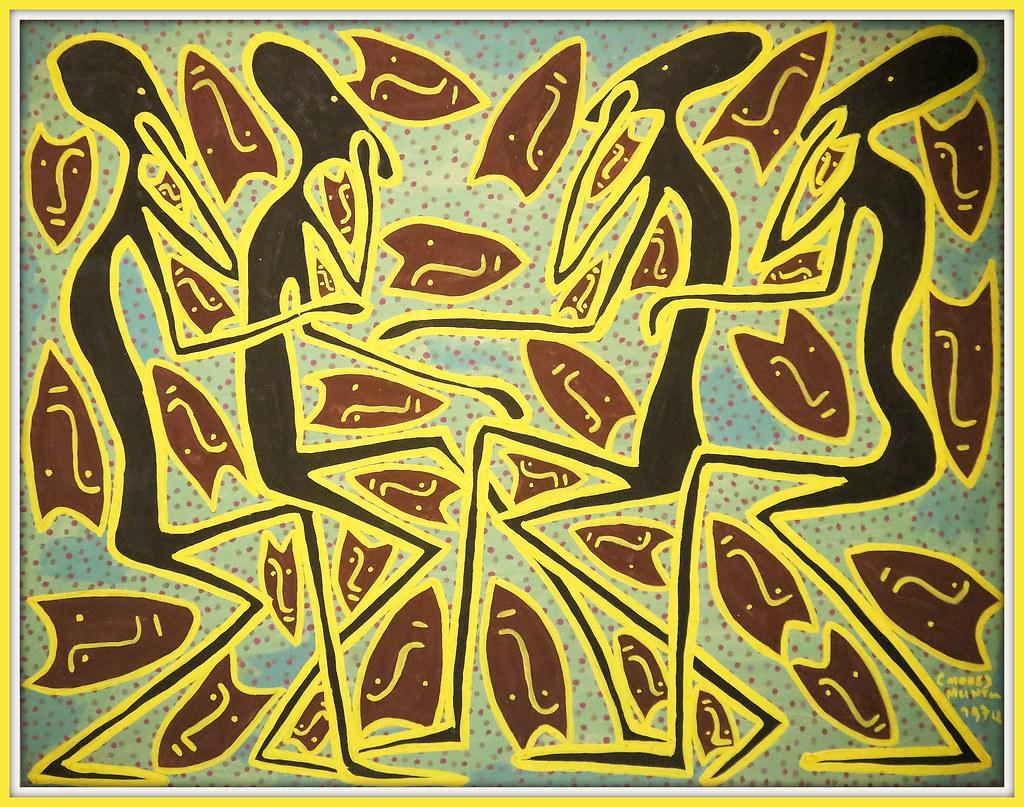
While not directly associated with the Hangar workshop, Mode Muntu, a student of the artist Pilipili Mulongoy, developed a remarkable and contemporary body of work. His vibrant, colorful paintings, characterized by silhouettes, embody the essence of modern painting while drawing from traditional imagination and narrative iconography. Many have drawn comparisons between his work and that of Keith Haring or A.R. Penck. Born in 1940, Muntu was influenced early on by the artists of the Hangar workshop, who inspired him in terms of color palette and technical ingenuity. He soon established his own style, using gouache and cardboard as his mediums. Muntu's creations possess a universally appealing graphic quality, reflecting the deep reflections of his time.
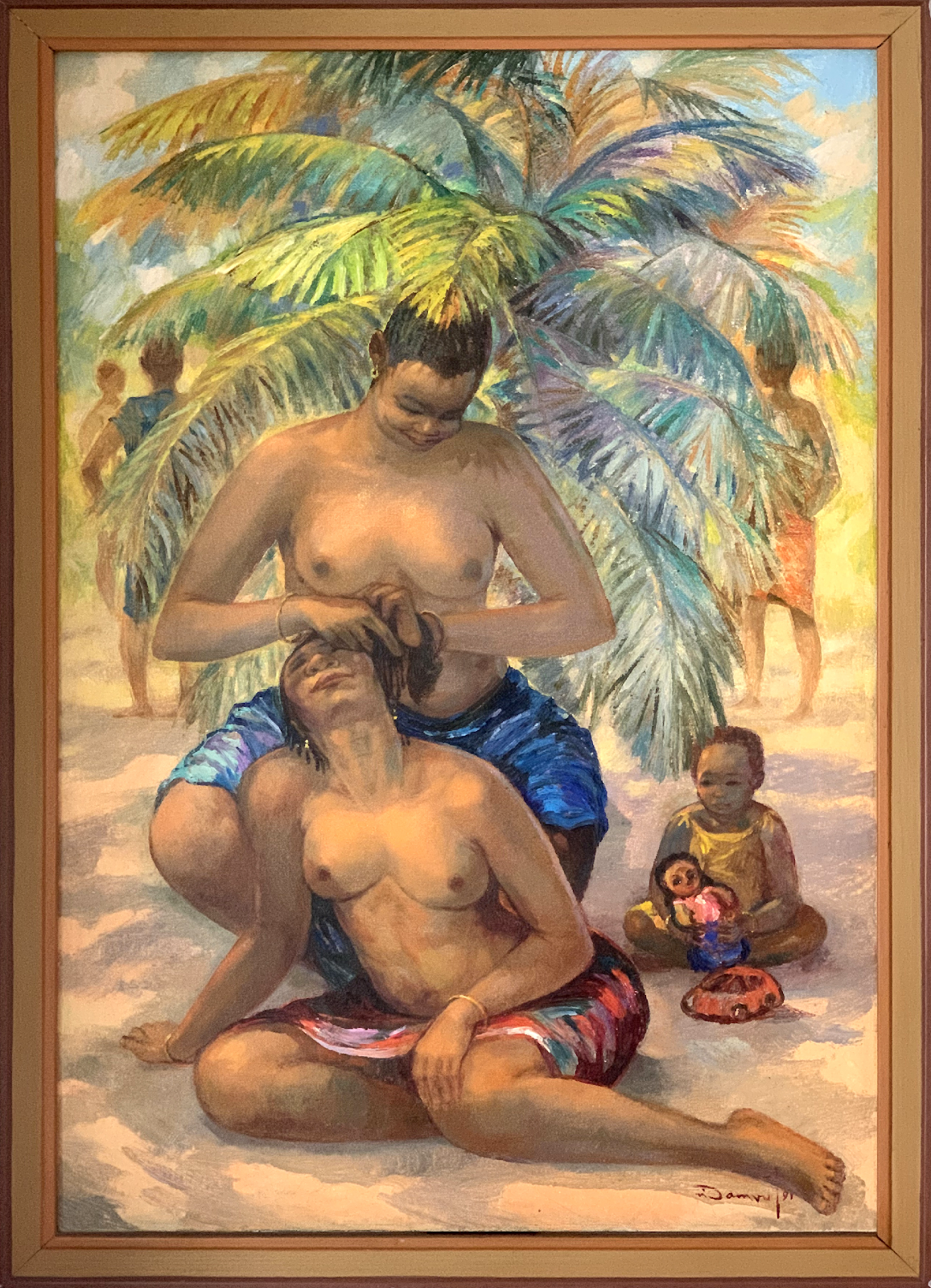
N'Damvu Tsiku-Pezo (Boma, 1939 – DRC, 1997)
Hailing from a family of artists, N'Damvu exhibited his talent as a designer from a young age. He initially studied at the Academy of Fine Arts in Kinshasa and later became a teacher there. N'Damvu participated in the first World Festival of Black Arts in Dakar in 1966 and the Universal Exhibition in Montreal in 1967. His works have been showcased in exhibitions in Liège (1973), Lausanne (1974), Paris (1975), Los Angeles (1977), Brussels, and Paris (1978). Women held a prominent place in his artistic expression. From the outset, N'Damvu was a pioneer and a militant in the Grand Atelier, alongside Liyolo, Mavinga, Lema, Mokengo, and Tamba. They championed the message of "Zairian authenticity" during the Mobutu regime.
Alfred Liyolo (Bolobo, 1943 – Vienna, 2019)
If we were to highlight one sculptor from this survey, it would be Alfred Liyolo. Born in 1943 in the former Bandundu province, Liyolo left behind a profound artistic legacy upon his passing over two years ago. Through his bronze sculptures, Liyolo sought beauty, transmission, and audacity. One of his most notable achievements is the large-scale statue of Congolese rumba musician Franco Luambo Makiadi in Matonge, Kinshasa. Liyolo's bronze sculptures feature graceful lines and a universal language across various scales. A passionate artist, his work has been widely acclaimed, cementing Liyolo's status as a monument of African modern sculpture.

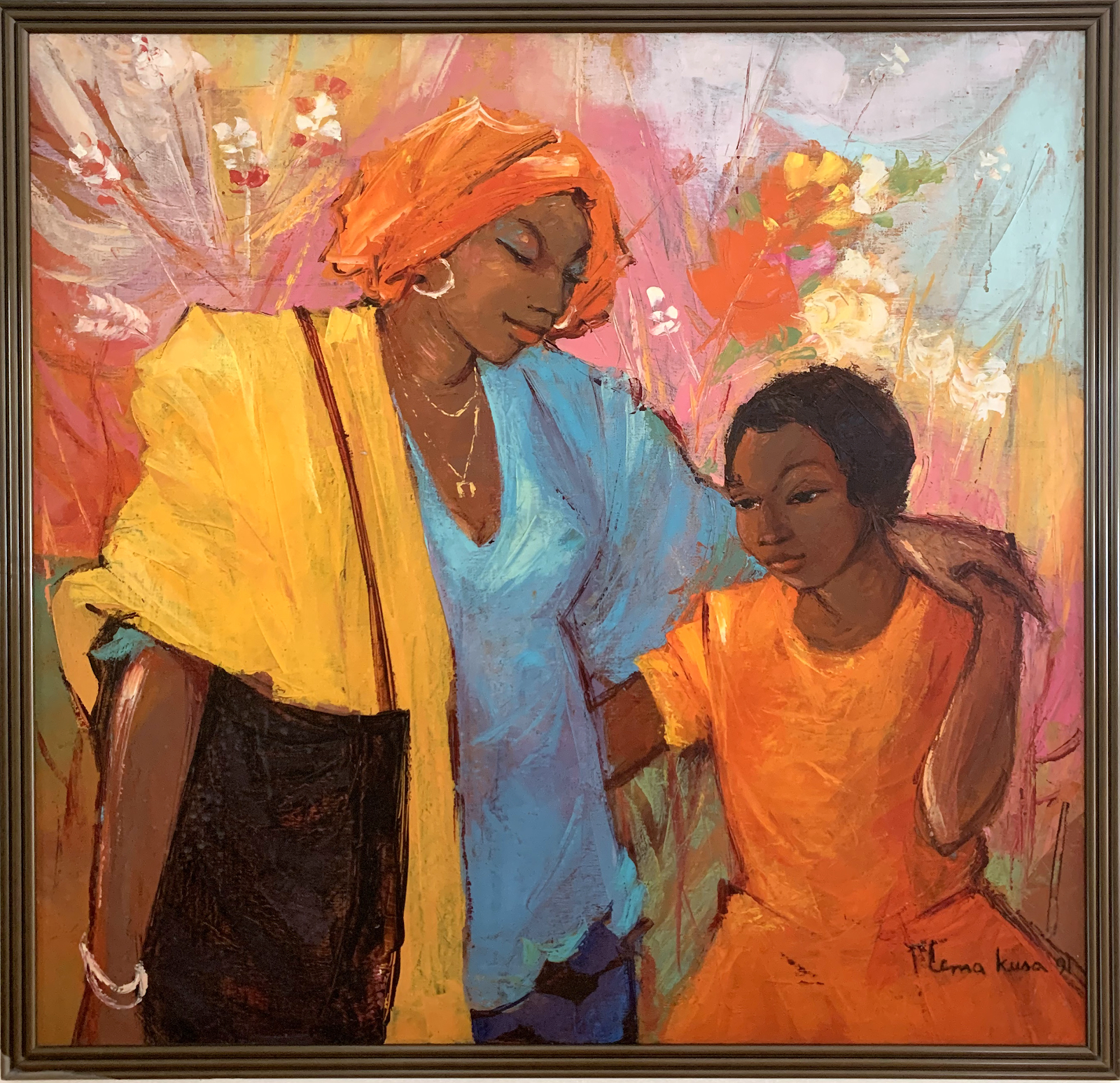
Lema Kusa (Kinkenge, 1944)
Lema Kusa can be regarded as one of the most quintessential modern painters of Congo's contemporary era. In 1958, he enrolled in the Academy of Fine Arts in Kinshasa, specializing in advertising painting and illustrations. Lema further honed his skills through training and professional experience at higher institutes and advertising agencies in Belgium. The popularity of modern art and painting in the country, particularly in Kinshasa, is closely tied to depictions of daily urban life, moral concerns, and advertising purposes. Lema's work employs an expressionist palette and a figurative approach. His paintings often carry symbolic or abstract elements. Lema participated in the National Symposium on Authenticity in September 1981 at N'Sele, organized by the Writers' Union of Zaire.
Kamba Luesa (Basangana, 1944 – 1995)
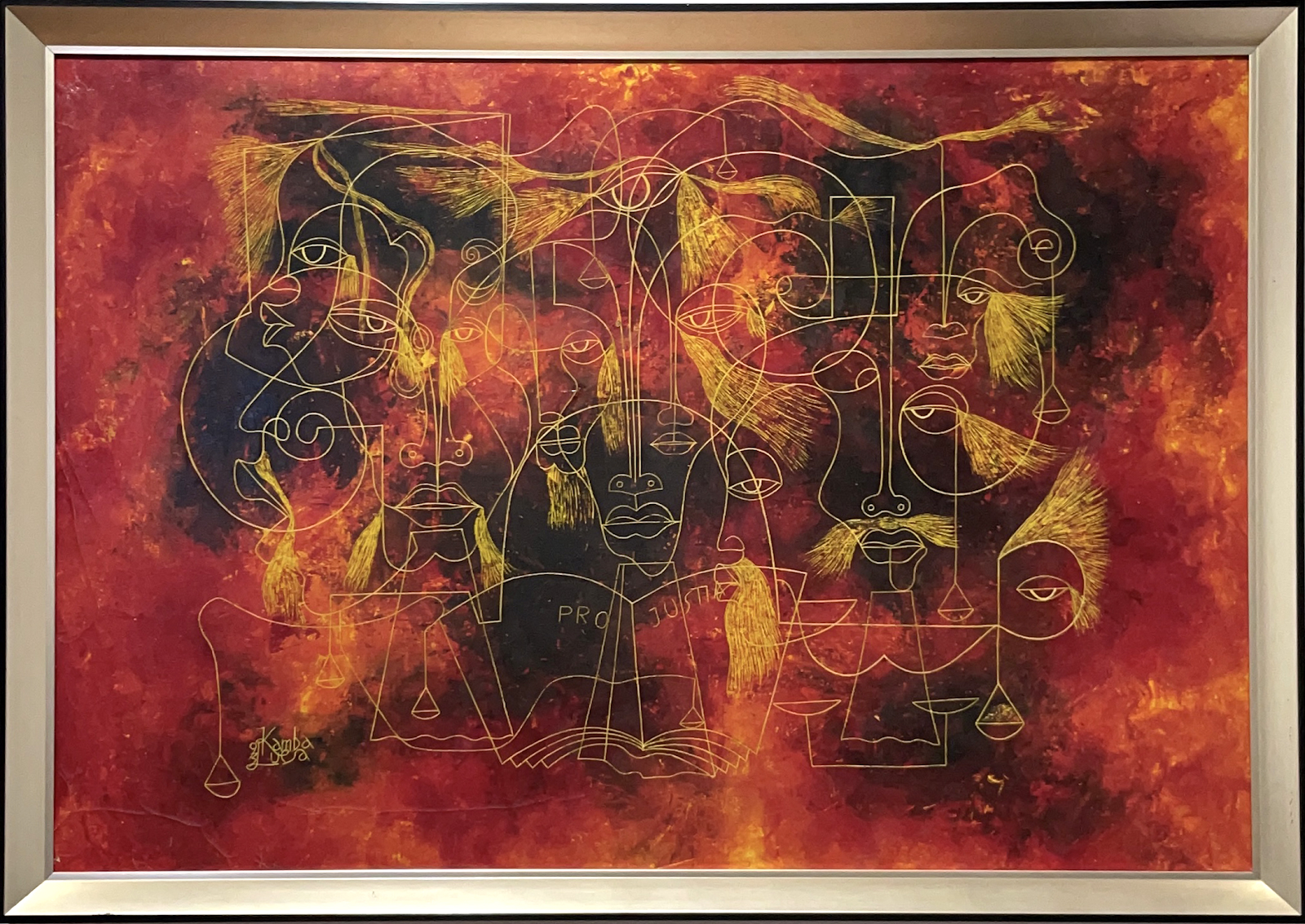
Kamba Luesa exhibited prolific talent and originality from an early age. Inspired by rock art, his compositions feature intricate and resolutely modern lines. Luesa's innovative use of colors sets him apart. He is renowned for a technique called color scraping, which enhances the rock and scenery effects in his paintings, imbuing them with subtle color gradients and warmth. This technique has inspired many of his contemporaries. Kamba Luesa symbolizes the early desire to break free from a certain form of academic classicism, as evidenced by the creation of the Grand Atelier, and to explore new forms of artistic expression.