Mathias Tusiime's Solo Exhibition Shines Bright
-
 Loading...
 - Lisa Adong
- 13 Jun 2023
- 97 Views
- 0 Like
- 0 Comment
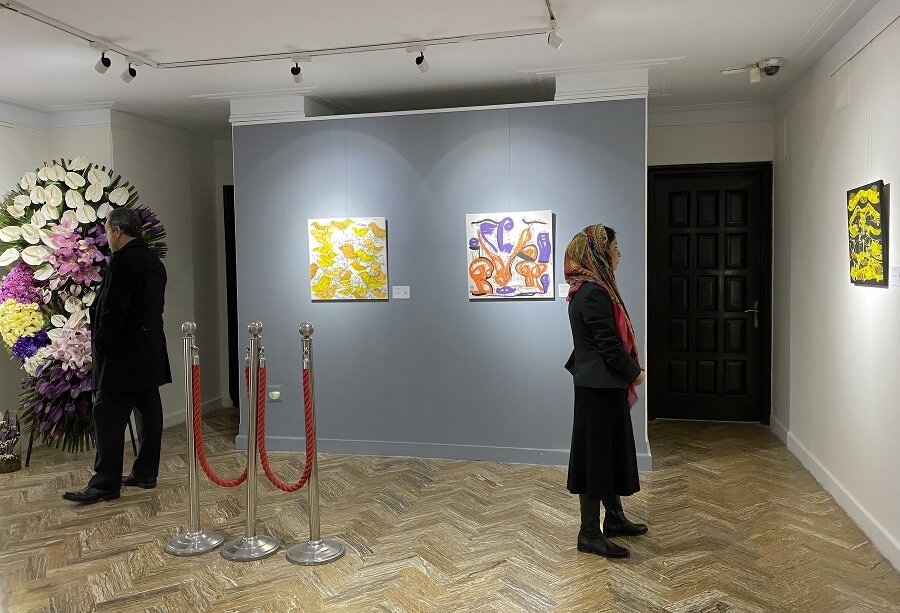
Without a doubt, Mathias Tusiime has emerged as a prominent figure in the contemporary art scene of Uganda, capturing the attention and admiration of art enthusiasts. His latest solo exhibition, titled "Recycling and Environmental Sustainability," cements his position as one of the most innovative and diligent artists of his generation. Drawing from his humble artistic background, Tusiime delves into the themes of recycling and environmental sustainability, shedding light on artistic innovation and research, while emphasizing the crucial importance of preserving our environment. The timing of his message is particularly significant, as global conversations increasingly revolve around environmental safety and conservation.
The exhibition is currently on display at the Makerere Art Gallery, situated within the School of Industrial and Fine Art.
At the heart of Tusiime's exhibition lies the use of barkcloth paper, which serves as a powerful symbol of recycling and environmental sustainability. The artist's unique creation, derived from regular barkcloth, undergoes a rudimentary process of soaking and beating, resulting in a highly textured material. By employing this organic medium, Tusiime initiates profound dialogues about his art that go beyond the surface of the exhibition. The use of barkcloth paper also highlights the significance of materiality in art, a subject often explored by artists working with traditional materials. Although Tusiime does not hail from Buganda, a central region of Uganda where barkcloth holds great cultural significance, his connection to the fabric is authenticated through his frequent interactions with the local community.
Tusiime intentionally selects barkcloth as his medium to captivate his audience. Perhaps no other material would have conveyed the subject of environmental sustainability as effectively. Barkcloth is renowned in academic circles for being a sustainable fabric, owing to its organic nature and the tree (Mutuba) from which it is harvested. Rather than felling the tree, the fabric is skillfully obtained by carefully removing the bark from the trunk. By transforming this fabric into an enhanced form, the artist breathes new life into it, ensuring its preservation as a canvas for painting. Furthermore, the placement of barkcloth within the gallery space, where it is showcased as an integral part of the artwork, symbolically signifies the preservation of tradition in a modern context.
The innovative approach evident in Tusiime's new body of work reflects his acute observation of the community and environment that surround him. His collection of over 15 paintings exudes nuanced emotions and feelings, revealing both the artist's persona and individuality. Drawing inspiration from his daily interactions with art lecturers and students at Makerere School of Industrial and Fine Art, as well as the vibrant ambiance of his Nassana neighborhood, Tusiime fearlessly explores unconventional artistic avenues. Notably, the palette and subjects depicted in his paintings evoke a sense of unease, reminiscent of the chaotic scenes found in such neighborhoods.
Tusiime's work can best be described as a social commentary on everyday life. While his focus lies on recycling and environmental sustainability, he delicately conveys the importance of preserving our humanity in a rapidly changing world dominated by self-interests. Thankfully, Tusiime already embodies this sentiment through his natural inclination towards love and kindness. If we embrace his perspective and pay heed to the message conveyed through his art, we can undoubtedly contribute to the preservation of our planet.