A Mountain to the North by László Krasznahorkai — gardeners’ world
-
 Loading...
 - Grant Berger
- 14 Mar 2023
- 61 Views
- 0 Like
- 0 Comment
The novella, rendered in Ottilie Mulzet’s fine translation, is imbued with a precision that can be glorious, but also at times intensely analytical
On the face of it, very little happens in Hungarian novelist László Krasznahorkai’s fulsomely titled A Mountain to the North, a Lake to the South, Paths to the West, a River to the East. One fine day, the “extraordinarily beautiful” grandson of Prince Genji (Murasaki Shikibu’s immortal 11th-century character) alights from a train at a station in the south-east of modern-day Kyoto, not far from where the imposing Rashōmon gate once stood. From there, he makes his way up an almost imperceptible incline towards a monastery that stands in the mountains to the east of the city, where, for some hours, he roams the deserted temple grounds, looking for a fabled garden that may or may not exist described in a book that may or may not exist — all before returning to the station and carrying on his way.
It is a curious, if initially underwhelming, premise from an author once described by Susan Sontag as a “master of apocalypse who inspires comparison with Gogol and Melville”. A Mountain to the North has none of Gogol’s grotesquerie or ribald humour, nor any of Melville’s baroque stylisations or gothic romanticism. Instead, Krasznahorkai’s fiction here is altogether more controlled, more economical, more Zen.
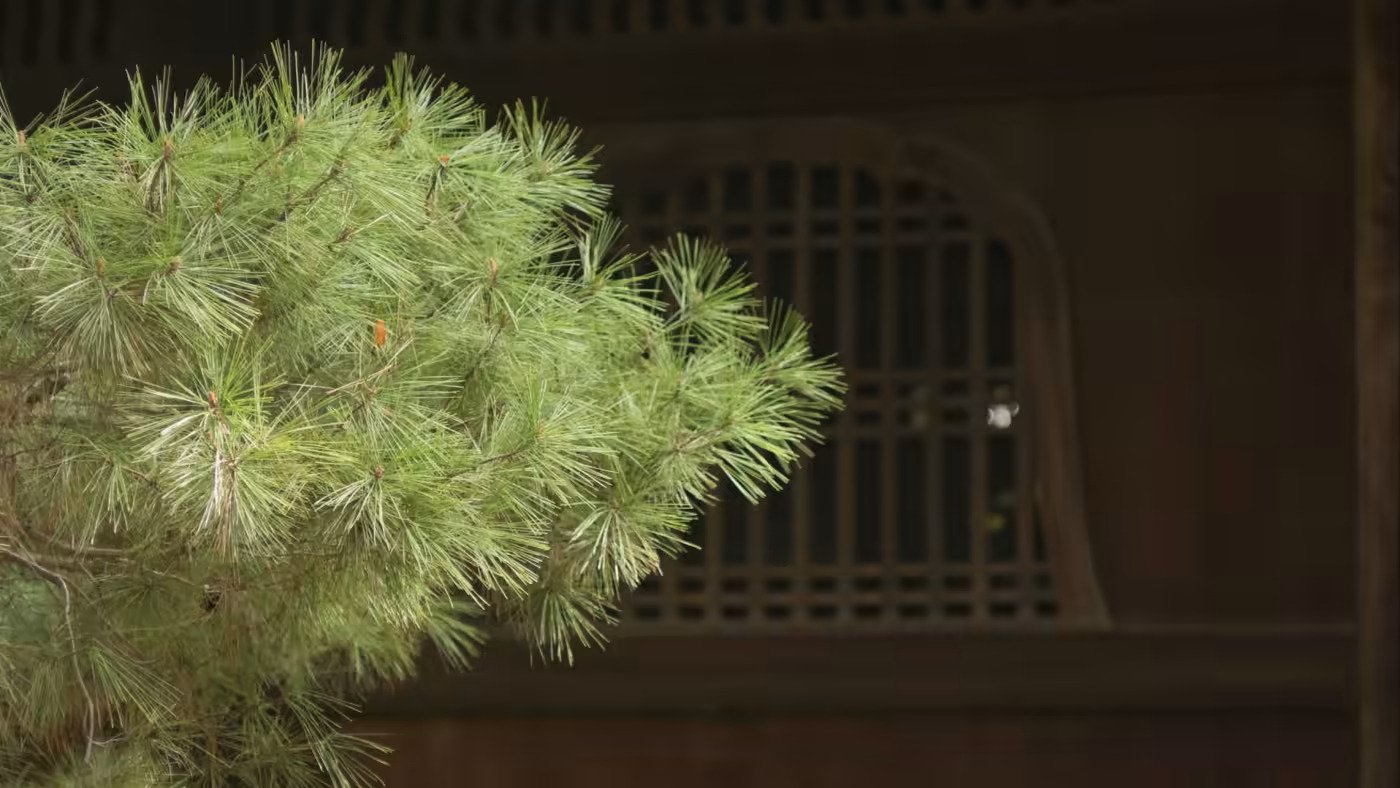
Having given his tottering retinue of “hammered” security guards the slip, the grandson of Prince Genji (we never do learn his name) undertakes his enchanted search, spurred on by the prospect of finding the “hidden garden” mentioned at the end of One Hundred Beautiful Gardens — a guide that he ostensibly acquired in the last decade of the Tokugawa era, in the 1860s. Though we learn that the garden may have “existed only in the imagination of the author”, who in turn may have been imaginary himself, it has “become real” in the imagination of Genji’s grandson (who is in himself a relation of a character loaned from fiction). And so the garden and the quest for it take on a symbolic meaning as the borders between reality, dream and fiction grow ever more indistinct.
Across the 49 slow, meditative vignettes that make up this otherworldly wandering, Krasznahorkai meticulously catalogues his protagonist’s observations, conjuring a vision of vivid beauty that, for the most part, seems to float above the mundane and transitory world below. From lavish inventories of the flora and fauna populating the monastery grounds to dissertations on temple architecture, papermaking and the wind itself, history, nature, philosophy and aesthetics intermingle, while time itself becomes fluid and the chapters skip back an hour or a millennium. Read More…