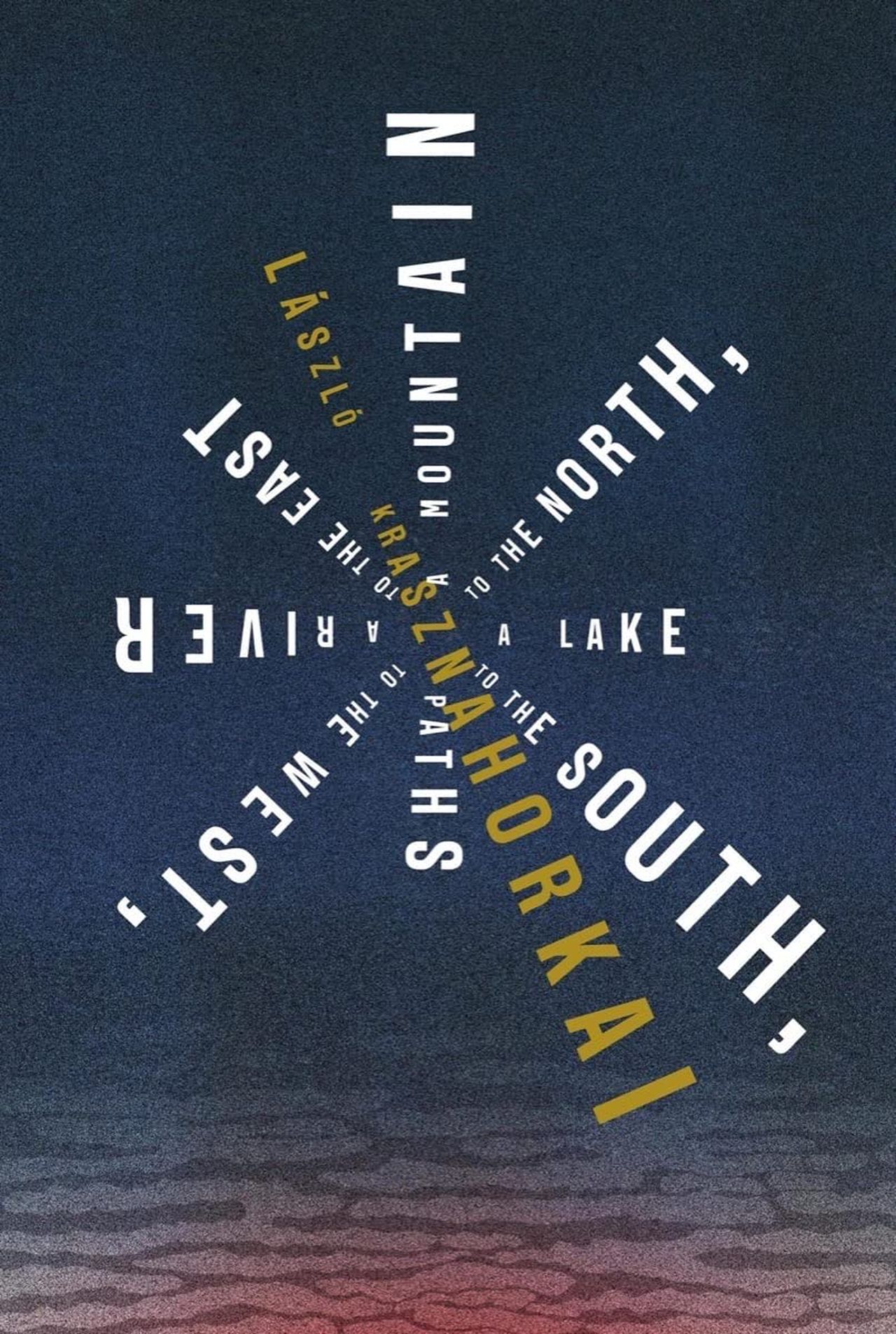
A Garden in This Wretched World: On László Krasznahorkai’s “A Mountain to the North, a Lake to the South, Paths to the West, a River to the East”
-
 Loading...
 - Martisse Bertin
- 14 Mar 2023
- 63 Views
- 0 Like
- 0 Comment
Every work of art entails a journey, not necessarily in its essence but in its creation: a search by an artist or artists to discover how to tell their story, to develop their idea, to convey their emotion, to display their vision; a search for the apposite, if not the perfect, combination of phrases, shapes, colors, chords, movements, silences, images, expressions.
Such a journey requires focused devotion, not to mention contending with any constraints imposed by time, money, physical and mental health, and opportunity (read: systemic and historic biases and prejudices). These strictures ensure that few such searches are successful, that few such journeys reach their destination. Some have argued that nothing can stop true artists from creating, that they have a gift and that gift will find a way to manifest itself, to overcome any obstacles, but such thinking feels naïve. Of course, there have been, and will be, unstoppable successes, but for every writer, painter, dancer, sculptor, or filmmaker we know of who overcame the odds, who carved out the time to create, an unknown number remain anonymous, unable to start their journeys or, more importantly, unable to finish them, so consumed are they by the rigors — material, existential, or psychological — of daily living.
If this riff on artistic creation resonates, László Krasznahorkai’s slight, almost static novella A Mountain to the North, a Lake to the South, Paths to the West, a River to the East may speak to you as it did to me, slowly revealing itself as a meditation not only on Buddhism and the fragility of life, but also on writing, on the creation of art, and on aesthetic fulfillment in general, a journey that can be exhausting, elusive, consuming, frustrating, and ultimately futile. Ottilie Mulzet’s characteristically wondrous translation is the ninth of Krasznahorkai’s works to appear in English over the past decade, and while the book was originally published in Hungarian in 2003, it still feels like a fitting coda to the Man Booker International winner’s remarkable oeuvre. Read More…