A Poem That Is a Witness: On Vasyl Makhno’s “Paper Bridge”
-
 Loading...
 - Katrien Vliet
- 13 Mar 2023
- 60 Views
- 0 Like
- 0 Comment
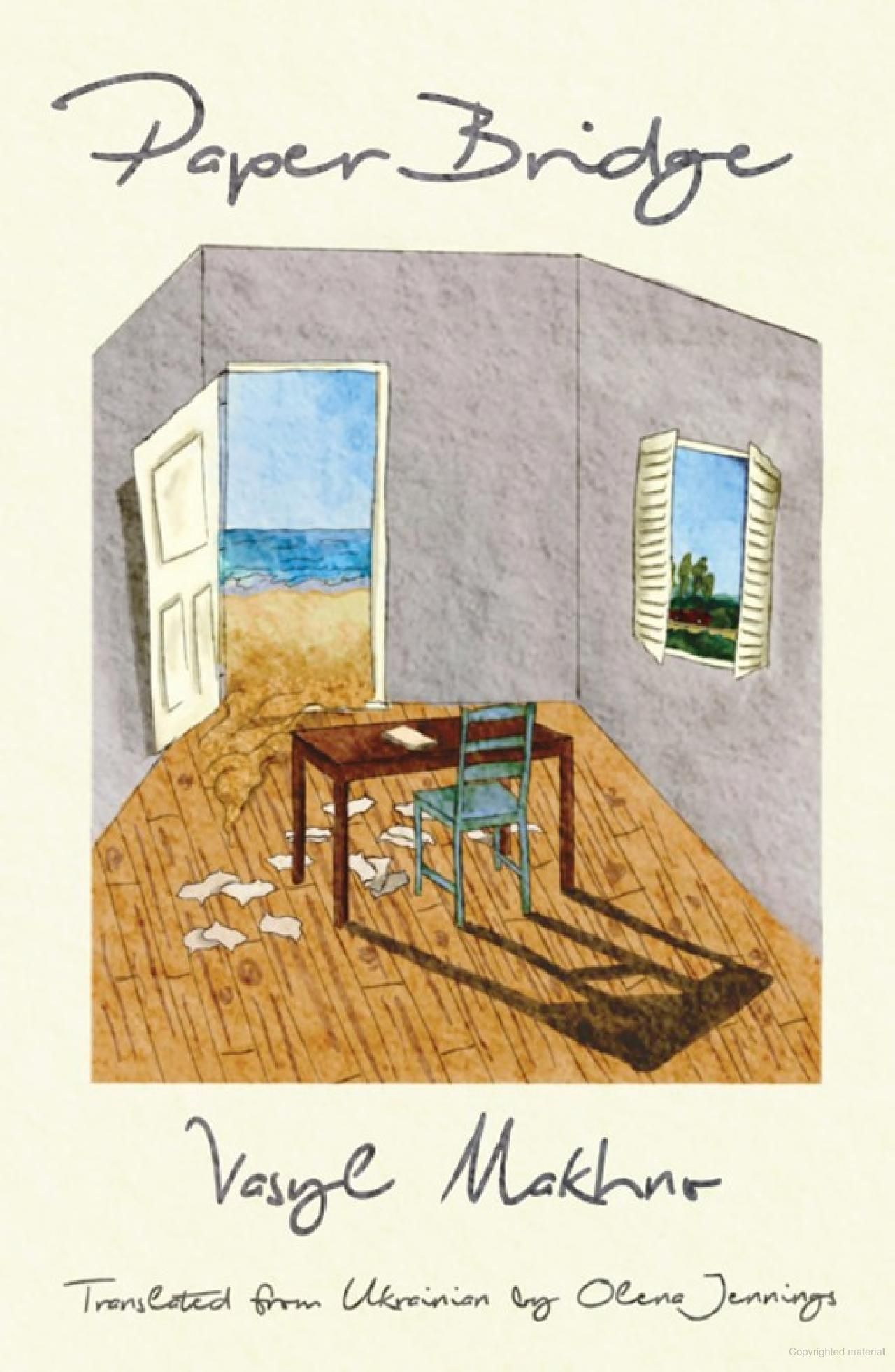
Gathering personal poems that communicate the present Ukrainian experience, Vasyl Makhno’s Paper Bridge (translated by Olena Jennings and published by Plamen Press in October 2022) presents a witness account to heartbreak, wandering, hopelessness, and endurance. Instead of dwelling on suffering, however, the poems’ speakers transform their excruciating circumstances into light and passion, dreams and romance, and prayerful rhetorical moments that leave readers alone with, and searching within, themselves.
Quietly tapering, “Autumn Poems” oozes a modern transcendentalism. The poem’s natural imagery harkens back to works by American poet Robinson Jeffers, while its fusion of the modern with the mystical is comparable to the work of Ukrainian poet Oleh Lysheha. The poem begins with the quiet observation, “A leaf was caught in a spider’s web.” From this line, the poem unfolds, developing a confessional tone and carefully balancing the natural world with the industrialized one. The spider and its web stand paramount in the speaker’s mind: “From the spider’s spit and its razor thread / We’ll gather rain, a little rain and poems / Those filled with despair, those that are sad and sadder still.”
Place and environment influence many of Makhno’s poems, such as “Berlin.” Like “Autumn Poems,” “Berlin” balances a natural narrative with an industrial one and offers an observation or two about the creative process. It also asks what society and individual readers should demand of poetry, especially during our current times, when war and disaster permeate the headlines: “But how can one live with a poem that is a witness?” For the speaker, poetry is an all-powerful guiding force amid daily chores and interactions. Makhno’s direct, succinct lines and his use of anaphora with the conjunction “And” create an incantatory effect: “And so you rake the leaves with a fox’s claw / And so you throw on a military coat / And write a poem and read it.” Read More…