Afro-Colombians helped install a new government in Bogotà¡. Will it address their needs?
-
 Loading...
 - Alanyo Montes
- 08 Sep 2022
- 79 Views
- 0 Like
- 0 Comment
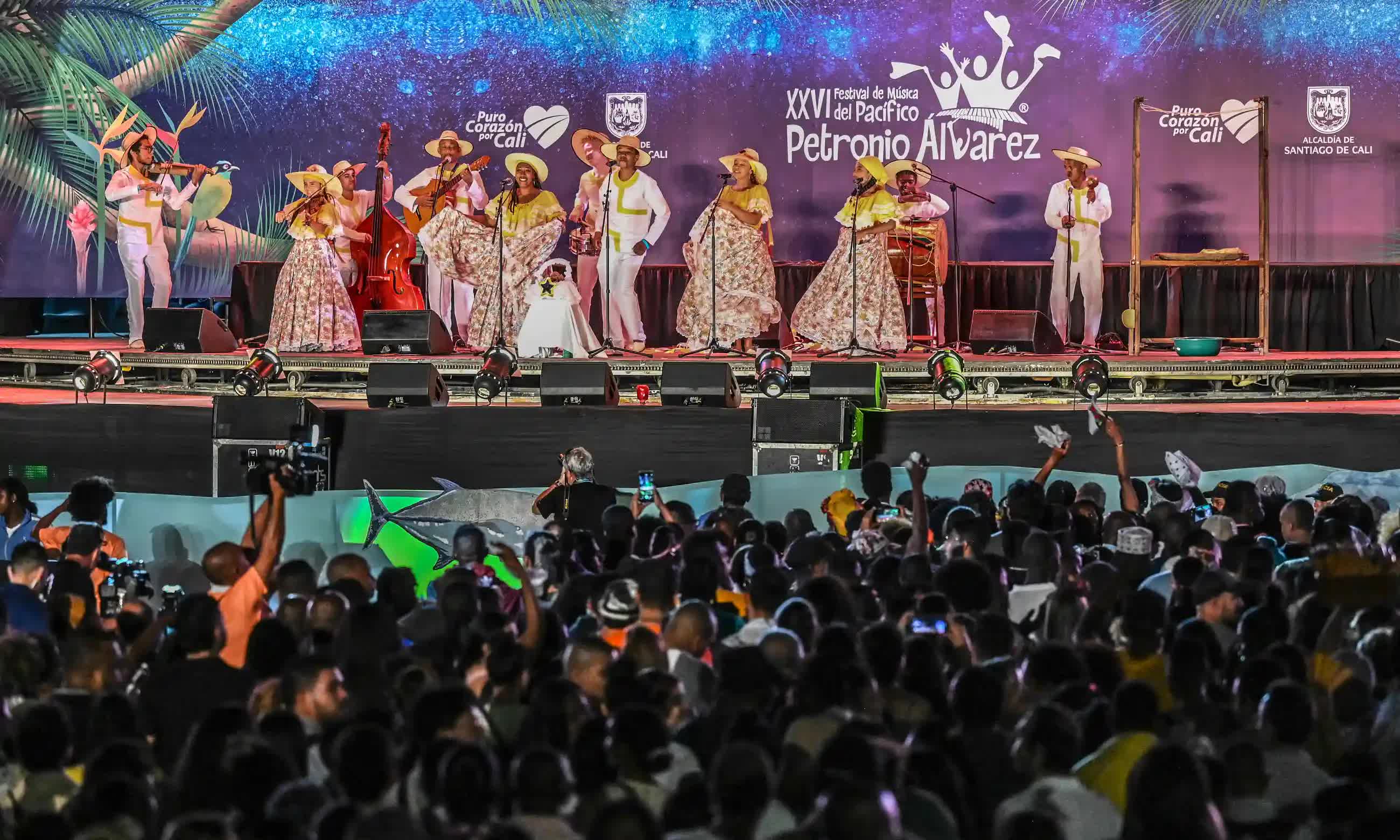
The wooden bars of the xylophone-like marimba bounce under the heads of enthusiastic mallets. Guasás – bamboo cylinders filled with seeds – begin to shake in unison. Dressed in a white cotton dress and straw sombrero, Otoniel Orobio sing.
In Guapi, an isolated town of 38,000 inhabitants on Colombia’s Pacific coast, 10 bands from the surrounding region are competing for a coveted spot at the finals of the Petronio Álvarez festival, an annual celebration of Afro-Colombian music and culture held every August in Cali. In a region largely cut off from the road network, life here revolves around the rivers that snake through dense rainforest. It’s fertile ground for musical inspiration.
“The heart of Colombia is in the rural areas,” says Orobio, a transwoman who works as a nurse and is the lead singer and songwriter of local 10-piece band, Camerón de Playa. “This music comes from the rumble of the stones that roll when the river rises, from the sound of the breeze in the trees, from birdsong. There are birds that play the marimba, birds that play the flute.”
Following the election in June of former guerrilla Gustavo Petro and Francia Márquez, the country’s first Black vice-president, the voice of Colombia’s 4.7 million Afro-Colombian population has never been louder.
The four departments on the Pacific coast contributed 2.55m votes to Petro and Márquez’s total haul of 11.2m. In Guapi, they won 94% of the ballot.
“For the first time in history the Pacific coast played a determining role in electing a presidential candidate,” said Angélica Mayolo, Colombia’s Afro-Colombian outgoing minister of culture. “Now there’s a great expectation in the region that the government should respond with concrete actions that address its needs.”
Those needs are many. Despite numerous government initiatives over the past two decades, the Pacific coast region lacks basic public services from education to health. A 2018 study showed that less than half of the population had access to clean water and sewerage and barely a quarter to electricity. The region was hit particularly hard during the pandemic, with over 30% of the population experiencing multidimensional poverty. Read More...