Autofiction Without the Auto: On Javier Cercas' Outward-Looking, Self-Centered Fiction
-
 Loading...
 - Beatrice Abate
- 19 Aug 2024
- 47 Views
- 0 Like
- 0 Comment
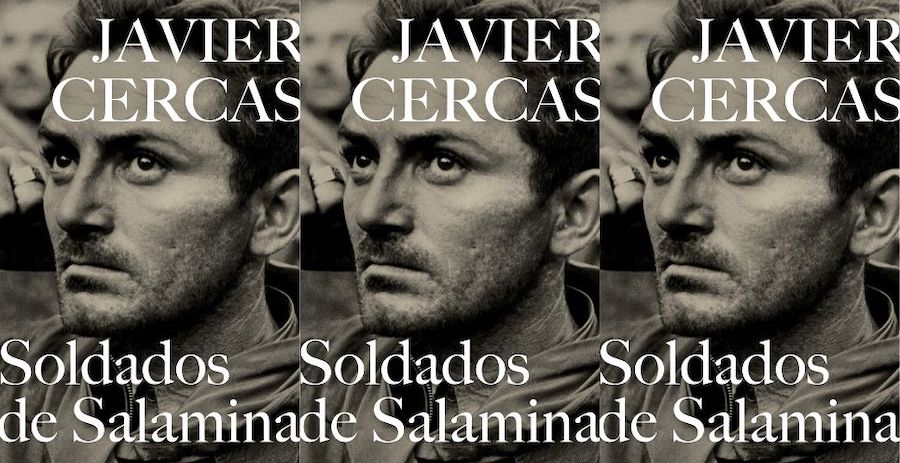
Javier Cercas, the Spanish novelist and essayist, has built a reputation for crafting fiction that blurs the lines between autobiography and imagination. His novels, such as "Soldiers of Salamis" and "The Anatomy of a Moment", often feature protagonists who share his name, occupation, and even his physical appearance. However, unlike traditional autofiction, Cercas' work eschews introspection and navel-gazing, instead using the self as a lens to examine the world around him.
Cercas' unique approach to autofiction can be seen as a reaction against the solipsistic tendencies of contemporary literature. In an era where writers are encouraged to mine their personal experiences for material, Cercas' work stands out for its outward-looking gaze. His novels are less concerned with exploring the inner workings of his own mind than with using his own experiences as a way to understand the world around him.
Take, for example, his novel "The Impostor", which tells the story of a man who impersonates a famous Spanish writer. On the surface, the novel appears to be a exploration of identity and deception, but as the story unfolds, it becomes clear that Cercas is using the protagonist's impersonation as a way to examine the nature of truth and fiction. The novel is less about the protagonist's inner life than about the ways in which we construct and perform identity.
This outward-looking approach to autofiction is also evident in Cercas' use of historical events and figures in his work. His novels often incorporate real-life events and characters, which serve as a way to explore larger themes and ideas. In "Soldiers of Salamis", for example, Cercas uses the true story of a Spanish writer who was spared from execution during the Spanish Civil War to examine the nature of heroism and morality.
Cercas' use of historical events and figures also serves to underscore the self-centered nature of his fiction. By inserting himself into these larger narratives, Cercas is able to explore the ways in which individual experiences are shaped by broader historical and cultural forces. This self-centeredness is not about navel-gazing or introspection, but rather about using the self as a way to understand the world around us.
One of the key features of Cercas' work is his use of a protagonist who is often a stand-in for himself. This protagonist is not a straightforward autobiographical figure, but rather a fictionalized version of the author. This allows Cercas to explore themes and ideas that are personal to him, while also maintaining a level of distance and objectivity.
This approach to autofiction raises interesting questions about the nature of truth and fiction. By using a fictionalized version of himself as a protagonist, Cercas is able to blur the lines between reality and imagination. This blurring of lines serves to underscore the idea that all writing is a form of fiction, and that even the most autobiographical of works is subject to the distortions and biases of the author.
In conclusion, Javier Cercas' work represents a unique approach to autofiction, one that eschews introspection and navel-gazing in favor of an outward-looking gaze. By using the self as a lens to examine the world around him, Cercas is able to craft fiction that is both personal and universal. His work serves as a reminder that even the most autobiographical of writing is always a form of fiction, and that the self is always a construction, subject to the distortions and biases of the author.