Beyond All Odds: Raimany's Journey of Perseverance with Albinism in Mozambique
-
 Loading...
 - Agnes Turkson
- 24 Aug 2022
- 63 Views
- 0 Like
- 0 Comment
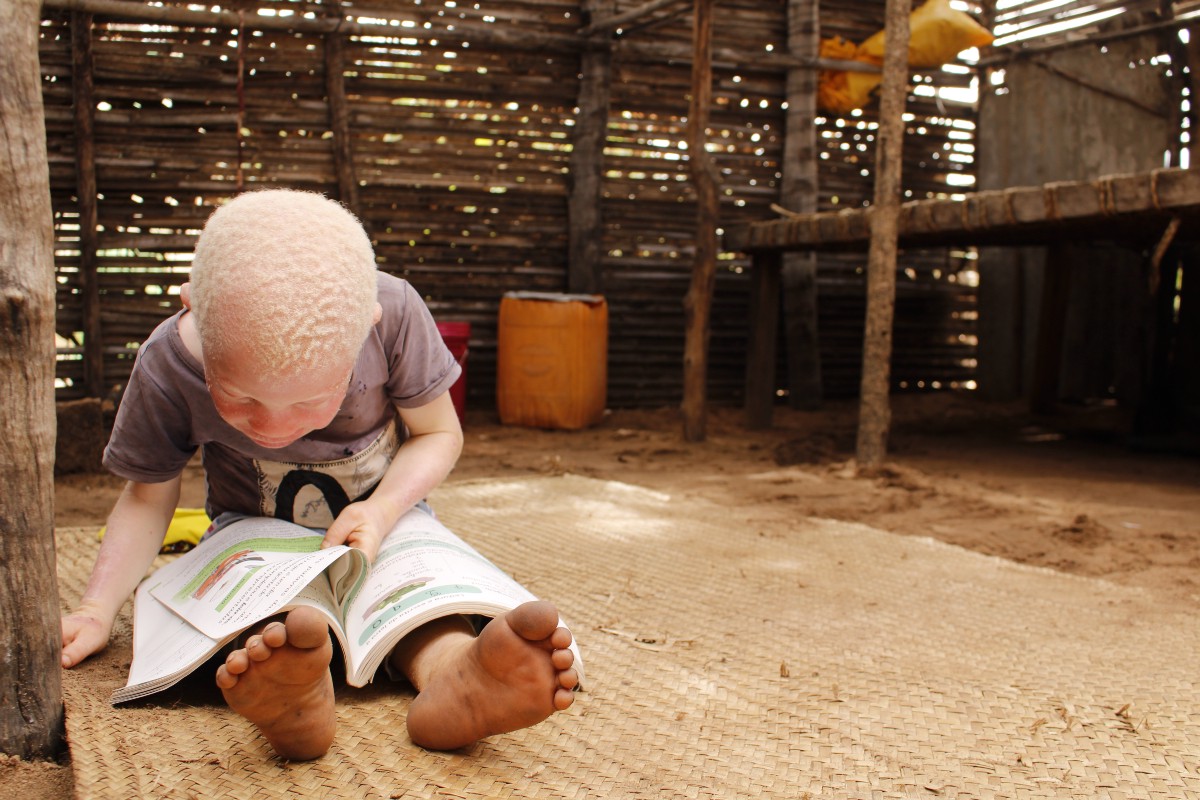
Five-year-old Raimany is playing with his friends, unaware of the complexities of his skin colour, just one innocent child among many.
His journey of perseverance started early; his mother died in childbirth in the far northern province of Cabo Delgado, Mozambique. His father raised him by himself, grappling with Raimany’s health needs as a person with albinism, and the discrimination and threats of physical violence he might face.
Albinism is a rare, non-contagious, genetically inherited condition present at birth, which results in little or complete lack of melanin in the hair, skin, and eyes, causing vulnerability to the sun and bright light. As a result, people with albinism may be visually impaired and are more prone to developing skin cancer.
While there is no cure for the absence of melanin that is central to albinism, protecting the skin and eyes from the sun and watching for any changes in the skin can help. In Fiji, for example, thanks to a government initiative, people with albinism can now access free sunscreen at local hospitals and health clinics.
Although there is no accurate data on the exact number of people living with albinism in Mozambique, most of them live in fear of being kidnapped and mutilated. Due to their daily struggles, many albinos in Mozambique do not finish school and struggle to integrate in society.
The province of Cabo Delgado, as many others in Mozambique, is engulfed in taboos. Albinism is still greatly misunderstood, and people with albinism across the world face multiple forms of discrimination. The physical appearance of persons with albinism is often the object of myths and superstitions, which often lead to marginalization, stigma, discrimination and hate crimes.

In 2015, the Government of Mozambique adopted a Multisectoral Action Plan on Albinism to guide the implementation of measures to address the human rights and development challenges faced by people with albinism in Mozambique. Despite the efforts, access to health care and legal protection remains challenging for them. Read More...