High level of resistant bacteria circulating in the environment, food chain and community: A call to strengthen One Health Surveillance on antimicrobial resistance in Zimbabwe
-
 Loading...
 - Talai Wangila
- 04 Aug 2022
- 85 Views
- 0 Like
- 0 Comment
Antimicrobial resistance (AMR) is a threat to global public health, which involves the human, animal, food, plants, and environment sectors. AMR happens when germs like bacteria and fungi develop the ability to defeat the drugs designed to kill them. As a result, the medicines become ineffective, and infections can persist in the body and/or spread to others. This increases illness and even deaths in humans, animals, and plants. It also has implications for food safety, food security and the economic well-being of millions of people.
In 2017, Zimbabwe established a One Health AMR surveillance system through which AMR studies were done to understand the characteristics of bacteria which caused cholera and typhoid outbreaks in the recent past. However, a robust multisectoral surveillance system is needed to generate reliable data to assess the magnitude of AMR in Zimbabwe.
To strengthen Zimbabwe’s One Health AMR surveillance, the country implemented the WHO Extended Spectrum Beta-Lactamase Escherichia coli (ESBL Ec) Tricycle [1] protocol. The Tricycle protocol detects and estimates, the proportion of highly drug resistant bacteria, (ESBL Ec) in three key sectors, namely: humans (hospital and community); the food chain (animals); and the environment.
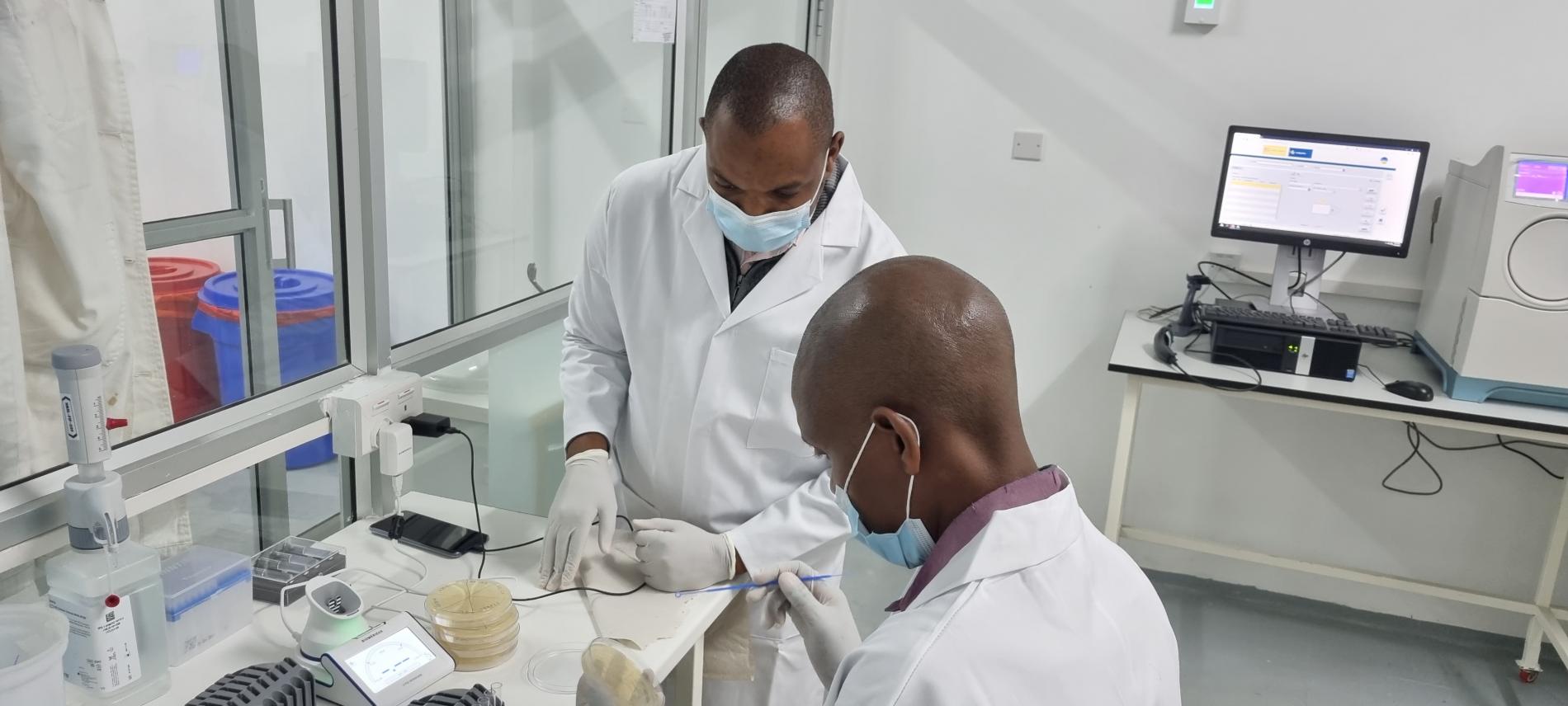
The implementation of the WHO Tricycle was between March 2021 to March 2022 and was done under the National AMR Action Plan (2017 - 2022), Research Strategic Objective. A series of activities were conducted which includes sensitisation and protocol adoption, distribution of reagents, sampling, isolation, and screening for ESBL Ec, full antibiotic profiling and data analysis using local and international trainers. Repeated annually, this protocol will provide a common set of metrics to follow over time and increase capacities for expansion at the national level while including other foodborne pathogens. This will strengthen Zimbabwe’s national integrated surveillance systems for AMR.
“As the Government of Zimbabwe (GoZ), we take AMR seriously and it has the highest level of commitment and support from the presidium. We have done this by supporting the three different ministries (health, lands, and environment) that are involved. Results from this study are going to inform our future AMR interventions,” noted, Ministry of Health and Child Care (MoHCC), Chief Director of Public Health (AMR Focal Point), Dr Munyaradzi Dobbie. “The GoZ is now being proactive in addressing AMR and no longer waiting for outbreaks to happen to find out which antibiotics are no longer working,” he added.
“A multi-sector approach to contain AMR includes a coordinated approach to the collection and analysis of AMR data across key sectors to inform decision making and containment activities. The Tricycle protocol provides a genuine effort towards the application of the One Health approach and a foundation for establishing a national integrated surveillance system for AMR,” says Lusubilo Mwamakamba, WHO AFRO Food Safety Focal Point.