How to Handhold a Telephoto Lens for Better Wildlife Photography
-
 Loading...
 - Claude Garcon
- 22 Jun 2022
- 190 Views
- 0 Like
- 0 Comment
It’s no secret that wildlife photography really requires a telephoto lenses. Some think those lenses can be big and cumbersome. But in recent years, that hasn’t been the case. These lenses have become much lighter and easier to manage. What’s more, it’s easier to handhold a telephoto lens for wildlife photography because of the tech inside. In this short tutorial, we’re going to talk about good practices and introduce you to some of that tech.A
The Settings
If you’re shooting with an APS-C camera, then you need to take the focal length and multiply it by 1.5x. That means a 100mm lens on an APS-C camera will require at least 1/150th. Again though, vibration compensation like what’s found in the Tamron 18-300mm f3.5-6.3 Di III-A VC VXD can help immensely. In real-life shooting situations, you’ll be shooting at at least 1/450th. If you add on the vibration compensation, you can probably shoot slower.
However, you probably won’t want to shoot slower unless you’re panning with the camera and your subject to get a blur effect.
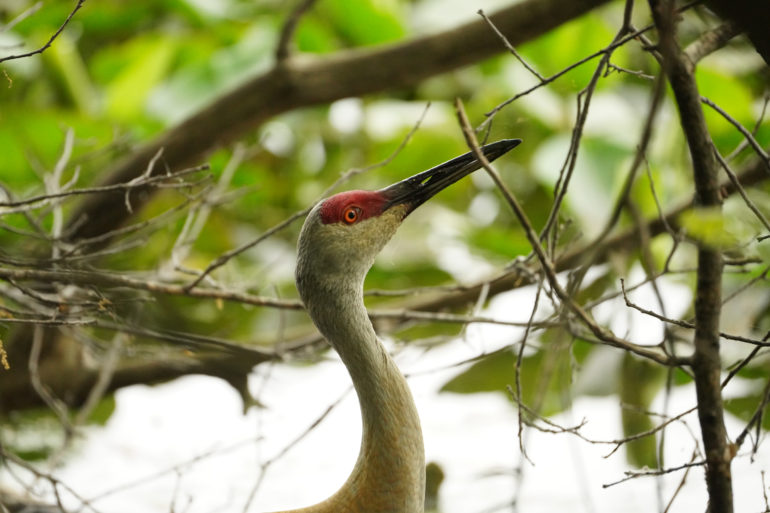
Then you need to consider what is required to handhold a telephoto lens for wildlife. Practically speaking, 1/100th isn’t going to cut it. You’ll have to raise your ISO levels and shoot at at least 1/1000th of a second to stop any subject motion. This will help freeze the animal’s movement and also prevent camera shake. For even better results, use it in mechanical shutter mode. I do this regularly when shooting with my Tamron 70-300mm f4.5-6.3 Di III RXD lens. Read More...