Hungarian Literature Highlighted at Baku Books’ Festival
-
 Loading...
 - Gregor Berger
- 31 Jul 2024
- 56 Views
- 0 Like
- 0 Comment
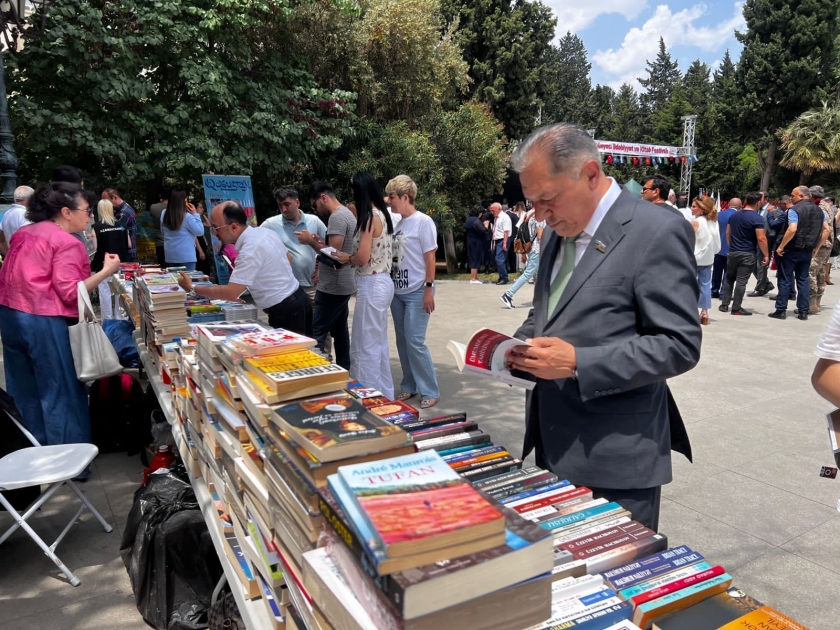
The Third Literature and Books’ Festival of the Turkic World recently took place in Baku, Azerbaijan, where Hungary was one of the eight countries represented. This year’s festival spanned eight days, with each day dedicated to a specific country, including Kyrgyzstan, Uzbekistan, Hungary, Kazakhstan, Azerbaijan, Türkiye, Turkmenistan, and the Turkish Republic of Northern Cyprus.
Khayal Rza, the festival’s project leader, emphasized the growing scope of the event: “The first festival was three days, the second festival was seven days, and this year’s festival is eight days. We want to maintain this format in the future, highlighting and presenting one country each day. I also plan to include film art: a film screening at the end of each day, with an audience meeting.” Rza also expressed his intention to expand the festival beyond Baku in the coming years.
Hungarian Literature in Focus
Hungary’s participation at the festival featured notable literary figures and showcased the country’s rich literary heritage. Poet Dániel Levente Pál shared his positive experience: “After our presentation, the director of a prestigious Azeri publishing house approached us, expressing his admiration for my ballads and his desire to publish them.” Pál was struck by the high regard for poets and writers in Baku and Azerbaijan, noting the enthusiastic reception not just in literary circles but also in everyday settings like restaurants and cafés.
Szonja Emese Schmidt, a turkologist and literary translator, was honored with the Molla Penah Foundation for Culture and Art of the Turkic World Prize. Schmidt highlighted the fraternal ties between Hungarians and other Turkic peoples, which were frequently emphasized by those she met in Baku. She expressed optimism about the future of Hungarian literature in Azerbaijan, thanks to the efforts of young literary figures committed to promoting contemporary Hungarian authors, albeit still translating from intermediary languages.
Cross-Cultural Literary Appreciation
The festival facilitated significant cultural exchange and appreciation among the Turkic world and Hungarian representatives. Kyrgyz prose writer and journalist Rizvan Ismailova praised Hungarian poet Sándor Petőfi, placing him among the world’s top poets. Rana Jahangirli, a researcher and literary translator, has translated Magda Szabó’s novel "The Door" into Azerbaijani. Jahangirli was impressed by the deep cultural relations between Hungary and Azerbaijan, which extend far back in history.
Poet and academic Ramil Ahmedov, who is currently translating the works of Hungarian poet Bálint Balassi, also attended the event. Ahmedov expressed hope that the festival would further deepen the cultural and literary ties between Hungary and Azerbaijan.
The participation of Hungary in the festival not only highlighted the nation's literary contributions but also strengthened the cultural bonds between Hungary and other Turkic nations, promising a bright future for continued literary and cultural exchange.
The Third Literature and Books’ Festival of the Turkic World in Baku served as a significant platform for Hungary to showcase its literary achievements and foster cross-cultural connections. The enthusiasm and respect for Hungarian literature in Azerbaijan underscore the potential for further cultural collaboration and the sharing of literary heritage across borders.