Jaguars return to Argentina in ‘South America's most complete species reintroduction project'
-
 Loading...
 - Luiz Almeida
- 21 Jul 2022
- 102 Views
- 0 Like
- 0 Comment
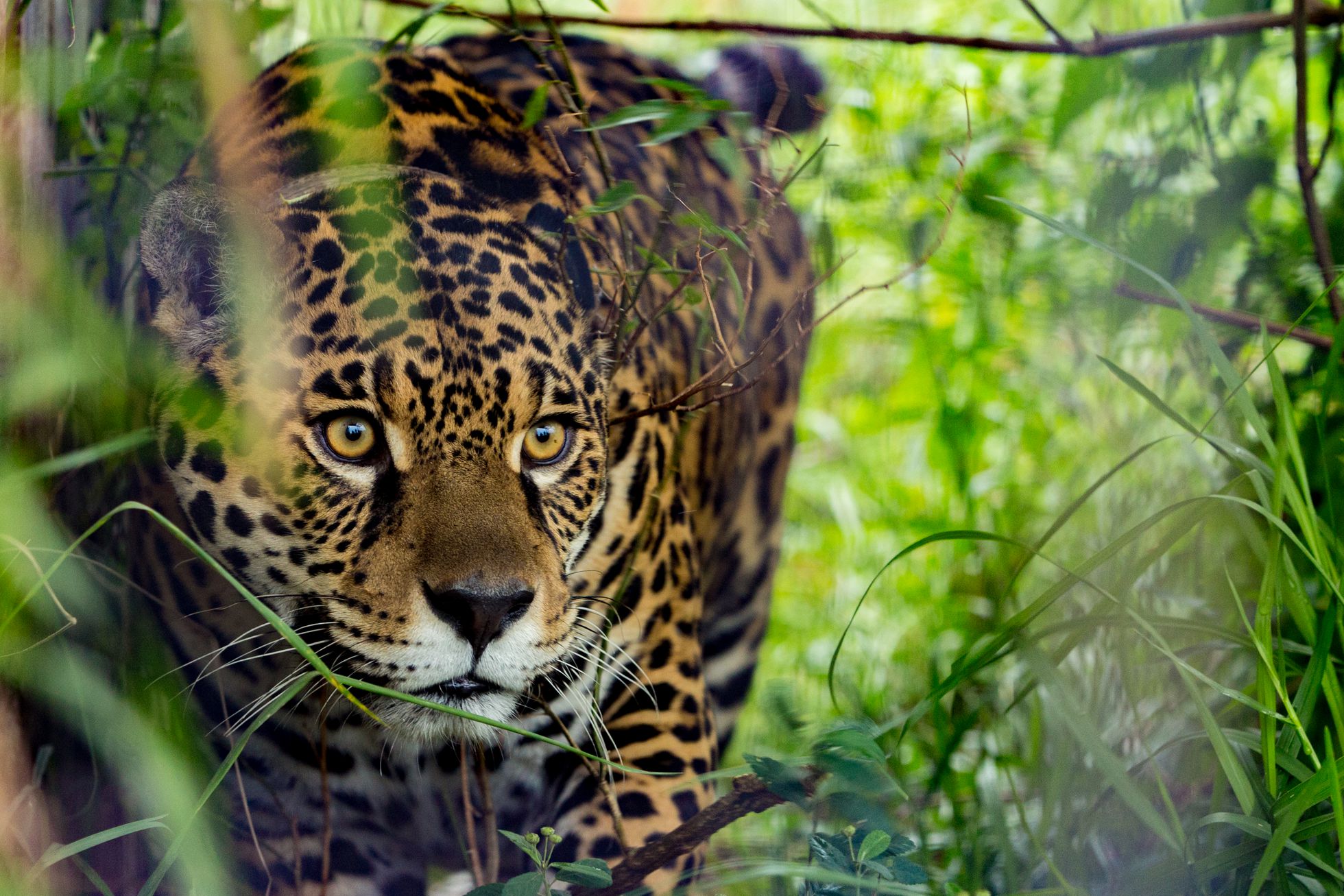
The king of the jungle in the Americas is the jaguar, or yaguareté as it is mostly known in Argentina, a magnificent animal whose primary populations are found in the Amazon rainforest. Sometimes also called the American tiger, it is the largest land-based predator on the continent. Biologist Sofía Heinonen explains that the idea of returning these animals to their natural environment in a country with such as large cattle industry as Argentina’s was, at first, “seen as madness.” However, in 2021 the first eight specimens were released in the Esteros del Iberá wetlands in the province of Corrientes. It was one of the most eye-catching cases presented during the First Global Meeting of Conservation Translocation Practitioners, held a few days ago in Valencia, Spain. As Heinonen, director of the Rewilding Argentina Foundation, explains, in reality the jaguar is only one of several indigenous species her organization is attempting to help recover, part of a far more ambitious plan that includes the reintroduction of 14 different species, among them the giant otter, the pampas deer, the giant anteater, the collared peccary and the scarlet macaw.
Question. Why are you reintroducing 14 species at once?
Answer. The goal is to try and restore complete and functioning ecosystems, to prevent species from becoming extinct. We are not focused on threatened species that are on the red list, the idea is to recuperate an ecosystem is which the ecological roles continue to be resilient in the face of climate change so that there is no need to intervene afterward to ensure that nature can subsist. The more complex a system is, and the more relationships there are within it, the higher the possibility that it will continue to function. It’s like weaving: the more threads there are in a fabric, the more weight it can support.
Q. Why has a project like this come about in Argentina?
A. What we are doing in Argentina is the most complete reintroduction project in South America. On this continent, the priority for biodiversity was always protecting territory through the creation of national parks, but Argentina is among the first to turn to habitat restoration. This is because it has lost so many species. Argentina is a very flat country, it was very easy to colonize and it has a huge amount of livestock, unlike some other places that have mountain ranges.
Q. Where did the idea to reintroduce jaguars into Esteros del Iberá come from?
A. Esteros del Iberá is the biggest wetland in Argentina, at 1.5 million hectares. In 1998, [American philanthropist Douglas] Tompkins, who had been working to reintroduce wolves to Yellowstone, flew over it. While doing so, he realized there was an incredible opportunity to do something similar with the jaguar, because there were no major threats to the ecosystem and there was sufficient land extension for a population to live without conflicts. But he found that nobody in Argentina believed it was possible. In a conservative society like Argentina’s, where there are a lot of cattle ranches and private property holds a lot of sway, to think of introducing a top predator was crazy. I was at the time working for the national parks and to be honest it blew my mind, because I had never thought about it as something that was even possible.
Q. How did you achieve it?
A. Knowing how averse cattle ranchers can be toward these predators – they have persecuted them in the past because they see them as a threat – the first thing we saw we had to do was to change this perception. To turn fear into an opportunity. And this was done through a change in the economy; we had to make Esteros del Iberá be seen as an attractive destination for nature tourism, whose value would be increased by the return of the yaguareté. At the time there was nobody there but cattle ranchers, tourism didn’t exist, so we had to create a tourism industry from scratch.
Q. How long has that process taken?
A. Until the local communities asked for it, the politicians didn’t dare to authorize it. We had to create that moment at which society was ready to take it on board. It was a lengthy process; it took us 15 years to get people in Argentina to want to see the return of the yaguareté.
Q. So that means that the jaguar been reintroduced to Esteros del Iberá for the economy, for tourism?
A. Aside from economic motives, we found that the people of Corrientes, the province in which we work, felt very proud of their cultural ties with the yaguareté. They have a perception of themselves as being brave, just like the jaguar. Proposing bringing this big cat back gave them a sense of pride, because they couldn’t boast that they were brave if they didn’t have the jaguar. We found this out afterward and it came as a surprise. In this they can be compared to the Maasai, for whom living alongside lions is an act of courage. Read More...