Nuclear Fuels: Definition, Characteristics & Examples
-
 Loading...
 - Martin Philippe
- 06 Sep 2022
- 82 Views
- 0 Like
- 0 Comment
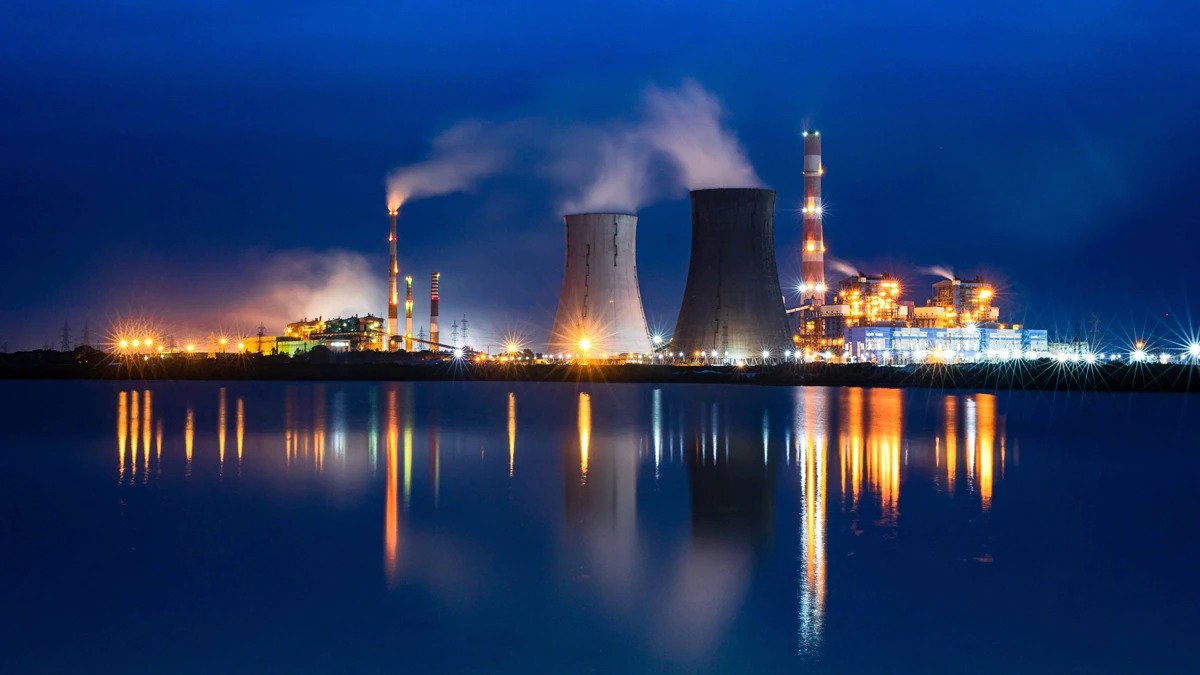
Nuclear fuel is what is used in nuclear reactors to generate electricity. In this lesson, we will explore more on what nuclear fuel is, characteristics of it and investigate examples of different nuclear fuels.
Fuel
Think about all of the different types of fuel that exist. For our vehicles there are gasoline and diesel fuels. Fuel for our bodies is food, and fuel for nuclear reactors that generate electricity are certain radioactive isotopes. Atoms of elements that have different numbers of neutrons are called isotopes. A nuclide is a specific isotope of an element. Let's go through some radioactive isotopes that are used for fuel in reactors.
Nuclear Fuel
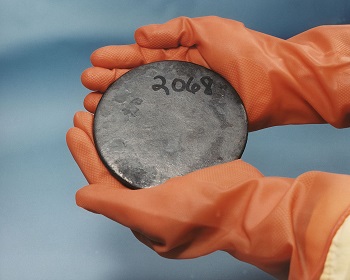
Gasoline for cars isn't just pumped out of the ground and stored in tanks for people to pump into their vehicles. It is refined from crude oil that is pumped out of the ground. The same goes for nuclear fuel, which are pellets of highly processed radioactive ore such as uranium. Nuclear fuel is material that can be used in a nuclear reactor to generate electricity. Let's first look uranium-235, which is one of the fuels used in nuclear reactors.
U-235
The ''235 '' after the dash in U-235 is the atomic mass of this isotope of uranium. Since uranium's atomic number is 92 (meaning it has 92 protons and electrons) the remaining mass consists of the neutrons. In U-235, there are 143 neutrons. This gives it a neutron to proton ratio of about 1.55 to 1. A nuclide is radioactive if its ratio of neutrons to protons is not between 1 neutron to 1 proton and 1.5 neutrons to 1 proton. This means U-235 is radioactive and decays. U-235 is the end product that started with the mining of U-238.
U-235
Nuclear Decay of U-235
Since U-235 is unstable it gives off subatomic particles from its nucleus in an effort to make its nucleus stable. This is known as radioactive decay. U-235 gives off an alpha particle, which is identical to a helium nucleus. It consists of a two protons and two neutrons. When U-235 gives off an alpha particle it transmutates into Thorium-231. Transmutation is the process of one element turning into another element. The nuclear reaction is shown in Reaction 1.
The time required for one-half of a sample of U-235 to turn into Th-231 is just over 700 million years! This value is known as U-235's half-life. Now that we have covered the basic characteristics of U-235, let's see how it is used as nuclear fuel. Read More...