Offa's Dyke Trail at 50: following the England-Wales border along this historic earthwork
-
 Loading...
 - Noah Taylor
- 24 May 2022
- 283 Views
- 0 Like
- 0 Comment
It may just look like an 8m mound of earth but, in fact, it’s the longest scheduled ancient monument in northern Europe. A man-made statement of intent by an 8th century king, Offa’s Dyke remains part of our cultural heritage.
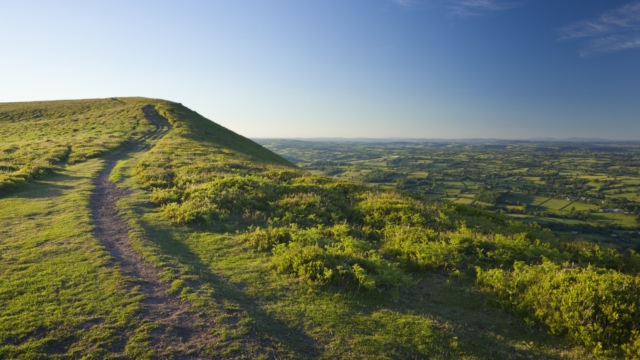
The Offa’s Dyke Path National Trail, one of 16 National Trails in England and Wales, runs alongside it and marks its 50-year anniversary this year. Look out for a revamped visitor centre in the Welsh border town of Knighton, local walking festivals along the trail and a series of new circular day walks off the main route. What’s more, with Wales now open to visitors again, the long-distance trail offers fresh-air-filled days out in the blossoming countryside of the Welsh-English border.
“I love the variety of landscapes across the sections of the trail – from rolling valleys, to heather-clad mountains and leafy woodlands,” says National Trail Officer, Rob Dingle, who has managed the path for the past 14 years. “The contrast between the uplands of the Brecon Beacons and the lowland Wye Valley, plus the rolling Shropshire Hills, makes every day walk feel different.”
I’m walking a day section of the 177-mile trail, which runs from near Chepstow on the River Severn to Prestatyn on the North Wales coast. The trail divides into 12 sections with plenty of accommodation and places to eat along the way. I joined the trail at the rural hamlet of Castle Mill, just beyond the grounds of the Chirk Castle estate in North Wales, and headed south towards the Shropshire border, following the National Trail acorn waymarking, to find the monument slumbering in a farmer’s field overlooking the Cheshire Plain.

King Offa of Mercia (the modern-day Midlands) ordered the construction of the dyke around 785AD to mark a de-facto border between England and the rebellious Welsh tribes to the west.
But, unlike Hadrian’s Wall with its milecastles and functional role in collecting taxes, Offa’s Dyke was more symbolic of English military might at a time when the Welsh were fighting for independence from their Marcher overlords. The high-earth bank would witness bitter fighting between the rival fiefdoms, running with blood for centuries until Edward I crushed the Welsh rebellion in the late 13th century.
Around 40 per cent of Offa’s Dyke Path still clings to the original monument, badger-burrowed and frost eroded, sometimes surfing its high earth bank with a deep ditch to its western side. It completes a series of border-spanning forays between England and Wales some 26 times along its length.
A shadowy figure
“King Offa is something of a shadowy figure from history, but we do know that he was keen to expand his kingdom, and the design of the Dyke was quite deliberate, acting as a warning shot to the west,” explains Rob as we look across to the Ceiriog Valley and the Berwyn range beyond, examples of 200-year-old Silver birch and beech surrounding around us.
From here the trail forges forward to a steep gorge at the Nanteris Wood, where we stop for sandwiches and coffee from pre-packed flasks, before pushing on towards the border village of Trefonen with its little village shop to stock up on mid-walk snacks.*
It’s another seven miles onto the next facilities at Llanymynech, so Rob and I retrace our steps, enjoying the afternoon sun breaking through the spring-breeze clouds to spot early bluebells and Wood anemones poking their sleepy heads above ground after winter. Buzzards patrol this northern section of the trail whereas red kites are more common along the Mid Wales sections.
Back at Chirk, I take a short detour from the trail, which leads onwards to the Pontcysyllte Aqueduct World Heritage Site near Llangollen, and head into the woodland by Chirk Castle to find the Gate of the Dead.
Site of a bloody battle

The gnarled, 11th-century oak tree marks the site of one of the bloodiest battles ever fought along the dyke. King Henry II led an army of 30,000 soldiers against the Welsh forces, led by Owain Gwynedd, at the 1165 Battle of Crogen. Read More...