Red Sea's most endangered species in Egypt
-
 Loading...
 - Luna Alfaro
- 19 Oct 2022
- 67 Views
- 0 Like
- 0 Comment
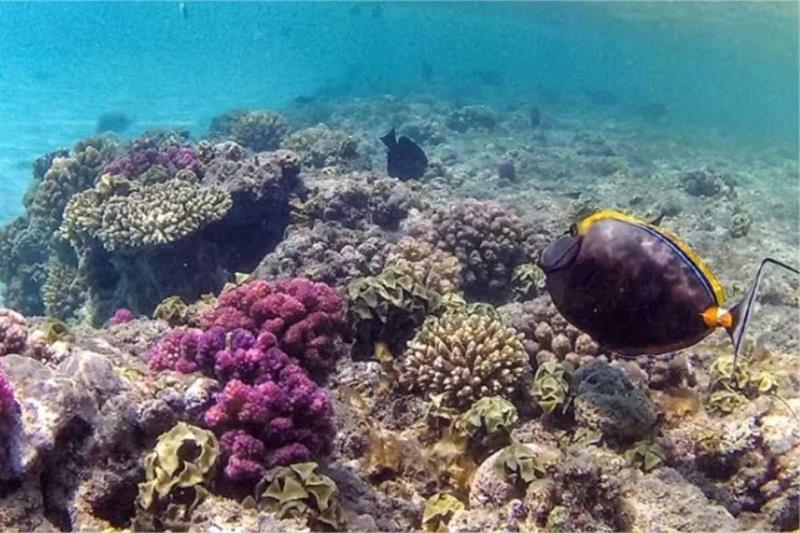
On the occasion of the 27th session of the United Nations Conference on Climate Change (COP27) scheduled to be held in the city of Sharm El-Sheikh on the Red Sea in Egypt in November, Ahram Online shares a list of the most endangered species in the Red Sea and the related conservation initiatives.
The group of species at risk listed below are based on the internationally recognised Red List for endangered marine species worldwide issued by the International Union for the Conservation of Nature (IUCN), a 1948 global nature conservation heavyweight that is composed of both governments and NGOs.
Sea turtles (green sea and hawksbill sea turtles)

For decades, there has been a myth in Egyptian coastal cities, on both the Red and Mediterranean seas that the blood of a turtle (tersa) gives health and immunity against diseases, though such folk tales never came into play in dealing with threats besting the sea turtles.
Despite the fact that sea turtles have been living on earth for 200 million years, witnessed the extinction of many animals, and seemed tolerant and adaptable to extreme climate changes, only recently a huge decline in their numbers and gatherings has been noticed around the globe due to one main weak point they have: nesting on sandy beaches.
According to professor of Marine Biology at the University of Suez Canal Mahmoud Hanafy, there are five types of marine turtles in the Red Sea, of which two are among the top endangered species: the green sea turtle and the hawksbill Sea turtle.
“They both nest on the beaches of the Red Sea governorate, specifically at the Red Sea isles and that is why those isles should be under protection,” Hanafy told Ahram Online.
The Red Sea governorate officially has 39 sea isles and most of them are already nature reserves.
The green sea turtles, for example, dig a hole and nest their eggs and then they head back to the sea while the eggs stay in the nest for 50-55 days before hatching. The hatchlings head east to the seawater where they grow and live in the sea for over 25 years till they become adults and they repeat the cycle.
“The mother turtle returns to the same beach where it was hatched as an egg to lay its own eggs like its mother, and this is how those turtles are connected to those sandy beaches,” the professor of marine biology elaborated, adding that the nesting place of those turtles became their own challenge. Read More...