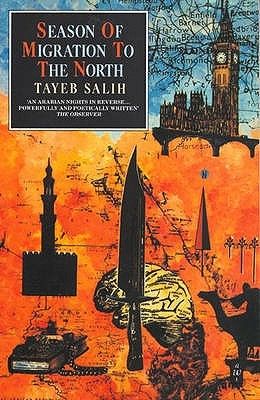
Season of Migration to the North

The unnamed narrator returns to his hometown, Wad Hamid, a small village near the Nile in northern Sudan, after studying in British poetry in London for seven years. He is glad to be back, but the village has changed since he left--most importantly, there is a new arrival, a mysterious middle-aged man named Mustafa Sa'eed. The narrator is unnerved by Mustafa and asks his family and friends about the man. Eventually, the narrator's grandfather reveals that Mustafa is from Khartoum, adding that he is a good farmer and neighbor but keeps to himself. He moved to Wad Hamid five years before, and married Hosna bint Mahmoud. Later, Mustafa visits the narrator at his home, introducing himself but remaining coy about his past.
The narrator is at a drinking session with his friend Mahjoub, who sees Mustafa walking by and pressures the older man to join them. Mustafa reluctantly does, and as he gets drunk, he begins to recite poetry in English. The narrator is shocked by this, and approaches Mustafa the next day asking where he learned to speak English. Mustafa initially insists that the poetry was drunken gibberish, but the next morning he returns to the narrator. Mustafa Sa'eed says that if the narrator swears he will tell no one, he will reveal his life story. The narrator eagerly agrees.
As a young boy growing up in Khartoum, Mustafa was a genius and quickly advanced through elementary school, which was all the education that was available in Sudan at the time. Although he was poor and fatherless, the headmaster of his school arranged for him to attend secondary school in Cairo, where his school’s headmaster, Mr. Robinson, mentored him. Upon graduating, Mustafa was awarded a scholarship to Oxford, and quickly became the darling of the English literary and political scenes. He associated mainly with left-wing bohemians, although he secretly resented their silly misconceptions about "Oriental" culture. In fact, he exaggerated his African roots, making up stories about living in the jungle and charming snakes. Read More...