Solving a Neuroscience Riddle: How the Brain Stops Us From Jumping the Gun
-
 Loading...
 - Lucas Silva
- 19 Jul 2022
- 103 Views
- 0 Like
- 0 Comment
Suppressing the urge to act until the time is right is a crucial, often overlooked, aspect of behavior. Just think about what might happen if you pressed the gas before the traffic light turned green. How does the brain keep the urge to act in check?
It’s the final race. Eight sprinters are lined up on the track, their feet tensely braced against the starting blocks. They hear the count off: “On Your Marks!,” “Get Set,” and then, a fraction of a second before the gunshot, a runner leaps forward, disqualifying himself from the competition. It is in such moments that a commonly overlooked aspect of behavior — action suppression — painfully emerges.
A study published today in the journal Nature, uncovers how the brain stops us from jumping the gun. “We discovered a brain area responsible for driving action and another for suppressing that drive. We could also trigger impulsive behavior by manipulating neurons in these areas,” said the study’s senior author, Joe Paton, Director of the Champalimaud Neuroscience Program.
Scientists from Champalimaud Research’s Learning lab discovered an answer to how we suppress the urge to act until the time is right — an impulsivity switch in the brain. In their study, published in the journal Nature, the team presents a brain area responsible for driving action and another for suppressing that drive. They also describe how manipulating neurons in these areas could trigger impulsive behavior.
Solving a Riddle
Paton’s team set out to solve a mystery that arose in part from Huntington’s and Parkinson’s Disease. These conditions manifest as movement disorders with broadly opposite symptoms. Parkinson’s patients struggle with action initiation, while Huntington’s patients suffer from uncontrolled, involuntary movement. Surprisingly, both conditions stem from dysfunction of the same brain region: the basal ganglia. How can the same neural structure support contradictory functions?
According to Paton, a valuable clue emerged from past studies, which found two major circuits in the basal ganglia: the direct and indirect pathways. It is thought that while the activity of the direct pathway promotes movement, the indirect pathway suppresses it. However, the precise manner by which this interplay is carried out was largely unknown.
A Timing Task With a Twist
Paton took a unique approach to the problem. Whereas previous studies investigated the basal ganglia during movement, Paton’s team focused on active action suppression instead.
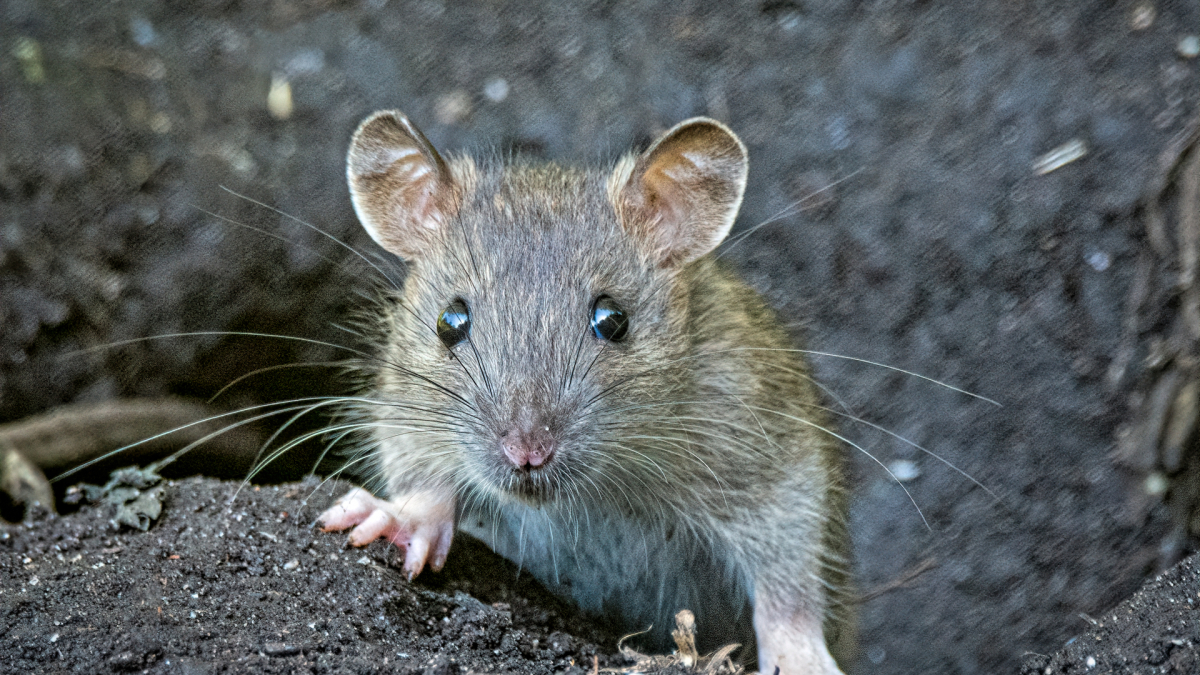
The team designed a task where mice had to determine whether an interval separating two tones was longer or shorter than 1.5 seconds. If it was shorter, a reward would be provided on the left side of the box, and if it was longer, it would be available on the right.
“The key was that the mouse had to stay perfectly still in the period between the two tones,” said Bruno Cruz, a doctoral student in the lab. “So even if the animal was certain the 1.5-second mark had passed, it needed to suppress the urge to move until after the second tone sounded, and only then go for the reward.”
An Impulsivity “Switch”
The researchers tracked neural activity of both pathways while the mouse performed the task. As in past studies, activity levels were similar when the mouse was moving. However, things changed during the action-suppression period.
“Interestingly, unlike the coactivation we and others have observed during movement, activity patterns across the two pathways were strikingly different during the action suppression period. The activity of the indirect pathway was overall higher and it continuously increased while the mouse waited for the second tone,” said Cruz.
According to the authors, this observation suggests that the indirect pathway flexibly supports the behavioral goals of the animal. “As time passes, the mouse becomes more confident that it’s in a ‘long-interval’ trial. And so its urge to move becomes increasingly more difficult to restrain. It’s likely that this continuous increase in activity reflects this internal struggle,” Cruz explained. Read More...