Ten terrifying stats about Sweden from the hit book Girig-Sverige
-
 Loading...
 - Piers Howard
- 23 Feb 2023
- 62 Views
- 0 Like
- 0 Comment
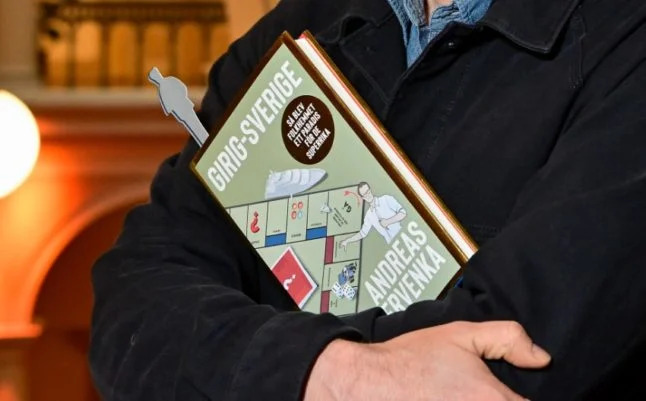
Economy reporter Andreas Cervenka won Sweden's most coveted journalist prize for 'Girig-Sverige' (Greedy Sweden), his polemic on wealth, debt, and inequality, which the judges said had "brought forward a new picture of the country". We picked out some of the most striking statistics.
Cervenka paints a picture of a country where, unnoticed by most residents and even most politicians, the economy has gone seriously awry, with worrying levels of indebtedness and gaping inequalities opening up just over the past decade or so.
Everything, he argues, points to a devastating financial crisis coming sooner rather than later.
“Right now, the markets are betting that we can avoid the worst-case scenario. But the jury’s still out, and I think the next six months will be quite crucial,” he tells The Local’s Sweden in Focus podcast, out this Saturday.
He sees the ingredients of the problem as: the decision to bring in ränteavdrag, tax-deductible mortgage interest; the abolition of Sweden’s property tax, inheritance tax and tax on gifts; a poorly functioning rental market; inadequate housing construction; and weak bank regulation.
But perhaps the biggest culprit of all, he argues, has been Sweden’s central bank, the Riksbank.
The zero and negative interest rates the central bank has had in place for much of the last decade and its creation of vast amounts of new kronor to purchase of shares and bonds – so-called quantitative easing – have benefited the rich at the expense of the poor, he argues.
Cervenka scoffs at the complaint from the Riksbank’s former governor Stefan Ingves that heading the bank had been “like sitting on the top of a volcano”, given that it was Ingves’ own policies which have caused most of the problems.
“To describe yourself as a victim of mischievous Mother Earth’s various dangers is perhaps more comforting than having the realisation that the volcano is in fact a gigantic bomb of your own making,” he writes.
Much of the impact of the book comes from Cervenka’s genius for rooting out the most terrifying and striking statistics. Here are some of the ones that left me wondering whether to convert my small savings into gold.
Inflationary Sweden
The amount of kronor in existence rose by a terrifying 540 percent between 1996 and 2021, from 750 billion to 4,800 billion kronor. In the two-or-so years since the pandemic hit in 2020 alone, the Riksbank has created nearly 700 billion new kronor. Read More…