The Cell Biology of Cell Motility
-
 Loading...
 - Oscar Hayes
- 09 Apr 2025
- 107 Views
- 0 Like
- 0 Comment
Cell motility is a fundamental aspect of various biological processes, including tissue development, immune responses, and disease progression. The ability of cells to navigate their environment is crucial for stem cells and progenitors as they migrate to sites of tissue growth, for neurons as they extend long-range projections, and for immune cells like neutrophils and macrophages as they track and capture foreign entities. Understanding the molecular mechanisms that govern cell motility is essential for advancing our knowledge of both normal physiological processes and pathological conditions, such as cancer metastasis.
In this collection, we aim to showcase primary research that significantly enhances our understanding of the cell biological mechanisms regulating cell movement. Key areas of focus include:
i. Environmental Cue Sensing Systems: Cells rely on various external signals to guide their movement. This includes the detection of chemical gradients (chemotaxis), physical cues (haptotaxis), and mechanical properties of the extracellular matrix. Research in this area explores how cells sense and respond to these cues, integrating multiple signaling pathways to direct their motility.
ii. Intracellular Signaling Pathways: Once environmental cues are detected, cells activate intracellular signaling pathways that orchestrate the cellular response. These pathways involve a complex network of proteins that relay signals from the cell surface to the cytoskeleton, ultimately influencing cell behavior. Understanding these signaling cascades is crucial for deciphering how cells coordinate their movement in response to external stimuli.
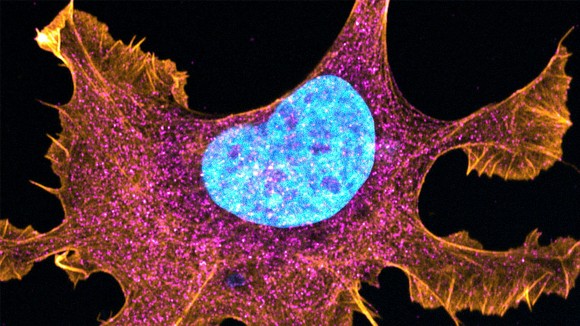
iii. Cytoskeletal Machinery: The cytoskeleton is the structural framework that enables cell motility. It consists of actin filaments, microtubules, and intermediate filaments, which work together to facilitate changes in cell shape and movement. Research in this area focuses on the dynamics of cytoskeletal components, their regulation by signaling pathways, and how they interact with motor proteins to drive cell movement.
iv. Pathological Implications: The study of cell motility is not limited to normal physiological processes; it also has significant implications for understanding disease. For instance, the motility of cancer cells is a critical factor in metastasis, where tumor cells invade surrounding tissues and spread to distant sites. Investigating the mechanisms that enable cancer cell motility can provide insights into potential therapeutic targets for preventing metastasis.
By bringing together research that spans these critical areas, this collection aims to provide a comprehensive overview of the cell biology of cell motility. We invite contributions that advance our understanding of how cells move, the molecular mechanisms involved, and the implications for health and disease. Through this collaborative effort, we hope to foster new insights and stimulate further research in this dynamic field.