Home Upload Photo Upload Videos Write a Blog Analytics Messaging Streaming Create Adverts Creators Program
Bebuzee Afghanistan Bebuzee Albania Bebuzee Algeria Bebuzee Andorra Bebuzee Angola Bebuzee Antigua and Barbuda Bebuzee Argentina Bebuzee Armenia Bebuzee Australia Bebuzee Austria Bebuzee Azerbaijan Bebuzee Bahamas Bebuzee Bahrain Bebuzee Bangladesh Bebuzee Barbados Bebuzee Belarus Bebuzee Belgium Bebuzee Belize Bebuzee Benin Bebuzee Bhutan Bebuzee Bolivia Bebuzee Bosnia and Herzegovina Bebuzee Botswana Bebuzee Brazil Bebuzee Brunei Bebuzee Bulgaria Bebuzee Burkina Faso Bebuzee Burundi Bebuzee Cabo Verde Bebuzee Cambodia Bebuzee Cameroon Bebuzee Canada Bebuzee Central African Republic Bebuzee Chad Bebuzee Chile Bebuzee China Bebuzee Colombia Bebuzee Comoros Bebuzee Costa Rica Bebuzee Côte d'Ivoire Bebuzee Croatia Bebuzee Cuba Bebuzee Cyprus Bebuzee Czech Republic Bebuzee Democratic Republic of the Congo Bebuzee Denmark Bebuzee Djibouti Bebuzee Dominica Bebuzee Dominican Republic Bebuzee Ecuador Bebuzee Egypt Bebuzee El Salvador Bebuzee Equatorial Guinea Bebuzee Eritrea Bebuzee Estonia Bebuzee Eswatini Bebuzee Ethiopia Bebuzee Fiji Bebuzee Finland Bebuzee France Bebuzee Gabon Bebuzee Gambia Bebuzee Georgia Bebuzee Germany Bebuzee Ghana Bebuzee Greece Bebuzee Grenada Bebuzee Guatemala Bebuzee Guinea Bebuzee Guinea-Bissau Bebuzee Guyana Bebuzee Haiti Bebuzee Honduras Bebuzee Hong Kong Bebuzee Hungary Bebuzee Iceland Bebuzee India Bebuzee Indonesia Bebuzee Iran Bebuzee Iraq Bebuzee Ireland Bebuzee Israel Bebuzee Italy Bebuzee Jamaica Bebuzee Japan Bebuzee Jordan Bebuzee Kazakhstan Bebuzee Kenya Bebuzee Kiribati Bebuzee Kuwait Bebuzee Kyrgyzstan Bebuzee Laos Bebuzee Latvia Bebuzee Lebanon Bebuzee Lesotho Bebuzee Liberia Bebuzee Libya Bebuzee Liechtenstein Bebuzee Lithuania Bebuzee Luxembourg Bebuzee Madagascar Bebuzee Malawi Bebuzee Malaysia Bebuzee Maldives Bebuzee Mali Bebuzee Malta Bebuzee Marshall Islands Bebuzee Mauritania Bebuzee Mauritius Bebuzee Mexico Bebuzee Micronesia Bebuzee Moldova Bebuzee Monaco Bebuzee Mongolia Bebuzee Montenegro Bebuzee Morocco Bebuzee Mozambique Bebuzee Myanmar Bebuzee Namibia Bebuzee Nauru Bebuzee Nepal Bebuzee Netherlands Bebuzee New Zealand Bebuzee Nicaragua Bebuzee Niger Bebuzee Nigeria Bebuzee North Korea Bebuzee North Macedonia Bebuzee Norway Bebuzee Oman Bebuzee Pakistan Bebuzee Palau Bebuzee Panama Bebuzee Papua New Guinea Bebuzee Paraguay Bebuzee Peru Bebuzee Philippines Bebuzee Poland Bebuzee Portugal Bebuzee Qatar Bebuzee Republic of the Congo Bebuzee Romania Bebuzee Russia Bebuzee Rwanda Bebuzee Saint Kitts and Nevis Bebuzee Saint Lucia Bebuzee Saint Vincent and the Grenadines Bebuzee Samoa Bebuzee San Marino Bebuzee São Tomé and Príncipe Bebuzee Saudi Arabia Bebuzee Senegal Bebuzee Serbia Bebuzee Seychelles Bebuzee Sierra Leone Bebuzee Singapore Bebuzee Slovakia Bebuzee Slovenia Bebuzee Solomon Islands Bebuzee Somalia Bebuzee South Africa Bebuzee South Korea Bebuzee South Sudan Bebuzee Spain Bebuzee Sri Lanka Bebuzee Sudan Bebuzee Suriname Bebuzee Sweden Bebuzee Switzerland Bebuzee Syria Bebuzee Taiwan Bebuzee Tajikistan Bebuzee Tanzania Bebuzee Thailand Bebuzee Timor-Leste Bebuzee Togo Bebuzee Tonga Bebuzee Trinidad and Tobago Bebuzee Tunisia Bebuzee Turkey Bebuzee Turkmenistan Bebuzee Tuvalu Bebuzee Uganda Bebuzee Ukraine Bebuzee United Arab Emirates Bebuzee United Kingdom Bebuzee Uruguay Bebuzee Uzbekistan Bebuzee Vanuatu Bebuzee Venezuela Bebuzee Vietnam Bebuzee World Wide Bebuzee Yemen Bebuzee Zambia Bebuzee Zimbabwe
Blog Image

The Modern Soul of Traditional Atayal Indigenous Weaving

Among the 16 officially recognized indigenous peoples in Taiwan, the Atayal and Kavalan people, who were skilled at weaving, have long been known for their culturally distinct patterned clothing. Within their various tribes, women  must learn to weave from their female elders in the family before they are permitted to take a husband. Women who are good at weaving also acquire social status within the tribe and earn the respect of the tribespeople. In addition, Atayal people believe that only women who weave may cross the Rainbow Bridge that leads them to their ancestors in the afterlife. 

However, during the period of Japanese occupation, indigenous people were forbidden from practicing their traditional customs under the colonial assimilation policy. Many Atayal and Kavalan women were forced to give up weaving, causing the weaving culture to gradually vanish from their lives. Fortunately, in recent years, a small part of the craft of weaving that was passed down between generations of women within the tribe began to surface again through the indigenous cultural rejuvenation movement. Fascinated with weaving, Lin Mei-yu (林美玉) founded “Ferry of the Weaving Heart (織心擺渡)” after learning the weaving craft of the Atayal and Kavalan people, committing herself fully to the practice and advocacy of weaving. Taiwan Scene has invited Mei-yu to share her insights on weaving with us today.

Passing on the Traditional Weaving of Indigenous People 

Neither a member of an indigenous tribe nor a textile practitioner, Mei-yu was previously a special needs teaching assistant at a village primary school in Yilan County. Looking at the traditional patterns of the indigenous people and the fabrics slowly taking shape on weaving looms around the school, the woven patterns gradually took root firmly in her mind as well.

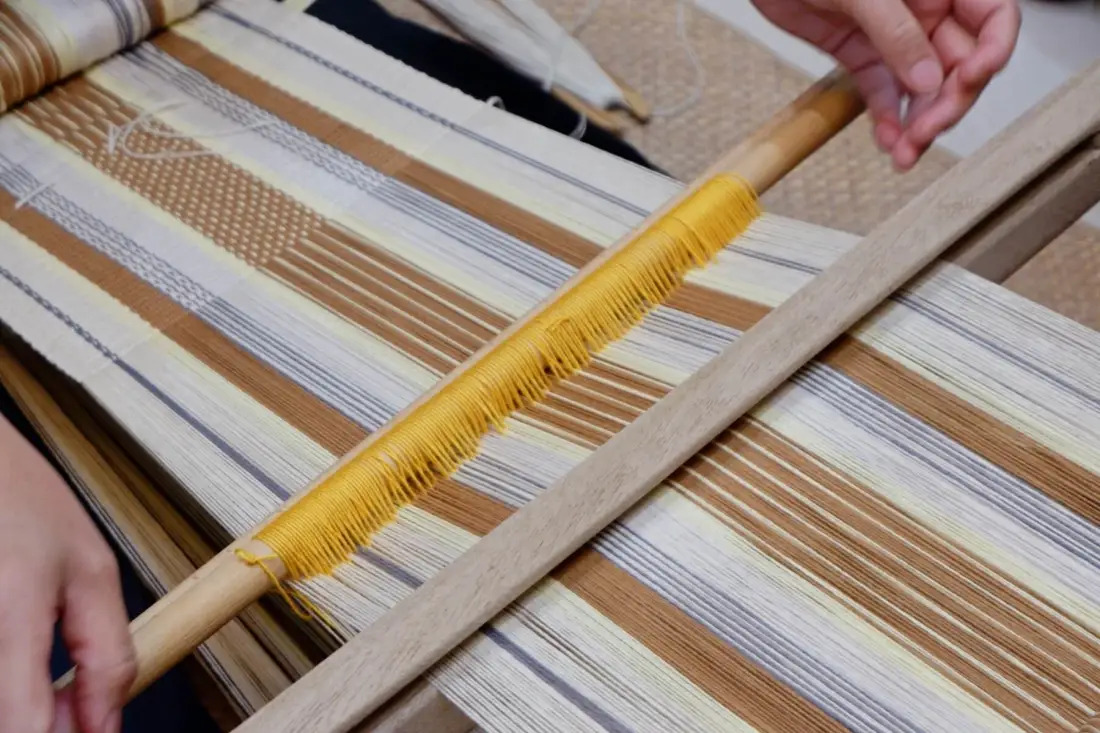
She impulsively sought out weaving classes, and her wish was granted when she visited Hualien to take up classes on banana silk weaving from the Kavalan people, where she learned to scrape hemp to make yarn. She describes the moment she began in earnest, saying, “I felt moved like never before, like I had awakened.” Since then, Mei-yu has embarked on the road of weaving, selecting natural or organically grown materials for her work and gradually developing woven works of her own unique styles.

Deeply moved by the craft of weaving, Mei-yu further sought to learn from Atayal weaving teachers in Wulai District and Nan’ao Township. Generally speaking, the traditional Atayal weaving craft was only taught to women within the tribe, but the Atayal teachers were so moved by Mei-yu’s passion that they not only taught her the craft, but also gave her the Atayal name of “Lawa.” “Every Lawa’s craftsmanship in our tribe is really good,” said the tribeswomen, The name was both a gift and the affirmation of a lifetime. Read More…

Previous Post

Special duties that concern the father of the bride on the wedding day

Next Post

6 Tips to Overcome a Gambling Addiction

Comments