Home Upload Photo Upload Videos Write a Blog Analytics Messaging Streaming Create Adverts Creators Program
Bebuzee Afghanistan Bebuzee Albania Bebuzee Algeria Bebuzee Andorra Bebuzee Angola Bebuzee Antigua and Barbuda Bebuzee Argentina Bebuzee Armenia Bebuzee Australia Bebuzee Austria Bebuzee Azerbaijan Bebuzee Bahamas Bebuzee Bahrain Bebuzee Bangladesh Bebuzee Barbados Bebuzee Belarus Bebuzee Belgium Bebuzee Belize Bebuzee Benin Bebuzee Bhutan Bebuzee Bolivia Bebuzee Bosnia and Herzegovina Bebuzee Botswana Bebuzee Brazil Bebuzee Brunei Bebuzee Bulgaria Bebuzee Burkina Faso Bebuzee Burundi Bebuzee Cabo Verde Bebuzee Cambodia Bebuzee Cameroon Bebuzee Canada Bebuzee Central African Republic Bebuzee Chad Bebuzee Chile Bebuzee China Bebuzee Colombia Bebuzee Comoros Bebuzee Costa Rica Bebuzee Côte d'Ivoire Bebuzee Croatia Bebuzee Cuba Bebuzee Cyprus Bebuzee Czech Republic Bebuzee Democratic Republic of the Congo Bebuzee Denmark Bebuzee Djibouti Bebuzee Dominica Bebuzee Dominican Republic Bebuzee Ecuador Bebuzee Egypt Bebuzee El Salvador Bebuzee Equatorial Guinea Bebuzee Eritrea Bebuzee Estonia Bebuzee Eswatini Bebuzee Ethiopia Bebuzee Fiji Bebuzee Finland Bebuzee France Bebuzee Gabon Bebuzee Gambia Bebuzee Georgia Bebuzee Germany Bebuzee Ghana Bebuzee Greece Bebuzee Grenada Bebuzee Guatemala Bebuzee Guinea Bebuzee Guinea-Bissau Bebuzee Guyana Bebuzee Haiti Bebuzee Honduras Bebuzee Hong Kong Bebuzee Hungary Bebuzee Iceland Bebuzee India Bebuzee Indonesia Bebuzee Iran Bebuzee Iraq Bebuzee Ireland Bebuzee Israel Bebuzee Italy Bebuzee Jamaica Bebuzee Japan Bebuzee Jordan Bebuzee Kazakhstan Bebuzee Kenya Bebuzee Kiribati Bebuzee Kuwait Bebuzee Kyrgyzstan Bebuzee Laos Bebuzee Latvia Bebuzee Lebanon Bebuzee Lesotho Bebuzee Liberia Bebuzee Libya Bebuzee Liechtenstein Bebuzee Lithuania Bebuzee Luxembourg Bebuzee Madagascar Bebuzee Malawi Bebuzee Malaysia Bebuzee Maldives Bebuzee Mali Bebuzee Malta Bebuzee Marshall Islands Bebuzee Mauritania Bebuzee Mauritius Bebuzee Mexico Bebuzee Micronesia Bebuzee Moldova Bebuzee Monaco Bebuzee Mongolia Bebuzee Montenegro Bebuzee Morocco Bebuzee Mozambique Bebuzee Myanmar Bebuzee Namibia Bebuzee Nauru Bebuzee Nepal Bebuzee Netherlands Bebuzee New Zealand Bebuzee Nicaragua Bebuzee Niger Bebuzee Nigeria Bebuzee North Korea Bebuzee North Macedonia Bebuzee Norway Bebuzee Oman Bebuzee Pakistan Bebuzee Palau Bebuzee Panama Bebuzee Papua New Guinea Bebuzee Paraguay Bebuzee Peru Bebuzee Philippines Bebuzee Poland Bebuzee Portugal Bebuzee Qatar Bebuzee Republic of the Congo Bebuzee Romania Bebuzee Russia Bebuzee Rwanda Bebuzee Saint Kitts and Nevis Bebuzee Saint Lucia Bebuzee Saint Vincent and the Grenadines Bebuzee Samoa Bebuzee San Marino Bebuzee São Tomé and Príncipe Bebuzee Saudi Arabia Bebuzee Senegal Bebuzee Serbia Bebuzee Seychelles Bebuzee Sierra Leone Bebuzee Singapore Bebuzee Slovakia Bebuzee Slovenia Bebuzee Solomon Islands Bebuzee Somalia Bebuzee South Africa Bebuzee South Korea Bebuzee South Sudan Bebuzee Spain Bebuzee Sri Lanka Bebuzee Sudan Bebuzee Suriname Bebuzee Sweden Bebuzee Switzerland Bebuzee Syria Bebuzee Taiwan Bebuzee Tajikistan Bebuzee Tanzania Bebuzee Thailand Bebuzee Timor-Leste Bebuzee Togo Bebuzee Tonga Bebuzee Trinidad and Tobago Bebuzee Tunisia Bebuzee Turkey Bebuzee Turkmenistan Bebuzee Tuvalu Bebuzee Uganda Bebuzee Ukraine Bebuzee United Arab Emirates Bebuzee United Kingdom Bebuzee Uruguay Bebuzee Uzbekistan Bebuzee Vanuatu Bebuzee Venezuela Bebuzee Vietnam Bebuzee World Wide Bebuzee Yemen Bebuzee Zambia Bebuzee Zimbabwe
Blog Image

The most mysterious asteroids in the solar system

A spacecraft is en route for the first-ever reconnaissance of these ancient objects.

They're trapped.

Two swarms of curious, diverse space rocks — called Trojan asteroids — continuously journey around the sun, one in front of the gas giant Jupiter and one behind. Jupiter and the sun's gravity have combined to lock the Trojans into this immutable orbit. The asteroids can't leave. It's a major reason why Trojan meteorites likely don't land on Earth, meaning we don't have any samples of these distant, still largely mysterious objects.

But planetary scientists are keenly interested in the story of the Trojans. They suspect these icy rocks are captured relics of our solar system's formation some 4 billion years ago. If so, the Trojans are the smaller building blocks of planets. They can help tell us how Earth, and the other planets, came to be.

"This is the first reconnaissance of the Trojan swarms."

"If we want to understand ourselves, we have to understand these small bodies," Hal Levison, a planetary scientist who leads the unprecedented mission to investigate the Trojans, told Mashable.

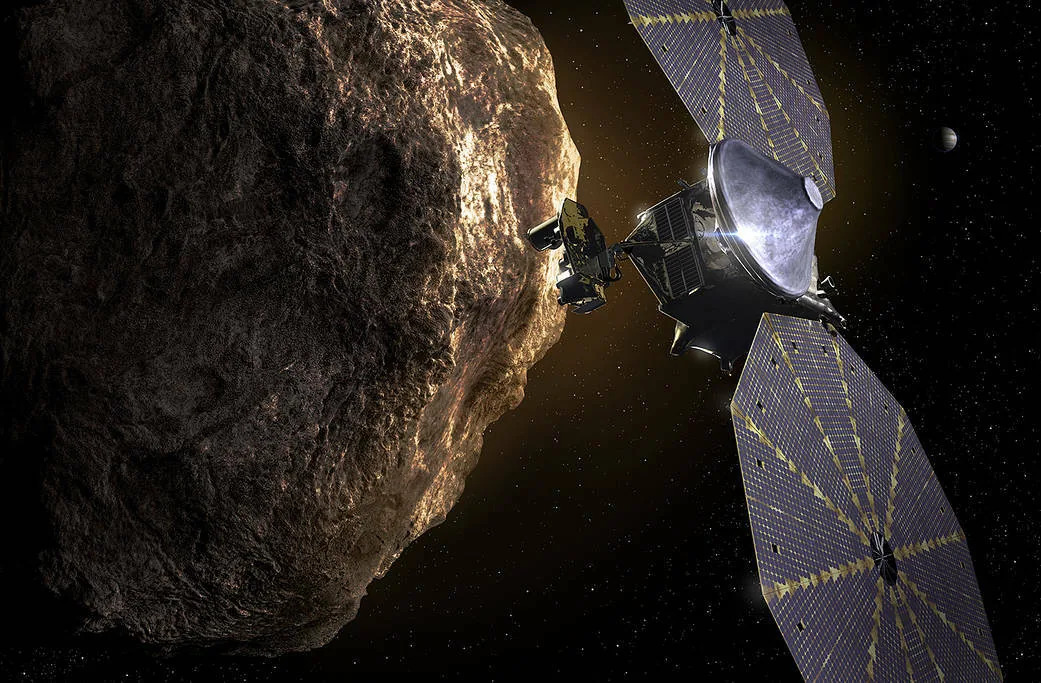
The mission, named "Lucy" after the ancient remains of a fossilized human skeleton, will visit six different Trojan asteroids over its 12-year mission. It launched in 2021. "This is the first reconnaissance of the Trojan swarms," Levison said.

Captured cosmic capsules

A looming question is how primordial chunks of our early solar system got trapped in swarms around Jupiter. A leading theory (based on simulations of the planets' formation) is that in the nascent solar system, the now-distant giant planets (Jupiter, Saturn, Neptune, and Uranus) were closer to the sun, as opposed to being the far-off intensely frigid worlds they are today. Meanwhile smaller, icy objects — the Trojans — formed beyond the planets in the outer realms of our solar system.

But around 880 million years after the solar system formed, it underwent dramatic change for reasons still being investigated. The large planets became violently unstable, explained Levison, and reoriented themselves farther from the sun. This created an opening for outer objects (the Trojans) to ultimately get propelled near gravitationally-powerful Jupiter.

"That's when we think the Trojans got stuck," said Levison.

They've orbited in swarms around Jupiter ever since. They're thought to be pristine solar system remnants from billions of years ago. And that's what makes them so valuable.

Planets grow by innumerable collisions, amassing into the larger worlds we see today. The untarnished Trojans are the type of smaller rocky and icy objects that would have contributed to making planets. They are diverse "fossils" of planet formation, Levison emphasized. If we want to know how Earth formed into the habitable, cloudy, lush world we know today, we have to know what, exactly, formed it.

The Trojans hold those clues. We just have to get there. Read More...

 

Previous Post

10 Famous Scientists of Pakistan

Next Post

7 Vietnamese scientists receive Alexandre Yersin award 2021

Comments