The Ultimate Guide for Fastpacking Success
-
 Loading...
 - Abigail Badu
- 24 Aug 2022
- 77 Views
- 0 Like
- 0 Comment
Sitting halfway between ultralight backpacking and trail running, fastpacking is all about efficiency. Fastpacking allows you to pack what would usually be a five-day trek into just two days. You can explore further and faster than ever before. This lets you make the most of your days off, and your weekends suddenly take on a whole new meaning.
Experienced backpackers and trail runners will already have a lot of the equipment and knowledge needed for fastpacking. For a successful fastpacking adventure, you need a reasonable level of fitness and equipment that is lightweight enough to run with. There’s more to it than just having the gear and being able to run a long way though. Our guide for fastpacking success will help you prepare to go fast and light overnight.
Get in Condition
With fastpacking, you’re trying to go further than you usually would hiking, and squeeze more into your day. You’re not going to be busting a lung the whole time — you can’t — but you will be run-walking for 10 hours or more every day. Sure, there’s no minimum distance for fastpacking, but you should do everything to ensure you’re physically prepared for your trip.
Once you step out of your hiking boots, you need to rely on ankle strength rather than external support and core stability to keep you moving steadily on the trails. Full-body workouts can help work those supporting muscles and leg strength for the hills, while regular trail running is necessary to build your aerobic base.
Mental toughness is at least as necessary as physical conditioning. This isn’t your quick-and-dirty 5 km lap around the park — you’re going to be on the trail for hours. You’re going to hurt. Positive self-talk, visualization, and short-term focus can all help keep you striding forward, and often we only find the key to our resilience through putting ourselves in those situations. Practice your mental strength as you do your physical strength and it will be there to keep you moving when your body is screaming for you to stop.
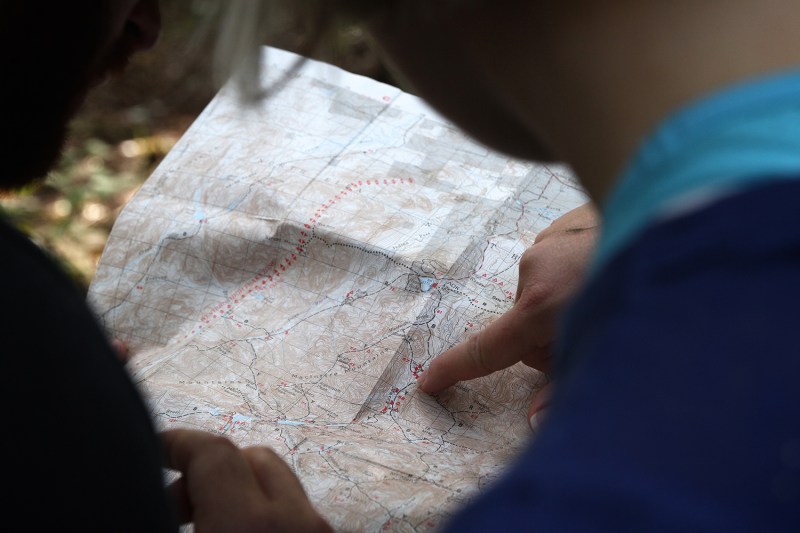
Planning and Navigation
There is no minimum distance for a fastpacking trip. It’s probably best that your first fastpacking trip isn’t a push to go as far as possible. A little like how backpacking differs from hiking, fastpacking is more than just running. There’s the bigger picture to think about — you’re carrying overnight gear, you’re going to be camping, and you’re going to run for multiple days. Until you’re comfortable running with the weight, consider shorter distances and less technical trails. Plan your trail time at a much more relaxed pace than you usually run at.
The more you know about your route before you head out, the easier you will find it to navigate efficiently on the trail. Starting out on well-marked trails helps limit potential mistakes and lets you focus on the journey. You should still brush up on your skills with a map and compass for tougher navigational sections and for when you get more adventurous in the future. Read More...