Top 10 Pieces of Advice for Beginner Thru-Hikers
-
 Loading...
 - Ivan Blazevic
- 02 Jun 2022
- 259 Views
- 0 Like
- 0 Comment
Every afternoon near the start of my first thru-hike, I knew just where I’d find the hiker named Poncho—and that he’d greet me with advice that would help me finish the Appalachian Trail.
A few years earlier, Poncho, a fifty-something auto mechanic from Boston, had found his real home (and that nickname) on the Appalachian Trail. He had fallen in love with the path’s subtle majesty and social fabric. Early each spring, he’d return to Georgia to start his annual pilgrimage up through the other side of his home state, Massachusetts, en route to the trail’s northern endpoint. Poncho had become something of an idiosyncratic guru in the process, an intriguing hiker who would slip out of shelters long before dawn and stop in the midafternoon 20 miles up trail to build a fire and rest for the following day’s long walk.
A compact and wiry man with an exquisite salt-and-pepper beard, Poncho seemed to glow when he talked about the Appalachian Trail, proselytizing on its virtues like he’d unlocked the meaning of life. Whenever I lumbered into camp, hours after his arrival, he’d be warming his toes and drying his reptilian five-toed shoes by the fire. He always offered friendly words of welcome: “Hey kid, you got what it takes,” he once yelled, his Boston accent scuffed by a longtime love of Black & Mild cigars—the first thing he’d seek out in every trail town. “Now you just gotta learn to tolerate it!”
But Poncho had more than motivational mantras. He would tell my fledging trail family of thru-hikers about learning to carry only enough water to make it to the next stop, or figuring out how much food to tote to avoid the dreaded “hanger.” He taught us about good hostels and great restaurants, difficult sections and daily routines. What’s more, his lessons tacitly acknowledged that long-distance hiking was an endless educational process, so it was OK if we rookies didn’t have all the answers—we had plenty of time and miles to discover them.
Poncho eventually sped ahead, churning out 30-mile days while we were still inching toward 25. But I would occasionally spot a five-toed footprint in the mud, certain it was his. (He’s still the only hiker I’ve ever met who swore by the things.) I continued following Poncho’s toes north, trusting that I was indeed learning to tolerate it.
I’m still no expert in thru-hiking, and I’m not sure such a thing exists. Nevertheless, I’ve combined a bit of Poncho’s wisdom, a bit of my own, and much I’ve acquired from other trekkers into ten pointers that, if you’re new to thru-hiking this year, may help you along your way. You got what it takes, kid.
Tips for Beginner Thru-Hikers to Nail Your First Trail
1. Buy a Buff. Get creative with how you use it.
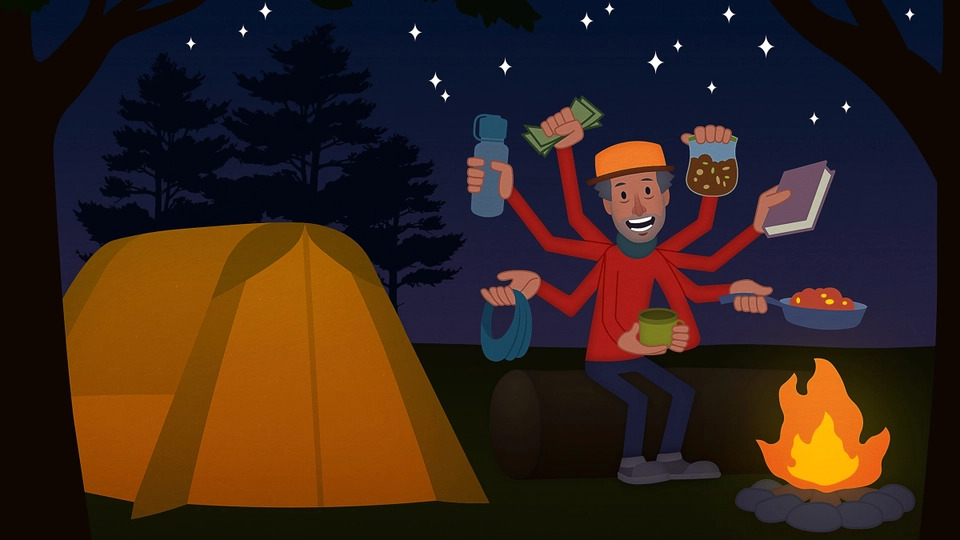
Since the benchmark for backpacking gear holds that every item you carry should have at least two uses, the humble Buff—that is, the ubiquitous brand of the common neck gaiter—is worth its weight in gold. Cold? Put it over your face, and let your nose and mouth warm you. Hot? Wrap it around your neck to shield sun and wick sweat. If you’re willing to get creative, it can function as underwear, a bra, a pillowcase, a camp towel, a rag, a mask, a wound wrap, and a dozen other things.
2. Always swim. You’ll never regret it.
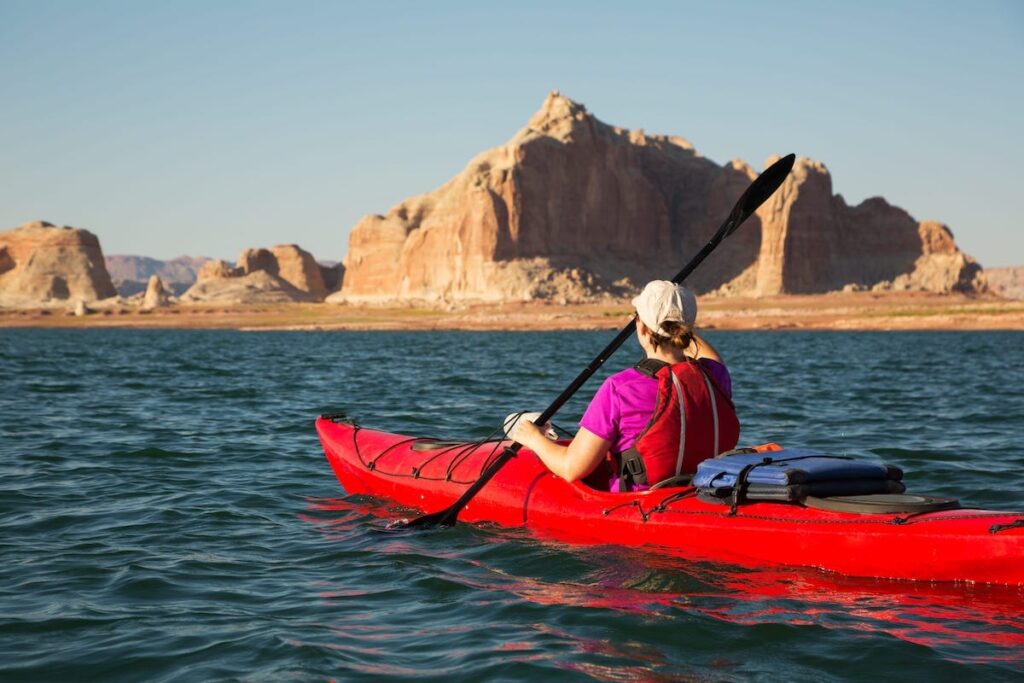
During any long hike, as in life, you will make endless choices, and each decision will bend your metaphorical and literal paths in unquantifiable ways. So don’t let regret become part of your thru-hiking. Perhaps the only moments I regret from every thru-hike are the instances when I decided not to swim. From the glacial lakes of the High Sierra to the natural springs of sunny Florida, swimming during long hikes is a chance to pause and enjoy being present in nature without the weight of walking. I think about my dips in Virginia creeks or raging California rivers often. But I also remember times when I decided against it, for fear of not making milage goals, or being wet and chafed, or encountering snakes swimming in my vicinity. I would take them all back if I could. If you are thru-hiking, you are grinding, and you also stink; take this moment for yourself, and get in the water already.
3. Listen to audiobooks. Physical books are heavy.
The paperback edition of the third volume of Karl Ove Knausgaard’s epic life chronicle, My Struggle, weighs 14 ounces. Like an absolute idiot, I carried that tome during my first thru-hike, finished it, and had a family member dispatch the fourth volume (which weighs even more) to a trailside post office. Then a fellow hiker told me about Libby, an app I could link to with my library card for free audiobooks. Sans paper book, my pack weighed nearly a pound less. I realize the notion of walking silently through woods by day and curling up fireside with a book by night is romantic; I also know that, given the exhaustion of thru-hiking, it’s nearly impossible to do. You will spend plenty of time with your own thoughts on trail as is, so give yourself a mental break from yourself by spending some time listening to a great writer’s thoughts instead. Whatever you hear will make your banter with fellow hikers better too. Read More...