6 Tips for Conveying Character and Personality in Wildlife Photography
-
 Loading...
 - Nicole Peters
- 26 Apr 2023
- 53 Views
- 0 Like
- 0 Comment
Are your wildlife photos feeling a little bit uninspired? Animal subjects are often fascinating to observe and photograph, but if you want to create compelling wildlife images, it’s important to go beyond technical mastery and produce images that convey both the character and personality of the subject.
You might be a bit skeptical here, but most animals do have personalities. I am doubtful this applies to certain creatures (e.g., ants), but mammals in particular have traits and habits. Some may be bold and investigate new things, whereas others may retreat and shy away from disturbances. I encourage you to view this as the animal’s personality and use your wildlife photography skills to capture it on camera!
It’s definitely not easy to get this right, though. A still photo freezes a single moment in time, which means you need to work hard if you want to translate an animal’s personality into a single shot. In this article, I share six tips to help you out – and I also offer plenty of examples so you can see what I mean.
Ready to start creating animal photos with character? Let’s dive right in, starting with my first tip:
1. Show unique behaviors

As a zoologist, I am fascinated by animal behavior. Some of these behaviors seem predictable – foraging and hunting, for instance – whereas others can shock and surprise us. (Did you know that fish swallow small stones to aid digestion?)
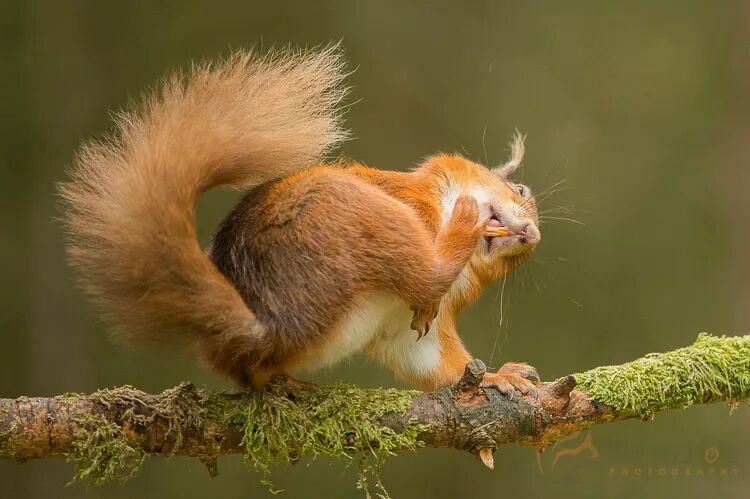
It’s often by capturing these interesting behaviors that you can convey the essence of a particular species. If you can photograph a bird, a bear, or a monkey behaving as they do in nature, the resulting images can give the viewer a real sense of that animal’s personality.
But how do you capture these behaviors on camera? When you’re staring through the viewfinder, it’s easy to get tunnel vision and focus purely on creating a technically perfect shot of your wildlife subject. If you take a step back and study the animal, however, you may start to notice behavior patterns that you can photograph.
It also pays to read up about your target species ahead of time. If you know you’ll be photographing a certain type of fox, for example, see if you can find research online that discusses any unusual behaviors. You might also look for videos that show the fox in its natural habitat; these can help you get a sense of its behavior before ever encountering it. Read More…