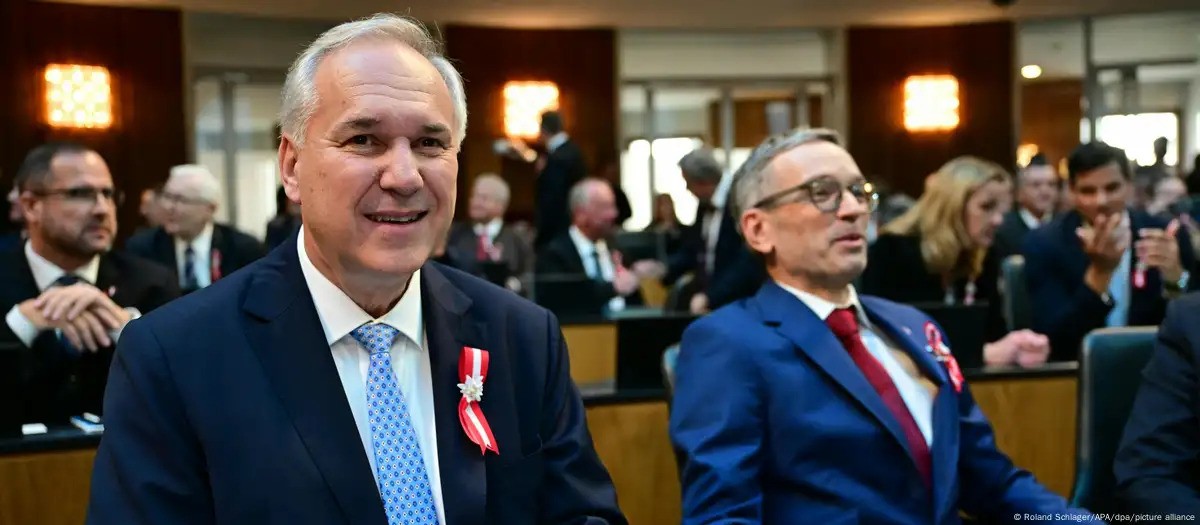
Austria Elects Far-Right Parliamentary Speaker
-
 Loading...
 - Anastasia Gabris
- 31 Oct 2024
- 63 Views
- 0 Like
- 0 Comment
Austrian parliamentarians elected Walter Rosenkranz of the far-right Freedom Party (FPÖ) as the new speaker of the National Assembly, marking the first time a far-right politician has held this significant position, which is second only to the presidency. The FPÖ secured 28.9% of the vote in the recent national parliamentary elections, surpassing the conservative People's Party (ÖVP) but failing to achieve a majority.
During the inaugural session of the new National Assembly, Rosenkranz received 100 out of 183 votes. His election faced strong opposition, particularly from Green Party members and several lawmakers from other parties who voted against him. Rosenkranz previously led the FPÖ's caucus in the parliament, and his election has raised concerns among various groups, including Jewish organizations, which have criticized his ties to far-right fraternities and the FPÖ's perceived failure to distance itself from extremist elements.
Despite the FPÖ's notable electoral performance, it is unlikely to govern in the near future due to its lack of a majority. The party would need to seek coalition partners to take the helm, but many parties, including the ÖVP, have publicly stated they will not collaborate with the FPÖ or its leader, Herbert Kickl. Kickl has insisted that the FPÖ would only enter government if he were appointed chancellor.
In light of these dynamics, Austrian President Alexander Van der Bellen has opted to bypass the FPÖ, inviting ÖVP leader Karl Nehammer to engage in coalition negotiations with the center-left Social Democratic Party of Austria (SPÖ). These talks are set to begin on Friday, with Nehammer expressing intentions to form a three-way coalition involving either the Greens or the liberal NEOS party.
The election of Walter Rosenkranz as parliamentary speaker underscores the rising influence of the far-right in Austria, even as the FPÖ faces significant challenges in forming a government. The political landscape remains complex, with ongoing negotiations that could shape the future of Austria's governance.