Here's the devastating impact a super-Earth would have on our solar system
-
 Loading...
 - Guga Fanuco
- 10 May 2023
- 84 Views
- 0 Like
- 0 Comment
Our solar system is home to eight planets, including Earth. Each planet has unique properties that make it a fascinating object to study. However, what would happen if another planet entered our solar system, and what if that planet were much larger than Earth?
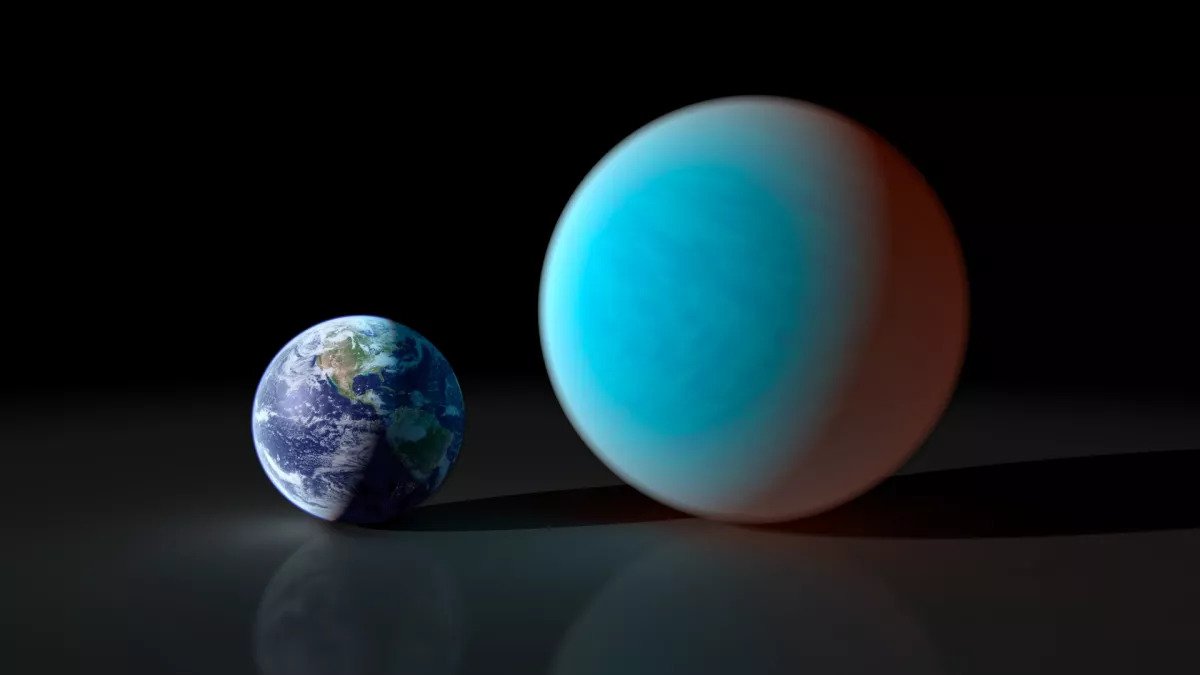
Super-Earths are a type of exoplanet that are between 1.5 and 10 times the mass of Earth. They are believed to be more common than Earth-sized planets, and some are located within the habitable zones of their host stars. However, what would happen if a super-Earth were to enter our solar system, and what impact would it have on our planet and the other planets in our solar system?
The Devastating Impact a Super-Earth Would Have on Our Solar System
The arrival of a super-Earth in our solar system would have a devastating impact on the planets in our solar system, especially if it were to enter the inner solar system. Here are some of the potential consequences:
Orbital Disturbances: The gravity of a super-Earth could cause significant orbital disturbances in our solar system. Its gravitational pull could perturb the orbits of the other planets, leading to changes in their orbital paths and potentially causing collisions between planets.
Tidal Forces: The strong gravitational forces of a super-Earth could cause tidal forces on the other planets in our solar system, especially on Earth. The tides on Earth would become much stronger, which could cause significant coastal flooding and other problems.
Atmospheric Disturbances: A super-Earth could also cause significant atmospheric disturbances on the other planets in our solar system. The gravitational pull of the super-Earth could cause atmospheric tides on the other planets, leading to changes in atmospheric pressure and temperature.
Impact on Planetary Moons: A super-Earth could also have a significant impact on the moons of the other planets in our solar system. Its gravitational pull could perturb the orbits of the moons, leading to changes in their orbital paths and potentially causing collisions between moons.
Changes in the Habitability of Other Planets: The arrival of a super-Earth in our solar system could also have significant implications for the habitability of other planets in our solar system. Its gravitational pull could change the position of the habitable zone in our solar system, potentially making some planets more or less habitable.
Collision with Other Planets: In the worst-case scenario, a super-Earth could collide with one of the other planets in our solar system, leading to catastrophic consequences for our planet and the other planets in our solar system.
The Likelihood of a Super-Earth Entering Our Solar System
While the arrival of a super-Earth in our solar system may seem unlikely, it is not impossible. There are several scenarios in which a super-Earth could enter our solar system, including:
Capture by the Sun: It is possible that a passing super-Earth could be captured by the Sun's gravitational pull and become a member of our solar system.
Collision with Another Star System: If our solar system were to collide with another star system, a super-Earth will occur.
- Oort Cloud Interaction: A super-Earth could also be gravitationally disturbed by the Oort Cloud, a region of icy objects that surrounds our solar system, and be sent on a trajectory towards our solar system.
While the likelihood of any of these scenarios occurring is low, it is not impossible. Therefore, it is important to consider the potential consequences of a super-Earth's arrival in our solar system.
The Potential Positive Impact of a Super-Earth
While the arrival of a super-Earth in our solar system would undoubtedly have many negative consequences, there could also be some potential positive impacts. Here are a few examples:
Increased Gravity: A super-Earth would have much stronger gravity than Earth. If it were to pass close enough to Earth, it could potentially increase our planet's gravity, which could have positive effects on our environment.
New Opportunities for Scientific Research: The arrival of a super-Earth in our solar system would provide an exciting new opportunity for scientific research. Scientists would be able to study the planet up close and learn more about the formation and evolution of super-Earths.
Potential for Terraforming: If a super-Earth were to enter our solar system and be found to be habitable, it could provide a potential target for terraforming. Terraforming is the process of making a planet or moon habitable for humans by changing its atmosphere, temperature, and other properties.
While these potential positive impacts may seem promising, it is important to remember that they are highly speculative and that the negative consequences of a super-Earth's arrival in our solar system would likely far outweigh any potential benefits.
FAQs
Q: What is a super-Earth?
A: A super-Earth is a type of exoplanet that is between 1.5 and 10 times the mass of Earth.
Q: What would happen if a super-Earth entered our solar system?
A: The arrival of a super-Earth in our solar system would have a devastating impact on the planets in our solar system, especially if it were to enter the inner solar system. Its gravitational pull could perturb the orbits of the other planets, lead to changes in atmospheric pressure and temperature, and potentially cause collisions between planets.
Q: Could a super-Earth increase Earth's gravity?
A: Yes, if a super-Earth were to pass close enough to Earth, it could potentially increase our planet's gravity.
Q: Could a super-Earth be habitable?
A: Yes, some super-Earths are located within the habitable zones of their host stars and could potentially be habitable.
Q: How likely is it that a super-Earth will enter our solar system?
A: While the likelihood is low, it is not impossible. There are several scenarios in which a super-Earth could enter our solar system.
Q: What is the Oort Cloud?
A: The Oort Cloud is a region of icy objects that surrounds our solar system.