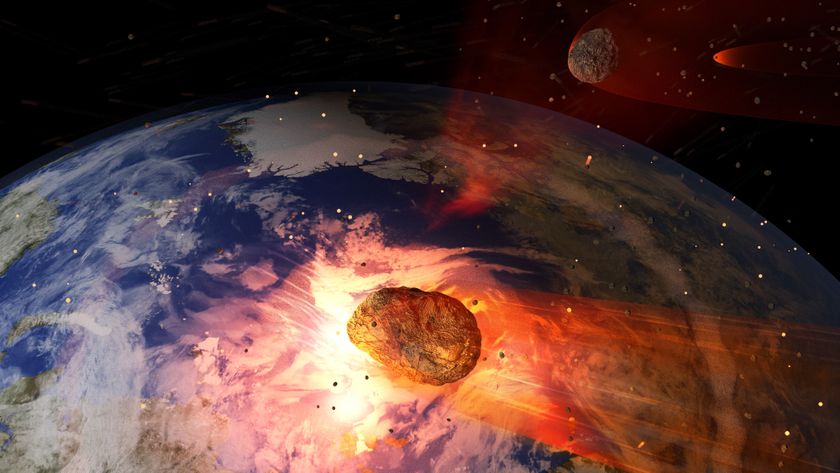
Most Powerful Cosmic Rays in the Universe Start Shockingly Close to Earth
-
 Loading...
 - Adelino Langa
- 14 Mar 2025
- 38 Views
- 0 Like
- 0 Comment
Cosmic rays are high-energy particles that travel through space at nearly the speed of light. They primarily consist of protons, but can also include heavier atomic nuclei and electrons. When these particles collide with the Earth's atmosphere, they produce a cascade of secondary particles, which can be detected by ground-based observatories.
Traditionally, scientists believed that the most energetic cosmic rays originated from distant astrophysical events, such as supernovae or active galactic nuclei. However, recent studies have indicated that some of the most powerful cosmic rays may actually be produced by more local sources, such as our own Milky Way galaxy.
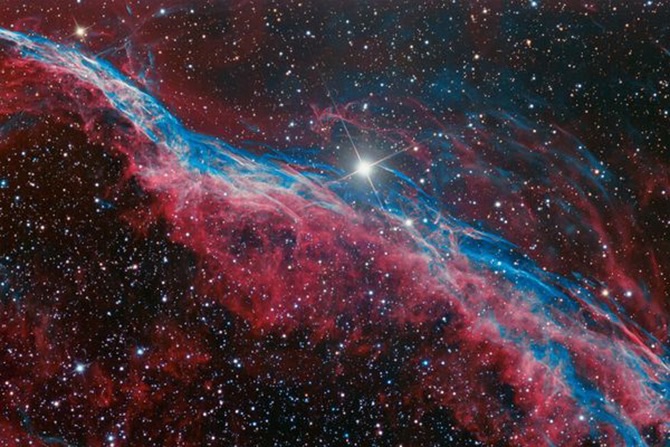
Researchers have identified specific regions within our galaxy, particularly near massive stars and supernova remnants, as potential accelerators of these high-energy particles. These findings suggest that the mechanisms responsible for generating cosmic rays may be more complex and varied than previously thought.
The discovery that powerful cosmic rays can originate so close to Earth has significant implications for our understanding of cosmic ray physics and the processes that govern high-energy astrophysical phenomena. It raises questions about the efficiency of particle acceleration in different environments and the role of local sources in the cosmic ray population.
Moreover, this new perspective could enhance our understanding of the interactions between cosmic rays and the interstellar medium, as well as their impact on space weather and Earth's atmosphere.
As scientists continue to investigate the origins of cosmic rays, advanced observational techniques and next-generation telescopes will play a crucial role.
Additionally, researchers are exploring the potential connections between cosmic rays and other astrophysical phenomena, such as gamma-ray bursts and gravitational waves, to gain a more comprehensive understanding of the universe's most energetic events.
The revelation that some of the most powerful cosmic rays in the universe start shockingly close to Earth is a testament to the ever-evolving nature of astrophysical research. As scientists delve deeper into the origins and mechanisms of cosmic rays, we can expect to uncover more about the fundamental processes that shape our universe. This exciting discovery not only challenges existing paradigms but also paves the way for future exploration and understanding of the cosmos.