Why Leila Aboulela's literature strikes a chord with Muslim readers
-
 Loading...
 - Bright Larbi
- 28 Sep 2022
- 263 Views
- 0 Like
- 0 Comment
Themes of belonging, faith, and what it means to be British are subjects that are rare in popular mainstream fiction when written from the perspective of Muslims.
Those are precisely the topics that award-winning Sudanese author Leila Aboulela examines in a host of highly acclaimed books, where women feature as central characters.
She won the Caine Prize for African Writing in 2000 for one of her short stories, The Museum. Her book, Elsewhere Home which is a collection of short stories, won the Satire Society’s Fiction Book of the Year 2018.
In recounting untold narratives and perspectives, Leila’s characters are ordinary people who just happen to be Muslim. Their faith is a large part of their identity and woven unashamedly into her stories. It does not feel contrived.
Born in 1964 in Cairo and raised in Khartoum, Leila moved to Aberdeen, Scotland, after she was married in her mid-20s. This uprooting of her life and the alienation she initially felt in the UK is a theme she writes about often, and that experience comes through in her writing.
She arrived in the UK in the 1990s, which was a time of rising anti-Muslim sentiment. This deeply upset Leila, and she would channel her emotions into prose. It was almost a therapeutic endeavour that allowed her to express her anger at being misrepresented as a Muslim, and to tell stories that challenged the mainstream narrative.
“Britain can be really resistant to outsiders, in a kind of odd way, so that no matter how much people integrate and no matter what they do, there is always this reminder that they are outsiders and that they have to qualify to belong,” Leila told TRT World.
Being a Muslim immigrant to the UK can pose a host of difficulties, including facing religious abuse, intolerance, and exclusion. British-born Muslims can experience similar hostilities because of their faith, where anti-Muslim bias is sadly ingrained and Islamophobia is an institutional problem.
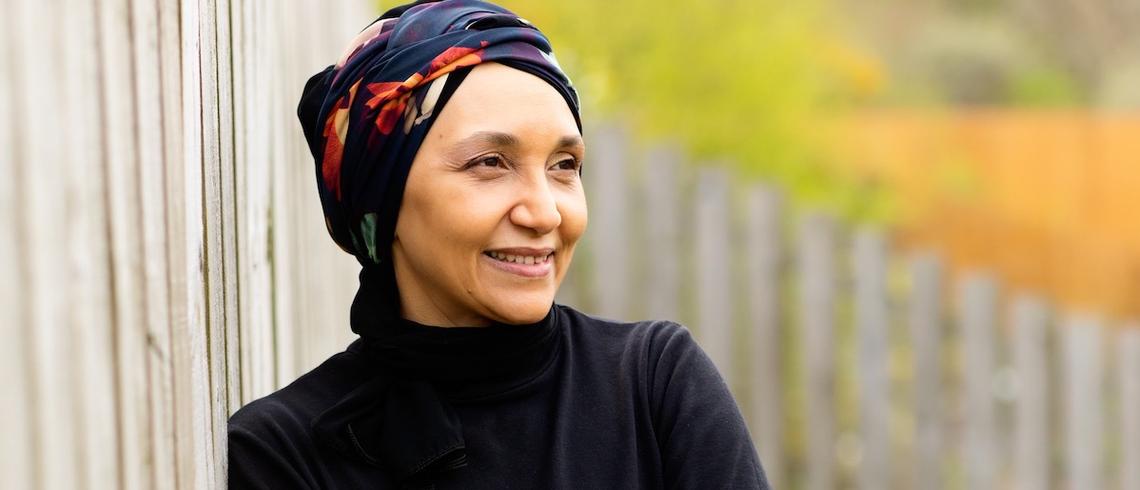
Women are often the most obvious targets, particularly those who wear headscarves. Leila’s female characters reflect this vulnerability, but at the same time, they have inner strength. This power comes from facing adversity, but it is their faith that defines and empowers them.
Leila’s books appeal to everyone but speak volumes to a largely unrepresented Muslim audience in the diaspora. Her characters and themes are familiar and comforting; a simplicity that encapsulates the greatness of Leila’s work.
In her latest novel, Bird Summons, the three main Muslim female characters of Arab heritage, set off on a part holiday-part quest to visit Lady Evelyn Cobbold’s grave in a remote part of Scotland. Read Book...